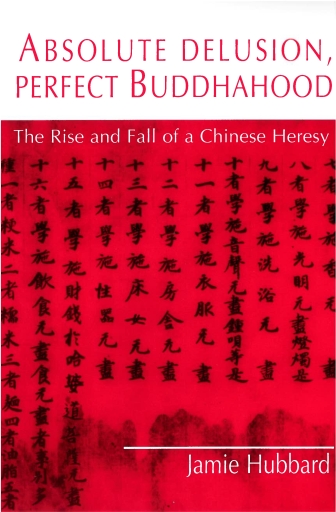
Absolute Delusion, Perfect Buddhahood
Pubblicato da University of Hawaii Press
English
352 pagine
2000
ISBN 9780824861346
Tempo di lettura stimato: 6 h 27 min
PDF
Buy at Ebooks Librería Antártica
🇨🇱
 Association of University Presses - Tienda FILUNI
🇺🇸
Visita il negozio →
Association of University Presses - Tienda FILUNI
🇺🇸
Visita il negozio →
 Bajalibros Argentina
🇦🇷
Visita il negozio →
Bajalibros Argentina
🇦🇷
Visita il negozio →
 Bajalibros Latam
🇺🇸
Visita il negozio →
Bajalibros Latam
🇺🇸
Visita il negozio →
 Bookshop Uruguay
🇺🇾
Visita il negozio →
Bookshop Uruguay
🇺🇾
Visita il negozio →
 Catademic
🇺🇸
Visita il negozio →
Catademic
🇺🇸
Visita il negozio →
Disponibile in 13 librerie
Association of University Presses - Tienda FILUNI
🇺🇸
Visita il negozio →
Bajalibros Argentina
🇦🇷
Visita il negozio →
Bajalibros Latam
🇺🇸
Visita il negozio →
Bookshop Uruguay
🇺🇾
Visita il negozio →
Catademic
🇺🇸
Visita il negozio →








Informazioni su questo libro
In spite of the common view of Buddhism as nondogmatic and tolerant, the historical record preserves many examples of Buddhist thinkers and movements that were banned as heretical or subversive. The San-chieh (Three Levels) was a popular and influential Chinese Buddhist movement during the Sui and T’ang periods, counting powerful statesmen, imperial princes, and even an empress, Empress Wu, among its patrons. In spite, or perhaps precisely because, of its proximity to power, the San-chieh movement ran afoul of the authorities and its teachings and texts were officially proscribed numerous times over a several-hundred-year history. Because of these suppressions San-chieh texts were lost and little information about its teachings or history is available. The present work, the first English study of the San-chieh movement, uses manuscripts discovered at Tun-huang to examine the doctrine and institutional practices of this movement in the larger context of Mahayana doctrine and practice.
By viewing San-chieh in the context of Mahayana Buddhism, Hubbard reveals it to be far from heretical and thereby raises important questions about orthodoxy and canon in Buddhism. He shows that many of the hallmark ideas and practices of Chinese Buddhism find an early and unique expression in the San-chieh texts.
Disponibilità
Absolute Delusion, Perfect Buddhahood è disponibile come PDF in 13 librerie online. Tra le librerie che lo vendono ci sono Association of University Presses - Tienda FILUNI, Bajalibros Argentina, Bajalibros Latam.
Categorie
- Lingua
- English
Condividi
Domande frequenti
- In quali formati è disponibile Absolute Delusion, Perfect Buddhahood?
- Absolute Delusion, Perfect Buddhahood è disponibile come PDF in 13 librerie online.
- Dove posso comprare Absolute Delusion, Perfect Buddhahood?
- Puoi comprare Absolute Delusion, Perfect Buddhahood su Association of University Presses - Tienda FILUNI, Bajalibros Argentina, Bajalibros Latam. Confronta tutte le opzioni nell’elenco di questa pagina.
- Quanto tempo ci vuole per leggere Absolute Delusion, Perfect Buddhahood?
- A un ritmo di lettura medio, Absolute Delusion, Perfect Buddhahood si legge in circa 6 h 27 min (352 pagine).
Valutazioni e recensioni
Ancora nessuna valutazione. Sii il primo a recensire questo libro.
Accedi per valutare e recensire questo libro.