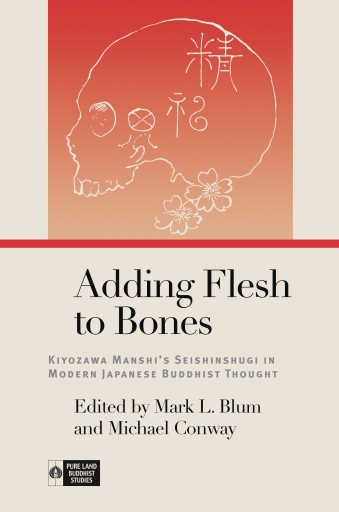
Adding Flesh to Bones
Pubblicato da University of Hawaii Press
English
497 pagine
2022
ISBN 9780824892081
Tempo di lettura stimato: 9 h 7 min
PDF
Buy at Viubux
🇲🇽
 Association of University Presses - Tienda FILUNI
🇺🇸
Visita il negozio →
Association of University Presses - Tienda FILUNI
🇺🇸
Visita il negozio →
 Bajalibros Argentina
🇦🇷
Visita il negozio →
Bajalibros Argentina
🇦🇷
Visita il negozio →
 Bajalibros Latam
🇺🇸
Visita il negozio →
Bajalibros Latam
🇺🇸
Visita il negozio →
 Bookshop Uruguay
🇺🇾
Visita il negozio →
Bookshop Uruguay
🇺🇾
Visita il negozio →
 Catademic
🇺🇸
Visita il negozio →
Catademic
🇺🇸
Visita il negozio →
Disponibile in 13 librerie
Association of University Presses - Tienda FILUNI
🇺🇸
Visita il negozio →
Bajalibros Argentina
🇦🇷
Visita il negozio →
Bajalibros Latam
🇺🇸
Visita il negozio →
Bookshop Uruguay
🇺🇾
Visita il negozio →
Catademic
🇺🇸
Visita il negozio →








Informazioni su questo libro
This collection of seventeen essays situates modern Shin Buddhist thinker Kiyozawa Manshi (1863–1903) and his new form of spirituality, Seishinshugi, in the broader context of Buddhism and religious thought in modern Japan. The work highlights several factors that led to the development of Kiyozawa’s ideas and demonstrates the broad influence that he and his disciples had, putting in relief both the events that led Kiyozawa to set forth his unique formulation of a modern Shin Buddhist religiosity in Seishinshugi and the ways in which those ideas became a force that shaped a large part of Japan’s religious landscape well past the middle of the twentieth century.
The book is made up of historical studies that explore the significance of Seishinshugi from a variety of perspectives and chapters that attempt to introduce some of the original ideas of Seishinshugi thinkers and other modern Shin proponents such as Sasaki Gesshō (1875–1926) and Yasuda Rijin (1900–1982). The inclusion of several translations of recent Japanese scholarship on Kiyozawa and Seishinshugi provides a snapshot of the state of the field for Kiyozawa studies today in Japan.
Several early chapters present issues that Kiyozawa addressed in his formulations of Seishinshugi. His relationship with Inoue Enryō (1858–1919) is discussed in depth, as is his understanding of the Tannishō and new research indicating that Seishinshugi might more closely represent the thought of Kiyozawa’s disciples than his own. This portion ends with a consideration of the reinvention of Kiyozawa’s historical image by his followers after his death. Later chapters bring together research into the specific ways in which Kiyozawa’s legacy shaped the Japanese religious and philosophical environment in the last century, including contributions on female spirituality as expressed in the Seishinshugi movement and the influence of Kiyozawa and Soga Ryōjin (1875–1971) on the Kyoto School and its implications. Other essays highlight approaches to finding meaning in Shin doctrines by Sasaki, Soga, and Yasuda, and how D. T. Suzuki, an Ōtani University colleague, fits into the movement as a whole.
Disponibilità
Adding Flesh to Bones è disponibile come PDF in 13 librerie online. Tra le librerie che lo vendono ci sono Association of University Presses - Tienda FILUNI, Bajalibros Argentina, Bajalibros Latam.
- Lingua
- English
Condividi
Domande frequenti
- In quali formati è disponibile Adding Flesh to Bones?
- Adding Flesh to Bones è disponibile come PDF in 13 librerie online.
- Dove posso comprare Adding Flesh to Bones?
- Puoi comprare Adding Flesh to Bones su Association of University Presses - Tienda FILUNI, Bajalibros Argentina, Bajalibros Latam. Confronta tutte le opzioni nell’elenco di questa pagina.
- Quanto tempo ci vuole per leggere Adding Flesh to Bones?
- A un ritmo di lettura medio, Adding Flesh to Bones si legge in circa 9 h 7 min (497 pagine).
Valutazioni e recensioni
Ancora nessuna valutazione. Sii il primo a recensire questo libro.
Accedi per valutare e recensire questo libro.