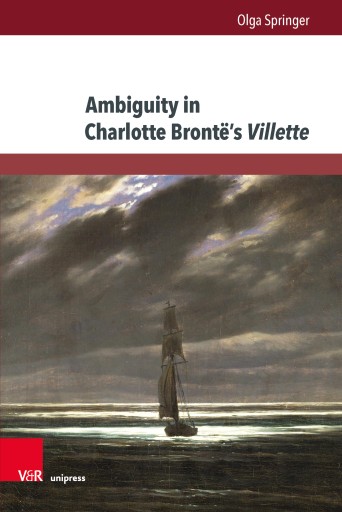
Ambiguity in Charlotte Brontë's Villette
Pubblicato da V&R Unipress
English
285 pagine
2020
ISBN 9783847011194
PDF
Buy at LORANCHBOOKSTORE
🇺🇸
 Catademic
🇺🇸
Visita il negozio →
Catademic
🇺🇸
Visita il negozio →
 Bajalibros Latam
🇺🇸
Visita il negozio →
Bajalibros Latam
🇺🇸
Visita il negozio →
 LORANCHBOOKSTORE
🇺🇸
Visita il negozio →
LORANCHBOOKSTORE
🇺🇸
Visita il negozio →
 Libros Patagonia
🇨🇱
Visita il negozio →
Libros Patagonia
🇨🇱
Visita il negozio →
 Ebooks Librería Carlos Fuentes
🇲🇽
Visita il negozio →
Ebooks Librería Carlos Fuentes
🇲🇽
Visita il negozio →
 Ebooks Librería Antártica
🇨🇱
Visita il negozio →
Ebooks Librería Antártica
🇨🇱
Visita il negozio →
 Ebooks Happy Books
🇨🇴
Visita il negozio →
Ebooks Happy Books
🇨🇴
Visita il negozio →
 ebooks libreria española
🇪🇨
Visita il negozio →
ebooks libreria española
🇪🇨
Visita il negozio →
 Bajalibros Argentina
🇦🇷
Visita il negozio →
Bajalibros Argentina
🇦🇷
Visita il negozio →
 Alpha Books
🇨🇴
Visita il negozio →
Alpha Books
🇨🇴
Visita il negozio →
 Sanborns Ebooks
🇲🇽
Visita il negozio →
Sanborns Ebooks
🇲🇽
Visita il negozio →
 ebooks Libreria del GAM
🇨🇱
Visita il negozio →
ebooks Libreria del GAM
🇨🇱
Visita il negozio →
 Bookshop Uruguay
🇺🇾
Visita il negozio →
Bookshop Uruguay
🇺🇾
Visita il negozio →
 Ebooks Yenny - El Ateneo
🇦🇷
Visita il negozio →
Ebooks Yenny - El Ateneo
🇦🇷
Visita il negozio →
 Crisol Ebooks
🇵🇪
Visita il negozio →
Crisol Ebooks
🇵🇪
Visita il negozio →
Disponibile in 15 librerie
Catademic
🇺🇸
Visita il negozio →
Bajalibros Latam
🇺🇸
Visita il negozio →
LORANCHBOOKSTORE
🇺🇸
Visita il negozio →
Libros Patagonia
🇨🇱
Visita il negozio →
Ebooks Librería Carlos Fuentes
🇲🇽
Visita il negozio →
Ebooks Librería Antártica
🇨🇱
Visita il negozio →
Ebooks Happy Books
🇨🇴
Visita il negozio →
ebooks libreria española
🇪🇨
Visita il negozio →
Bajalibros Argentina
🇦🇷
Visita il negozio →
Alpha Books
🇨🇴
Visita il negozio →
Sanborns Ebooks
🇲🇽
Visita il negozio →
ebooks Libreria del GAM
🇨🇱
Visita il negozio →
Bookshop Uruguay
🇺🇾
Visita il negozio →
Ebooks Yenny - El Ateneo
🇦🇷
Visita il negozio →
Crisol Ebooks
🇵🇪
Visita il negozio →
Informazioni su questo libro
Charlotte Brontë's final novel Villette (1853) is associated with ambiguity because of its open ending: Does M. Paul return to narrator-protagonist Lucy Snowe or is he killed in a storm raging on the Atlantic? Taking its famous ending as a starting point, this study explores Villette as a text in which ambiguity is all-pervasive in various ways. Among these is the narrator's ambivalent attitude toward herself and others, epitomised in her stylistic idiosyncrasies. The links between ambiguity and doubt are explored through an analysis of Lucy's signature phrase, "I know not," expressive of her existential doubts and questioning attitude toward the world. The analysis moreover focuses on the motif of the oracle as a traditionally ambiguous utterance, and explores its relevance in the context of the generic tradition of Villette as a fictional autobiography. Another focus is the interplay of figurative and literal levels of meaning in the allegorical episodes, creating ambiguity.
- Lingua
- English
Condividi