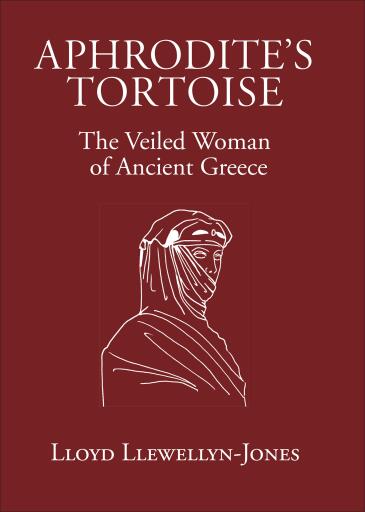
Aphrodite's Tortoise
Pubblicato da The Classical Press of Wales
English
369 pagine
2003
ISBN 9781910589892
Tempo di lettura stimato: 6 h 46 min
PDF
Buy at Alpha Books
🇨🇴
 Bajalibros Argentina
🇦🇷
Visita il negozio →
Bajalibros Argentina
🇦🇷
Visita il negozio →
 Bajalibros Latam
🇺🇸
Visita il negozio →
Bajalibros Latam
🇺🇸
Visita il negozio →
 Bookshop Uruguay
🇺🇾
Visita il negozio →
Bookshop Uruguay
🇺🇾
Visita il negozio →
 Catademic
🇺🇸
Visita il negozio →
Catademic
🇺🇸
Visita il negozio →
Disponibile in 14 librerie
 Bajalibros Argentina
🇦🇷
Visita il negozio →
Bajalibros Latam
🇺🇸
Visita il negozio →
Bookshop Uruguay
🇺🇾
Visita il negozio →
Catademic
🇺🇸
Visita il negozio →
Bajalibros Argentina
🇦🇷
Visita il negozio →
Bajalibros Latam
🇺🇸
Visita il negozio →
Bookshop Uruguay
🇺🇾
Visita il negozio →
Catademic
🇺🇸
Visita il negozio →









Informazioni su questo libro
Greek women routinely wore the veil. That is the unexpected finding of this meticulous study, one with interesting implications for the origins of Western civilisation. The Greeks, popularly (and rightly) credited with the invention of civic openness, are revealed as also part of a more Eastern tradition of seclusion. Llewellyn-Jones' work proceeds from literary and, notably, from iconographic evidence. In sculpture and vase painting it demonstrates the presence of the veil, often covering the head, but also more unobtrusively folded back onto the shoulders. This discreet fashion not only gave a priviledged view of the face to the ancient art consumer, but also, incidentally, allowed the veil to escape the notice of traditional modern scholarship. From Greek literary sources, the author shows that full veiling of the head and face was commonplace. He analyses the elaborate Greek vocabulary for veiling and explores what the veil meant to achieve. He shows that the veil was a conscious extension of the house and was often referred to as `tegidion', literally `a little roof'. Veiling was thus an ingeneous compromise; it allowed women to circulate in public while mainting the ideal of a house-bound existence. Alert to the different types of veil used, the author uses Greek and more modern evidence (mostly from the Arab world) to show how women could exploit and subvert the veil as a means of eloquent, sometimes emotional, communication. First published in 2003 and reissued as a paperback in 2010, Llewellyn-Jones' book has established itself as a central - and inspiring - text for the study of ancient women.
Disponibilità
Aphrodite's Tortoise è disponibile come PDF in 14 librerie online. Tra le librerie che lo vendono ci sono Alpha Books, Bajalibros Argentina, Bajalibros Latam.
Categorie
- Lingua
- English
Condividi
Domande frequenti
- In quali formati è disponibile Aphrodite's Tortoise?
- Aphrodite's Tortoise è disponibile come PDF in 14 librerie online.
- Dove posso comprare Aphrodite's Tortoise?
- Puoi comprare Aphrodite's Tortoise su Alpha Books, Bajalibros Argentina, Bajalibros Latam. Confronta tutte le opzioni nell’elenco di questa pagina.
- Quanto tempo ci vuole per leggere Aphrodite's Tortoise?
- A un ritmo di lettura medio, Aphrodite's Tortoise si legge in circa 6 h 46 min (369 pagine).
Valutazioni e recensioni
Ancora nessuna valutazione. Sii il primo a recensire questo libro.
Accedi per valutare e recensire questo libro.