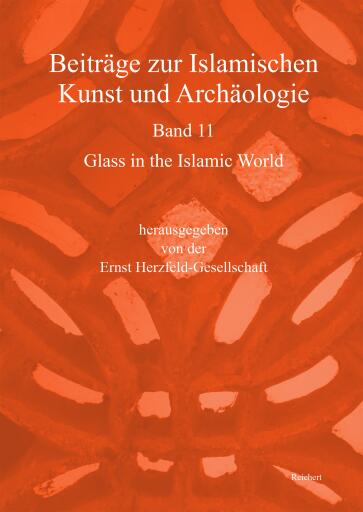
Beiträge zur Islamischen Kunst und Archäologie
Pubblicato da Dr Ludwig Reichert Verlag
English
255 pagine
2026
Tempo di lettura stimato: 4 h 41 min
PDF
Buy at Bookshop Uruguay
🇺🇾
 Bajalibros Argentina
🇦🇷
Visita il negozio →
Bajalibros Argentina
🇦🇷
Visita il negozio →
 Bajalibros Latam
🇺🇸
Visita il negozio →
Bajalibros Latam
🇺🇸
Visita il negozio →
 Crisol Ebooks
🇵🇪
Visita il negozio →
Crisol Ebooks
🇵🇪
Visita il negozio →
 ebooks Libreria del GAM
🇨🇱
Visita il negozio →
ebooks Libreria del GAM
🇨🇱
Visita il negozio →
Disponibile in 8 librerie
Bajalibros Argentina
🇦🇷
Visita il negozio →
Bajalibros Latam
🇺🇸
Visita il negozio →
 Crisol Ebooks
🇵🇪
Visita il negozio →
ebooks Libreria del GAM
🇨🇱
Visita il negozio →
Crisol Ebooks
🇵🇪
Visita il negozio →
ebooks Libreria del GAM
🇨🇱
Visita il negozio →



Informazioni su questo libro
Glass unites apparent opposites – it is at once malleable and solid, transparent and opaque, resilient and fragile. These qualities have long made it an important artistic and functional material. While vessel glass from Islamic regions has already been extensively studied, flat glass in its many forms – whether as window glass, mirrors, or components of mosaics – remained in the shadow of scholarship for a long time. The 19th colloquium of the Ernst Herzfeld Society for Islamic Art and Archaeology, organized jointly by the Swiss Research Center for Stained Glass and Glass Art (Vitrocentre Romont) and the Swiss Asia Society and held in 2024 in Romont (Switzerland), therefore focused specifically on this fascinating yet often underestimated subject: the history, production, and use of glass in the Islamic world, with particular emphasis on flat glass.
The present special issue, 'Glass in the Islamic World,' brings together international experts from art history, archaeology, and the natural sciences, presenting both current research findings and innovative methodological approaches. It fills a gap and opens up new perspectives on a field of study that is as rich as it is complex. The introductory overview by Stefano Carboni, one of the leading experts on Islamic glass, addresses fundamental questions of glass production in Islamic societies: where, when, by whom, how, and why was glass made? The subsequent essays – written by equally distinguished scholars – are organized thematically and range from new approaches to the study of early Islamic glass finds to the role of glass in courtly contexts and issues surrounding the production of everyday and luxury goods. A particular focus lies on coloured light and the artistic design of stucco and glass windows, whose significance is compellingly demonstrated both in Islamic architecture and in its reception in the West. The volume is further complemented by contributions on ongoing research projects, which broaden the perspective beyond the core topic and reflect the dynamism of current scholarly debates.
With a total of fifteen peer-reviewed contributions, this publication offers a well-founded and multifaceted insight into glass research in the Islamic world. It is aimed both at specialists and at readers interested in art and cultural history, inviting them to rediscover a field of study that has so far received little attention but is immensely rewarding.
Disponibilità
Beiträge zur Islamischen Kunst und Archäologie è disponibile come PDF in 8 librerie online. Tra le librerie che lo vendono ci sono Bajalibros Argentina, Bajalibros Latam, Bookshop Uruguay.
- Lingua
- English
Condividi
Domande frequenti
- In quali formati è disponibile Beiträge zur Islamischen Kunst und Archäologie?
- Beiträge zur Islamischen Kunst und Archäologie è disponibile come PDF in 8 librerie online.
- Dove posso comprare Beiträge zur Islamischen Kunst und Archäologie?
- Puoi comprare Beiträge zur Islamischen Kunst und Archäologie su Bajalibros Argentina, Bajalibros Latam, Bookshop Uruguay. Confronta tutte le opzioni nell’elenco di questa pagina.
- Quanto tempo ci vuole per leggere Beiträge zur Islamischen Kunst und Archäologie?
- A un ritmo di lettura medio, Beiträge zur Islamischen Kunst und Archäologie si legge in circa 4 h 41 min (255 pagine).
Valutazioni e recensioni
Ancora nessuna valutazione. Sii il primo a recensire questo libro.
Accedi per valutare e recensire questo libro.