Vai al contenuto principale
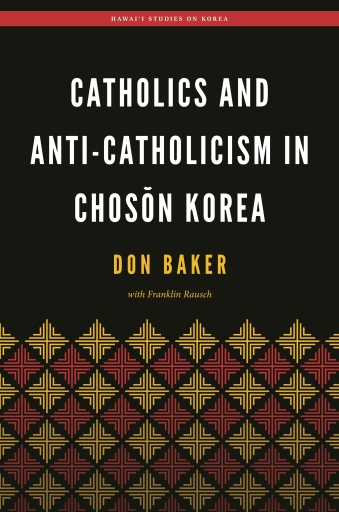
Catholics and Anti-Catholicism in Chosŏn Korea

Catholics and Anti-Catholicism in Chosŏn Korea

Di Baker, Don, Rausch, Franklin

Pubblicato da University of Hawaii Press

English 2017 ISBN 9780824866273
eBook

Informazioni su questo libro

Korea’s first significant encounter with the West occurred in the last quarter of the eighteenth century when a Korean Catholic community emerged on the peninsula. Decades of persecution followed, resulting in the deaths of thousands of Korean Catholics. Don Baker provides an invaluable analysis of late-Chosŏn (1392–1897) thought, politics, and society to help readers understand the response of Confucians to Catholicism and of Korean Catholics to years of violent harassment. His analysis is informed by two remarkable documents expertly translated with the assistance of Franklin Rausch and annotated here for the first time: an anti-Catholic essay written in the 1780s by Confucian scholar Ahn Chŏngbok (1712–1791) and a firsthand account of the 1801 anti-Catholic persecution by one of its last victims, the religious leader Hwang Sayŏng (1775–1801). Confucian assumptions about Catholicism are revealed in Ahn’s essay, Conversation on Catholicism. The work is based on the scholar’s exchanges with his son-in-law, who joined the small group of Catholics in the 1780s. Ahn argues that Catholicism is immoral because it puts more importance on the salvation of one’s soul than on what is best for one’s family or community. Conspicuously absent from his Conversation is the reason behind the conversions of his son-in-law and a few other young Confucian intellectuals. Baker examines numerous Confucian texts of the time to argue that, in the late eighteenth century, Korean Confucians were tormented by a growing concern over human moral frailty. Some among them came to view Catholicism as a way to overcome their moral weakness, become virtuous, and, in the process, gain eternal life. These anxieties are echoed in Hwang’s Silk Letter, in which he details for the bishop in Beijing his persecution and the decade preceding it. He explains why Koreans joined (and some abandoned) the Catholic faith and their devotion to the new religion in the face of torture and execution. Together the two texts reveal much about not only Korean beliefs and values of two centuries ago, but also how Koreans viewed their country and their king as well as China and its culture.

Disponibilità

Catholics and Anti-Catholicism in Chosŏn Korea è disponibile come eBook in 13 librerie online. Tra le librerie che lo vendono ci sono Association of University Presses - Tienda FILUNI, Bajalibros Argentina, Bajalibros Latam.

Lingua
English
Condividi

Domande frequenti

In quali formati è disponibile Catholics and Anti-Catholicism in Chosŏn Korea?
Catholics and Anti-Catholicism in Chosŏn Korea è disponibile come eBook in 13 librerie online.
Dove posso comprare Catholics and Anti-Catholicism in Chosŏn Korea?
Puoi comprare Catholics and Anti-Catholicism in Chosŏn Korea su Association of University Presses - Tienda FILUNI, Bajalibros Argentina, Bajalibros Latam. Confronta tutte le opzioni nell’elenco di questa pagina.

Valutazioni e recensioni

Ancora nessuna valutazione. Sii il primo a recensire questo libro.

Accedi per valutare e recensire questo libro.
Commenti

Accedi per unirti alla conversazione.

Ancora nessun commento.