Vai al contenuto principale
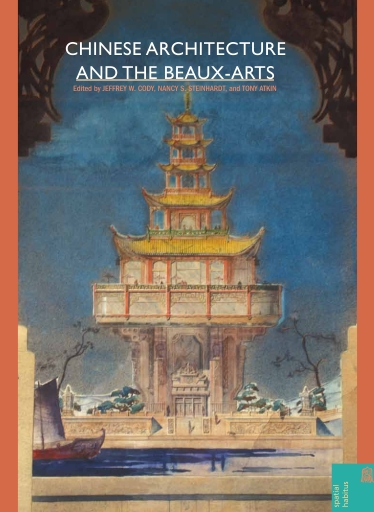
Chinese Architecture  and the Beaux-Arts

Chinese Architecture and the Beaux-Arts

Di Cody, Jeffrey W., Steinhardt, Nancy Shatzman, Atkin, Tony

Pubblicato da University of Hawaii Press

English 410 pagine 2011 ISBN 9780824861018
Tempo di lettura stimato: 7 h 31 min
PDF

Informazioni su questo libro

In the early twentieth century, Chinese traditional architecture and the French-derived methods of the École des Beaux-Arts converged in the United States when Chinese students were given scholarships to train as architects at American universities whose design curricula were dominated by Beaux-Arts methods. Upon their return home in the 1920s and 1930s, these graduates began to practice architecture and create China’s first architectural schools, often transferring a version of what they had learned in the U.S. to Chinese situations. The resulting complex series of design-related transplantations had major implications for China between 1911 and 1949, as it simultaneously underwent cataclysmic social, economic, and political changes. After 1949 and the founding of the People’s Republic, China experienced a radically different wave of influence from the Beaux-Arts through advisors from the Soviet Union who, first under Stalin and later Khrushchev, brought Beaux-Arts ideals in the guise of socialist progress. In the early twenty-first century, China is still feeling the effects of these events. Chinese Architecture and the Beaux-Arts examines the coalescing of the two major architectural systems, placing significant shifts in architectural theory and practice in China within relevant, contemporary, cultural, and educational contexts. Fifteen major scholars from around the world analyze and synthesize these crucial events to shed light on the dramatic architectural and urban changes occurring in China today—many of which have global ramifications. This stimulating and generously illustrated work is divided into three sections, framed by an introduction and a postscript. The first focuses on the convergence of Chinese architecture and the École des Beaux-Arts, outlining the salient aspects of each and suggesting how and why the two "met" in the U.S. The second section centers on the question of how Chinese architects were influenced by the Beaux-Arts and how Chinese architecture was changed as a result. The third takes an even closer look at the Beaux-Arts influence, addressing how innovative practices, new schools of architecture, and buildings whose designs were linked to Beaux-Arts assumptions led to distinctive new paradigms that were rooted in a changing China. By virtue of its scope, scale, and scholarship, this volume promises to become a classic in the fields of Chinese and Western architectural history. Contributors: Tony Atkin, Peter J. Carroll, Yung Ho Chang,Jeffrey W. Cody, Kerry Sizheng Fan, Fu Chao-Ching, Gu Daqing, Seng Kuan,Delin Lai, Xing Ruan, Joseph Rykwert, Nancy S. Steinhardt, David VanZanten, Rudolf Wagner, Zhang Jie, Zhao Chen.

Disponibilità

Chinese Architecture and the Beaux-Arts è disponibile come PDF in 13 librerie online. Tra le librerie che lo vendono ci sono Association of University Presses - Tienda FILUNI, Bajalibros Argentina, Bajalibros Latam.

Lingua
English
Condividi

Domande frequenti

In quali formati è disponibile Chinese Architecture and the Beaux-Arts?
Chinese Architecture and the Beaux-Arts è disponibile come PDF in 13 librerie online.
Dove posso comprare Chinese Architecture and the Beaux-Arts?
Puoi comprare Chinese Architecture and the Beaux-Arts su Association of University Presses - Tienda FILUNI, Bajalibros Argentina, Bajalibros Latam. Confronta tutte le opzioni nell’elenco di questa pagina.
Quanto tempo ci vuole per leggere Chinese Architecture and the Beaux-Arts?
A un ritmo di lettura medio, Chinese Architecture and the Beaux-Arts si legge in circa 7 h 31 min (410 pagine).

Valutazioni e recensioni

Ancora nessuna valutazione. Sii il primo a recensire questo libro.

Accedi per valutare e recensire questo libro.

Commenti

Accedi per unirti alla conversazione.

Ancora nessun commento.