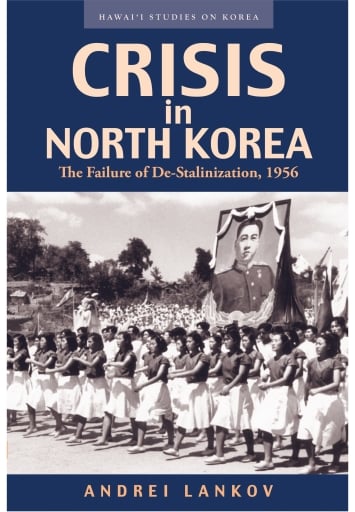
Crisis in North Korea
Pubblicato da University of Hawaii Press
English
297 pagine
2007
ISBN 9780824862039
Tempo di lettura stimato: 5 h 27 min
PDF
Buy at Catademic
🇺🇸
 Association of University Presses - Tienda FILUNI
🇺🇸
Visita il negozio →
Association of University Presses - Tienda FILUNI
🇺🇸
Visita il negozio →
 Bajalibros Argentina
🇦🇷
Visita il negozio →
Bajalibros Argentina
🇦🇷
Visita il negozio →
 Bajalibros Latam
🇺🇸
Visita il negozio →
Bajalibros Latam
🇺🇸
Visita il negozio →
 Bookshop Uruguay
🇺🇾
Visita il negozio →
Bookshop Uruguay
🇺🇾
Visita il negozio →
Disponibile in 13 librerie
Association of University Presses - Tienda FILUNI
🇺🇸
Visita il negozio →
Bajalibros Argentina
🇦🇷
Visita il negozio →
Bajalibros Latam
🇺🇸
Visita il negozio →
Bookshop Uruguay
🇺🇾
Visita il negozio →









Informazioni su questo libro
North Korea remains the most mysterious of all Communist countries. The acute shortage of available sources has made it a difficult subject of scholarship. Through his access to Soviet archival material made available only a decade ago, contemporary North Korean press accounts, and personal interviews, Andrei Lankov presents for the first time a detailed look at one of the turning points in North Korean history: the country’s unsuccessful attempts to de-Stalinize in the mid-1950s. He demonstrates that, contrary to common perception, North Korea was not a realm of undisturbed Stalinism; Kim Il Sung had to deal with a reformist opposition that was weak but present nevertheless.
Lankov traces the impact of Soviet reforms on North Korea, placing them in the context of contemporaneous political crises in Poland and Hungary. He documents the dissent among various social groups (intellectuals, students, party cadres) and their attempts to oust Kim in the unsuccessful "August plot" of 1956. His reconstruction of the Peng-Mikoyan visit of that year—the most dramatic Sino-Soviet intervention into Pyongyang politics—shows how it helped bring an end to purges of the opposition. The purges, however, resumed in less than a year as Kim skillfully began to distance himself from both Moscow and Beijing. The final chapters of this fascinating and revealing study deal with events of the late 1950s that eventually led to Kim’s version of "national Stalinism." Lankov unearths data that, for the first time, allows us to estimate the scale and character of North Korea’s Great Purge.
Meticulously researched and cogently argued, Crisis in North Korea is a must-read for students and scholars of Korea and anyone interested in political leadership and personality cults, regime transition, and communist politics.
Disponibilità
Crisis in North Korea è disponibile come PDF in 13 librerie online. Tra le librerie che lo vendono ci sono Association of University Presses - Tienda FILUNI, Bajalibros Argentina, Bajalibros Latam.
Categorie
- Lingua
- English
Condividi
Domande frequenti
- In quali formati è disponibile Crisis in North Korea?
- Crisis in North Korea è disponibile come PDF in 13 librerie online.
- Dove posso comprare Crisis in North Korea?
- Puoi comprare Crisis in North Korea su Association of University Presses - Tienda FILUNI, Bajalibros Argentina, Bajalibros Latam. Confronta tutte le opzioni nell’elenco di questa pagina.
- Quanto tempo ci vuole per leggere Crisis in North Korea?
- A un ritmo di lettura medio, Crisis in North Korea si legge in circa 5 h 27 min (297 pagine).
Valutazioni e recensioni
Ancora nessuna valutazione. Sii il primo a recensire questo libro.
Accedi per valutare e recensire questo libro.