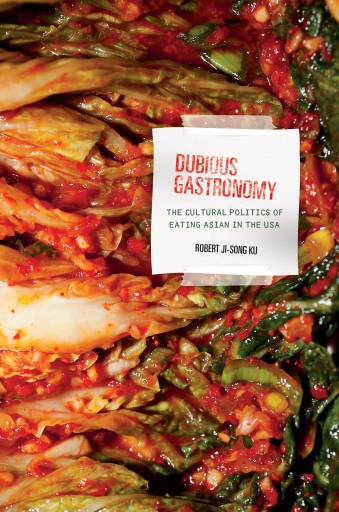
Dubious Gastronomy
Pubblicato da University of Hawaii Press
English
306 pagine
2013
ISBN 9780824839208
Tempo di lettura stimato: 5 h 37 min
PDF
Buy at Catademic
🇺🇸
 Association of University Presses - Tienda FILUNI
🇺🇸
Visita il negozio →
Association of University Presses - Tienda FILUNI
🇺🇸
Visita il negozio →
 Bajalibros Argentina
🇦🇷
Visita il negozio →
Bajalibros Argentina
🇦🇷
Visita il negozio →
 Bajalibros Latam
🇺🇸
Visita il negozio →
Bajalibros Latam
🇺🇸
Visita il negozio →
 Bookshop Uruguay
🇺🇾
Visita il negozio →
Bookshop Uruguay
🇺🇾
Visita il negozio →
Disponibile in 13 librerie
Association of University Presses - Tienda FILUNI
🇺🇸
Visita il negozio →
Bajalibros Argentina
🇦🇷
Visita il negozio →
Bajalibros Latam
🇺🇸
Visita il negozio →
Bookshop Uruguay
🇺🇾
Visita il negozio →









Informazioni su questo libro
California roll, Chinese take-out, American-made kimchi, dogmeat, monosodium glutamate, SPAM—all are examples of what Robert Ji-Song Ku calls “dubious” foods. Strongly associated with Asian and Asian American gastronomy, they are commonly understood as ersatz, depraved, or simply bad. In Dubious Gastronomy, Ku contends that these foods share a spiritual fellowship with Asians in the United States in that the Asian presence, be it culinary or corporeal, is often considered watered-down, counterfeit, or debased manifestations of the “real thing.” The American expression of Asianness is defined as doubly inauthentic—as insufficiently Asian and unreliably American when measured against a largely ideological if not entirely political standard of authentic Asia and America. By exploring the other side of what is prescriptively understood as proper Asian gastronomy, Ku suggests that Asian cultural expressions occurring in places such as Los Angeles, Honolulu, New York City, and even Baton Rouge are no less critical to understanding the meaning of Asian food—and, by extension, Asian people—than culinary expressions that took place in Tokyo, Seoul, and Shanghai centuries ago. In critically considering the impure and hybridized with serious and often whimsical intent, Dubious Gastronomy argues that while the notion of cultural authenticity is troubled, troubling, and troublesome, the apocryphal is not necessarily a bad thing: The dubious can be and is often quite delicious.
Dubious Gastronomy overlaps a number of disciplines, including American and Asian American studies, Asian diasporic studies, literary and cultural studies, and the burgeoning field of food studies. More importantly, however, the book fulfills the critical task of amalgamating these areas and putting them in conversation with one another. Written in an engaging and fluid style, it promises to appeal a wide audience of readers who seriously enjoys eating—and reading and thinking about—food.
Disponibilità
Dubious Gastronomy è disponibile come PDF in 13 librerie online. Tra le librerie che lo vendono ci sono Association of University Presses - Tienda FILUNI, Bajalibros Argentina, Bajalibros Latam.
- Lingua
- English
Condividi
Domande frequenti
- In quali formati è disponibile Dubious Gastronomy?
- Dubious Gastronomy è disponibile come PDF in 13 librerie online.
- Dove posso comprare Dubious Gastronomy?
- Puoi comprare Dubious Gastronomy su Association of University Presses - Tienda FILUNI, Bajalibros Argentina, Bajalibros Latam. Confronta tutte le opzioni nell’elenco di questa pagina.
- Quanto tempo ci vuole per leggere Dubious Gastronomy?
- A un ritmo di lettura medio, Dubious Gastronomy si legge in circa 5 h 37 min (306 pagine).
Valutazioni e recensioni
Ancora nessuna valutazione. Sii il primo a recensire questo libro.
Accedi per valutare e recensire questo libro.