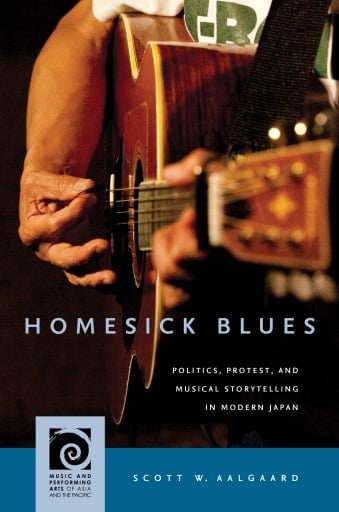
Homesick Blues
Pubblicato da University of Hawaii Press
English
2023
ISBN 9780824896652
eBook
Buy at Bajalibros Latam
🇺🇸
 Association of University Presses - Tienda FILUNI
🇺🇸
Visita il negozio →
Association of University Presses - Tienda FILUNI
🇺🇸
Visita il negozio →
 Bajalibros Argentina
🇦🇷
Visita il negozio →
Bajalibros Argentina
🇦🇷
Visita il negozio →
 Bookshop Uruguay
🇺🇾
Visita il negozio →
Bookshop Uruguay
🇺🇾
Visita il negozio →
 Catademic
🇺🇸
Visita il negozio →
Catademic
🇺🇸
Visita il negozio →
Disponibile in 13 librerie
Association of University Presses - Tienda FILUNI
🇺🇸
Visita il negozio →
Bajalibros Argentina
🇦🇷
Visita il negozio →
 Bookshop Uruguay
🇺🇾
Visita il negozio →
Catademic
🇺🇸
Visita il negozio →
Bookshop Uruguay
🇺🇾
Visita il negozio →
Catademic
🇺🇸
Visita il negozio →








Informazioni su questo libro
Homesick Blues explores how artists, fans, amateur practitioners, and others have used music to tell stories of everyday life in Japan from the late 1940s to 2018, a practice that author Scott Aalgaard calls “musical storytelling.” At its core, musical storytelling is a political practice, presenting world-producing potentials as social actors generate and share stories of themselves and others in ways that intersect with and inform social and political life. Sometimes, musical storytelling is used by powerful entities to reinforce dominant geopolitical, cultural, or economic visions. More often, it is deployed as a means of interfering in or redirecting those visions. In all cases, attending to musical storytelling helps reveal the complex and unexpected ways that everyday life has been imagined and critiqued across disparate moments in modern Japanese history. Aalgaard pushes beyond the upheavals of the 1960s and early 1970s, challenging well-established characterizations of these years as fleeting moments when critical politics in Japan reached an apex, and an end. Instead, he asserts that musical storytelling is robust and ongoing, and proposes more nuanced and comprehensive understandings of critical political and cultural engagement in modern Japan.
Homesick Blues is comprised of five chapters, each of which addresses specific instances of musical storytelling in the contexts of their own political, economic, and social histories. From postwar jazz to contemporary rock, from 1960s “anti-war folk” to Japanese pops (enka) and the “girls’ rock” of the 1980s, the book explores the political uses of music, reassesses “protest music,” and grapples with the complex political-ness of artists, many of whom have continued to interrogate conditions of everyday life well into the contemporary moment. Homesick Blues assembles a diverse ensemble of voices, some of whom appear in English-language scholarship for the first time, including industry stakeholders, rock stars, fans, newscasters, Kyoto-based folk singers, jazz singers, karaoke enthusiasts, and even US military personnel. An equally diverse selection of scholarship and methodology, from ethnomusicology to literary studies, from philosophy to history, creates a richly interdisciplinary and accessible analysis of musical modes of politics.
Disponibilità
Homesick Blues è disponibile come eBook in 13 librerie online. Tra le librerie che lo vendono ci sono Association of University Presses - Tienda FILUNI, Bajalibros Argentina, Bajalibros Latam.
Categorie
- Lingua
- English
Condividi
Domande frequenti
- In quali formati è disponibile Homesick Blues?
- Homesick Blues è disponibile come eBook in 13 librerie online.
- Dove posso comprare Homesick Blues?
- Puoi comprare Homesick Blues su Association of University Presses - Tienda FILUNI, Bajalibros Argentina, Bajalibros Latam. Confronta tutte le opzioni nell’elenco di questa pagina.
Valutazioni e recensioni
Ancora nessuna valutazione. Sii il primo a recensire questo libro.
Accedi per valutare e recensire questo libro.