Vai al contenuto principale
Judging Inequality

Judging Inequality

Di Nelson, Michael J., Gibson, James L.

Pubblicato da Russell Sage Foundation

English 2021 ISBN 9781610449076
eBook

Informazioni su questo libro

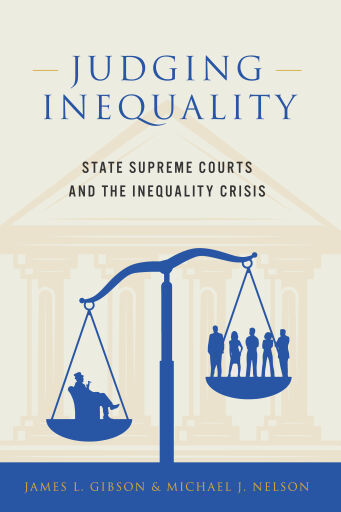
Social scientists have convincingly documented soaring levels of political, legal, economic, and social inequality in the United States. Missing from this picture of rampant inequality, however, is any attention to the significant role of state law and courts in establishing policies that either ameliorate or exacerbate inequality. In Judging Inequality, political scientists James L. Gibson and Michael J. Nelson demonstrate the influential role of the fifty state supreme courts in shaping the widespread inequalities that define America today, focusing on court-made public policy on issues ranging from educational equity and adequacy to LGBT rights to access to justice to worker’s rights.    Drawing on an analysis of an original database of nearly 6,000 decisions made by over 900 judges on 50 state supreme courts over a quarter century, Judging Inequality documents two ways that state high courts have crafted policies relevant to inequality: through substantive policy decisions that fail to advance equality and by rulings favoring more privileged litigants (typically known as “upperdogs”). The authors discover that whether court-sanctioned policies lead to greater or lesser inequality depends on the ideologies of the justices serving on these high benches, the policy preferences of their constituents (the people of their state), and the institutional structures that determine who becomes a judge as well as who decides whether those individuals remain in office.    Gibson and Nelson decisively reject the conventional theory that state supreme courts tend to protect underdog litigants from the wrath of majorities. Instead, the authors demonstrate that the ideological compositions of state supreme courts most often mirror the dominant political coalition in their state at a given point in time. As a result, state supreme courts are unlikely to stand as an independent force against the rise of inequality in the United States, instead making decisions compatible with the preferences of political elites already in power. At least at the state high court level, the myth of judicial independence truly is a myth.    Judging Inequality offers a comprehensive examination of the powerful role that state supreme courts play in shaping public policies pertinent to inequality. This volume is a landmark contribution to scholarly work on the intersection of American jurisprudence and inequality, one that essentially rewrites the “conventional wisdom” on the role of courts in America’s democracy.   

Disponibilità

Judging Inequality è disponibile come eBook in 13 librerie online. Tra le librerie che lo vendono ci sono Association of University Presses - Tienda FILUNI, Bajalibros Argentina, Bajalibros Latam.

Lingua
English
Condividi

Domande frequenti

In quali formati è disponibile Judging Inequality?
Judging Inequality è disponibile come eBook in 13 librerie online.
Dove posso comprare Judging Inequality?
Puoi comprare Judging Inequality su Association of University Presses - Tienda FILUNI, Bajalibros Argentina, Bajalibros Latam. Confronta tutte le opzioni nell’elenco di questa pagina.

Valutazioni e recensioni

Ancora nessuna valutazione. Sii il primo a recensire questo libro.

Accedi per valutare e recensire questo libro.

Commenti

Accedi per unirti alla conversazione.

Ancora nessun commento.