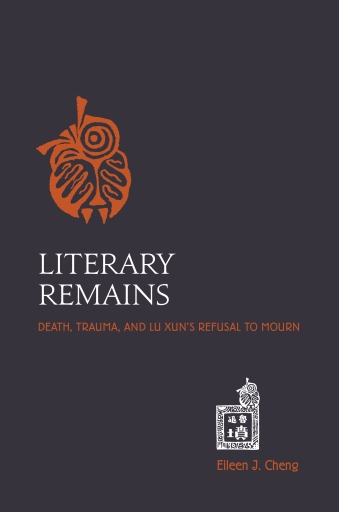
Literary Remains
Pubblicato da University of Hawaii Press
English
330 pagine
2013
ISBN 9780824837808
Tempo di lettura stimato: 6 h 3 min
PDF
Buy at Ebooks Agustin
🇪🇸
 Association of University Presses - Tienda FILUNI
🇺🇸
Visita il negozio →
Association of University Presses - Tienda FILUNI
🇺🇸
Visita il negozio →
 Bajalibros Argentina
🇦🇷
Visita il negozio →
Bajalibros Argentina
🇦🇷
Visita il negozio →
 Bajalibros Latam
🇺🇸
Visita il negozio →
Bajalibros Latam
🇺🇸
Visita il negozio →
 Bookshop Uruguay
🇺🇾
Visita il negozio →
Bookshop Uruguay
🇺🇾
Visita il negozio →
 Catademic
🇺🇸
Visita il negozio →
Catademic
🇺🇸
Visita il negozio →
Disponibile in 13 librerie
Association of University Presses - Tienda FILUNI
🇺🇸
Visita il negozio →
Bajalibros Argentina
🇦🇷
Visita il negozio →
Bajalibros Latam
🇺🇸
Visita il negozio →
Bookshop Uruguay
🇺🇾
Visita il negozio →
Catademic
🇺🇸
Visita il negozio →








Informazioni su questo libro
Lu Xun (1881–1936), arguably twentieth-century China’s greatest writer, is commonly cast in the mold of a radical iconoclast who vehemently rejected traditional culture. The contradictions and ambivalence so central to his writings, however, are often overlooked. Challenging conventional depictions, Eileen J. Cheng’s innovative readings capture Lu Xun’s disenchantment with modernity and his transformative engagements with traditional literary conventions in his “modern” experimental works. Lurking behind the ambiguity at the heart of his writings are larger questions on the effects of cultural exchange, accommodation, and transformation that Lu Xun grappled with as a writer: How can a culture estranged from its vanishing traditions come to terms with its past? How can a culture, severed from its roots and alienated from the foreign conventions it appropriates, conceptualize its own present and future?
Literary Remains shows how Lu Xun’s own literary encounter with the modern involved a sustained engagement with the past. His creative writings—which imitate, adapt, and parody traditional literary conventions—represent and mirror the trauma of cultural disintegration, in content and in form. His contradictory, uncertain, and at times bizarrely incoherent narratives refuse to conform to conventional modes of meaning making or teleological notions of history, opening up imaginative possibilities for comprehending the past and present without necessarily reifying them.
Behind Lu Xun’s “refusal to mourn,” that is, his insistence on keeping the past and the dead alive in writing, lies an ethical claim: to recover the redemptive meaning of loss. Like a solitary wanderer keeping vigil at the site of destruction, he sifts through the debris, composing epitaphs to mark both the presence and absence of that which has gone before and will soon come to pass. For in the rubble of what remains, he recovered precious gems of illumination through which to assess, critique, and transform the moment of the present. Literary Remains shows how Lu Xun’s literary enterprise is driven by a “radical hope”—that, in spite of the destruction he witnessed and the limits of representation, his writings, like the texts that inspired his own, might somehow capture glimmers of the past and the present, and illuminate a future yet to unfold.
Literary Remains will appeal to a wide audience of students and scholars interested in Lu Xun, modern China, cultural studies, and world literature.
Disponibilità
Literary Remains è disponibile come PDF in 13 librerie online. Tra le librerie che lo vendono ci sono Association of University Presses - Tienda FILUNI, Bajalibros Argentina, Bajalibros Latam.
Categorie
- Lingua
- English
Condividi
Domande frequenti
- In quali formati è disponibile Literary Remains?
- Literary Remains è disponibile come PDF in 13 librerie online.
- Dove posso comprare Literary Remains?
- Puoi comprare Literary Remains su Association of University Presses - Tienda FILUNI, Bajalibros Argentina, Bajalibros Latam. Confronta tutte le opzioni nell’elenco di questa pagina.
- Quanto tempo ci vuole per leggere Literary Remains?
- A un ritmo di lettura medio, Literary Remains si legge in circa 6 h 3 min (330 pagine).
Valutazioni e recensioni
Ancora nessuna valutazione. Sii il primo a recensire questo libro.
Accedi per valutare e recensire questo libro.