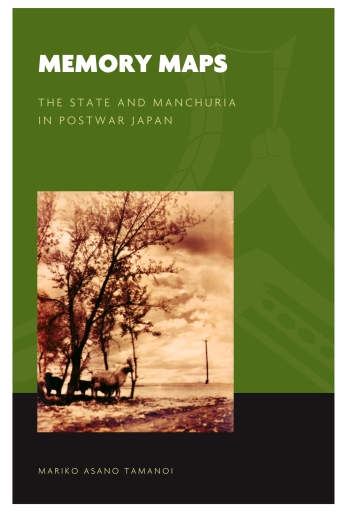
Memory Maps
Pubblicato da University of Hawaii Press
English
225 pagine
2008
ISBN 9780824863593
Tempo di lettura stimato: 4 h 8 min
PDF
Buy at Viubux
🇲🇽
 Association of University Presses - Tienda FILUNI
🇺🇸
Visita il negozio →
Association of University Presses - Tienda FILUNI
🇺🇸
Visita il negozio →
 Bajalibros Argentina
🇦🇷
Visita il negozio →
Bajalibros Argentina
🇦🇷
Visita il negozio →
 Bajalibros Latam
🇺🇸
Visita il negozio →
Bajalibros Latam
🇺🇸
Visita il negozio →
 Bookshop Uruguay
🇺🇾
Visita il negozio →
Bookshop Uruguay
🇺🇾
Visita il negozio →
 Catademic
🇺🇸
Visita il negozio →
Catademic
🇺🇸
Visita il negozio →
Disponibile in 13 librerie
Association of University Presses - Tienda FILUNI
🇺🇸
Visita il negozio →
Bajalibros Argentina
🇦🇷
Visita il negozio →
Bajalibros Latam
🇺🇸
Visita il negozio →
Bookshop Uruguay
🇺🇾
Visita il negozio →
Catademic
🇺🇸
Visita il negozio →








Informazioni su questo libro
Between 1932 and 1945, more than 320,000 Japanese emigrated to Manchuria in northeast China with the dream of becoming land-owning farmers. Following the Soviet invasion of Manchuria and Japan’s surrender in August 1945, their dream turned into a nightmare. Since the late 1980s, popular Japanese conceptions have overlooked the disastrous impact of colonization and resurrected the utopian justification for creating Manchukuo, as the puppet state was known. This re-remembering, Mariko Tamanoi argues, constitutes a source of friction between China and Japan today. Memory Maps tells the compelling story of both the promise of a utopia and the tragic aftermath of its failure. An anthropologist, Tamanoi approaches her investigation of Manchuria’s colonization and collapse as a complex "history of the present," which in postcolonial studies refers to the examination of popular memory of past colonial relations of power. To mitigate this complexity, she has created four "memory maps" that draw on the recollections of former Japanese settlers, their children who were left in China and later repatriated, and Chinese who lived under Japanese rule in Manchuria.
The first map presents the oral histories of farmers who emigrated from Nagano, Japan, to Manchuria between 1932 and 1945 and returned home after the war. Interviewees were asked to remember the colonization of Manchuria during Japan’s age of empire. Hikiage-mono (autobiographies) make up the second map. These are written memories of repatriation from the Soviet invasion to some time between 1946 and 1949. The third memory map is entitled "Orphans’ Voices." It examines the oral and written memories of the children of Japanese settlers who were left behind at the war’s end but returned to Japan after relations between China and Japan were normalized in 1972. The memories of Chinese who lived the age of empire in Manchuria make up the fourth map. This map also includes the memories of Chinese couples who adopted the abandoned children of Japanese settlers as well as the children themselves, who renounced their Japanese nationality and chose to remain in China. In the final chapter, Tamanoi considers theoretical questions of "the state" and the relationship between place, voice, and nostalgia. She also attempts to integrate the four memory maps in the transnational space covering Japan and China.
Both fastidious in dealing with theoretical questions and engagingly written, Memory Maps contributes not only to the empirical study of the Japanese empire and its effects on the daily lives of Japanese and Chinese, but also to postcolonial theory as it applies to the use of memory.
Disponibilità
Memory Maps è disponibile come PDF in 13 librerie online. Tra le librerie che lo vendono ci sono Association of University Presses - Tienda FILUNI, Bajalibros Argentina, Bajalibros Latam.
Categorie
- Lingua
- English
Condividi
Domande frequenti
- In quali formati è disponibile Memory Maps?
- Memory Maps è disponibile come PDF in 13 librerie online.
- Dove posso comprare Memory Maps?
- Puoi comprare Memory Maps su Association of University Presses - Tienda FILUNI, Bajalibros Argentina, Bajalibros Latam. Confronta tutte le opzioni nell’elenco di questa pagina.
- Quanto tempo ci vuole per leggere Memory Maps?
- A un ritmo di lettura medio, Memory Maps si legge in circa 4 h 8 min (225 pagine).
Valutazioni e recensioni
Ancora nessuna valutazione. Sii il primo a recensire questo libro.
Accedi per valutare e recensire questo libro.