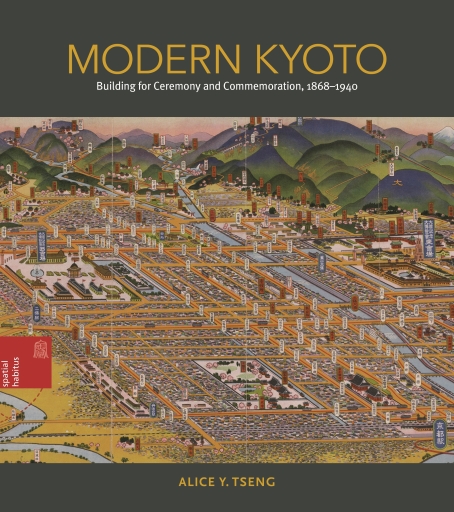
Modern Kyoto
Pubblicato da University of Hawaii Press
English
290 pagine
2018
ISBN 9780824876449
Tempo di lettura stimato: 5 h 19 min
PDF
Buy at Crisol Ebooks
🇵🇪
 Association of University Presses - Tienda FILUNI
🇺🇸
Visita il negozio →
Association of University Presses - Tienda FILUNI
🇺🇸
Visita il negozio →
 Bajalibros Argentina
🇦🇷
Visita il negozio →
Bajalibros Argentina
🇦🇷
Visita il negozio →
 Bajalibros Latam
🇺🇸
Visita il negozio →
Bajalibros Latam
🇺🇸
Visita il negozio →
 Bookshop Uruguay
🇺🇾
Visita il negozio →
Bookshop Uruguay
🇺🇾
Visita il negozio →
 Catademic
🇺🇸
Visita il negozio →
Catademic
🇺🇸
Visita il negozio →
Disponibile in 13 librerie
Association of University Presses - Tienda FILUNI
🇺🇸
Visita il negozio →
Bajalibros Argentina
🇦🇷
Visita il negozio →
Bajalibros Latam
🇺🇸
Visita il negozio →
Bookshop Uruguay
🇺🇾
Visita il negozio →
Catademic
🇺🇸
Visita il negozio →








Informazioni su questo libro
Can an imperial city survive, let alone thrive, without an emperor? Alice Y. Tseng answers this intriguing question in Modern Kyoto, a comprehensive study of the architectural and urban projects carried out in the old capital following Emperor Meiji’s move to Tokyo in 1868. Tseng contends that Kyoto—from the time of the relocation to the height of the Asia-Pacific War—remained critical to Japan’s emperor-centered national agenda as politicians, planners, historians, and architects mobilized the city’s historical connection to the imperial house to develop new public architecture, infrastructure, and urban spaces. Royal births, weddings, enthronements, and funerals throughout the period served as catalysts for fashioning a monumental modern city fit for hosting commemorative events for an eager domestic and international audience.
Using a wide range of visual material (including architectural plans, postcards, commercial maps, and guidebooks), Tseng traces the development of four core areas of Kyoto: the palaces in the center, the Okazaki Park area in the east, the Kyoto Station area in the south, and the Kitayama district in the north. She offers an unprecedented framework that correlates nation building, civic boosterism, and emperor reverence to explore a diverse body of built works. Interlinking microhistories of the Imperial Garden, Heian Shrine, Lake Biwa Canal, the prefectural library, zoological and botanical gardens, main railway station, and municipal art museum, among others, her work asserts Kyoto’s vital position as a multifaceted center of culture and patriotism in the expanding Japanese empire.
Richly illustrated with many never-before-published photographs and archival sources, Modern Kyoto challenges readers to look beyond Tokyo for signposts of Japan’s urban modernity and opens up the study of modern emperors to incorporate fully built environments and spatial practices dedicated in their name.
Disponibilità
Modern Kyoto è disponibile come PDF in 13 librerie online. Tra le librerie che lo vendono ci sono Association of University Presses - Tienda FILUNI, Bajalibros Argentina, Bajalibros Latam.
Categorie
- Lingua
- English
Condividi
Domande frequenti
- In quali formati è disponibile Modern Kyoto?
- Modern Kyoto è disponibile come PDF in 13 librerie online.
- Dove posso comprare Modern Kyoto?
- Puoi comprare Modern Kyoto su Association of University Presses - Tienda FILUNI, Bajalibros Argentina, Bajalibros Latam. Confronta tutte le opzioni nell’elenco di questa pagina.
- Quanto tempo ci vuole per leggere Modern Kyoto?
- A un ritmo di lettura medio, Modern Kyoto si legge in circa 5 h 19 min (290 pagine).
Valutazioni e recensioni
Ancora nessuna valutazione. Sii il primo a recensire questo libro.
Accedi per valutare e recensire questo libro.