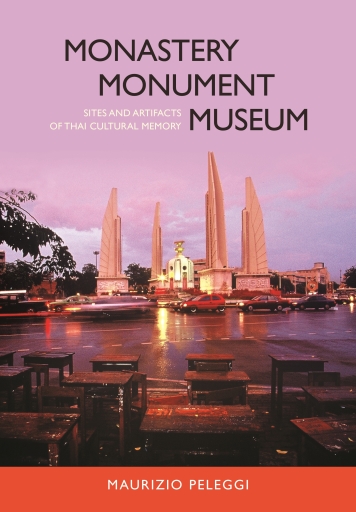
Monastery, Monument, Museum
Pubblicato da University of Hawaii Press
English
289 pagine
2017
ISBN 9780824866099
Tempo di lettura stimato: 5 h 18 min
PDF
Buy at Sanborns Ebooks
🇲🇽
 Association of University Presses - Tienda FILUNI
🇺🇸
Visita il negozio →
Association of University Presses - Tienda FILUNI
🇺🇸
Visita il negozio →
 Bajalibros Argentina
🇦🇷
Visita il negozio →
Bajalibros Argentina
🇦🇷
Visita il negozio →
 Bajalibros Latam
🇺🇸
Visita il negozio →
Bajalibros Latam
🇺🇸
Visita il negozio →
 Bookshop Uruguay
🇺🇾
Visita il negozio →
Bookshop Uruguay
🇺🇾
Visita il negozio →
 Catademic
🇺🇸
Visita il negozio →
Catademic
🇺🇸
Visita il negozio →
Disponibile in 13 librerie
Association of University Presses - Tienda FILUNI
🇺🇸
Visita il negozio →
Bajalibros Argentina
🇦🇷
Visita il negozio →
Bajalibros Latam
🇺🇸
Visita il negozio →
Bookshop Uruguay
🇺🇾
Visita il negozio →
Catademic
🇺🇸
Visita il negozio →








Informazioni su questo libro
Ranging across the longue durée of Thailand’s history, Monastery, Monument, Museum is an eminently readable and original contribution to the study of the kingdom’s art and culture. Eschewing issues of dating, style, and iconography, historian Maurizio Peleggi addresses distinct types of artifacts and artworks as both the products and vehicles of cultural memory. From the temples of Chiangmai to the Emerald Buddha, from the National Museum of Bangkok to the prehistoric culture of Northeast Thailand, and from the civic monuments of the 1930s to the political artworks of the late twentieth century, even well-known artworks and monuments reveal new meanings when approached from this perspective.
Part I, “Sacred Geographies,” focuses on the premodern era, when religious credence informed the cultural alteration of landscape, and devotional sites and artifacts, including visual representation of the Buddhist cosmology, were created. Part II, “Antiquities, Museums, and National History,” covers the 1830s through the 1970s, when antiquarianism, and eventually archaeology, emerged and developed in the kingdom, partly the result of a shift in the elites’ worldview and partly a response to colonial and neocolonial projects of knowledge. Part III, “Discordant Mnemoscapes,” deals with civic monuments and artworks that anchor memory of twentieth-century political events and provide stages for both their commemoration and counter-commemoration by evoking the country’s embattled political present.
Monastery, Monument, Museum shows us how cultural memory represents a kind of palimpsest, the result of multiple inscriptions, reworkings, and manipulations over time. The book will be a rewarding read for historians, art historians, anthropologists, and Buddhism scholars working on Thailand and Southeast Asia generally, as well as for academic and general readers with an interest in memory and material culture.
Disponibilità
Monastery, Monument, Museum è disponibile come PDF in 13 librerie online. Tra le librerie che lo vendono ci sono Association of University Presses - Tienda FILUNI, Bajalibros Argentina, Bajalibros Latam.
- Lingua
- English
Condividi
Domande frequenti
- In quali formati è disponibile Monastery, Monument, Museum?
- Monastery, Monument, Museum è disponibile come PDF in 13 librerie online.
- Dove posso comprare Monastery, Monument, Museum?
- Puoi comprare Monastery, Monument, Museum su Association of University Presses - Tienda FILUNI, Bajalibros Argentina, Bajalibros Latam. Confronta tutte le opzioni nell’elenco di questa pagina.
- Quanto tempo ci vuole per leggere Monastery, Monument, Museum?
- A un ritmo di lettura medio, Monastery, Monument, Museum si legge in circa 5 h 18 min (289 pagine).
Valutazioni e recensioni
Ancora nessuna valutazione. Sii il primo a recensire questo libro.
Accedi per valutare e recensire questo libro.