Places for Happiness
Pubblicato da University of Hawaii Press
English
2016
ISBN 9780824858216
eBook
Buy at Bajalibros Latam
🇺🇸
 Catademic
🇺🇸
Visita il negozio →
Catademic
🇺🇸
Visita il negozio →
 Bajalibros Latam
🇺🇸
Visita il negozio →
Bajalibros Latam
🇺🇸
Visita il negozio →
 Association of University Presses - Tienda FILUNI
🇺🇸
Visita il negozio →
Association of University Presses - Tienda FILUNI
🇺🇸
Visita il negozio →
 Ebooks Librería Antártica
🇨🇱
Visita il negozio →
Ebooks Librería Antártica
🇨🇱
Visita il negozio →
 Ebooks Agustin
🇪🇸
Visita il negozio →
Ebooks Agustin
🇪🇸
Visita il negozio →
 Bajalibros Argentina
🇦🇷
Visita il negozio →
Bajalibros Argentina
🇦🇷
Visita il negozio →
 Sanborns Ebooks
🇲🇽
Visita il negozio →
Sanborns Ebooks
🇲🇽
Visita il negozio →
 ebooks Libreria del GAM
🇨🇱
Visita il negozio →
ebooks Libreria del GAM
🇨🇱
Visita il negozio →
 Bookshop Uruguay
🇺🇾
Visita il negozio →
Bookshop Uruguay
🇺🇾
Visita il negozio →
 ebookskitapenas
🇬🇹
Visita il negozio →
ebookskitapenas
🇬🇹
Visita il negozio →
 Ebooks Yenny - El Ateneo
🇦🇷
Visita il negozio →
Ebooks Yenny - El Ateneo
🇦🇷
Visita il negozio →
 Crisol Ebooks
🇵🇪
Visita il negozio →
Crisol Ebooks
🇵🇪
Visita il negozio →
Disponibile in 12 librerie
Catademic
🇺🇸
Visita il negozio →
Bajalibros Latam
🇺🇸
Visita il negozio →
Association of University Presses - Tienda FILUNI
🇺🇸
Visita il negozio →
Ebooks Librería Antártica
🇨🇱
Visita il negozio →
Ebooks Agustin
🇪🇸
Visita il negozio →
Bajalibros Argentina
🇦🇷
Visita il negozio →
Sanborns Ebooks
🇲🇽
Visita il negozio →
ebooks Libreria del GAM
🇨🇱
Visita il negozio →
Bookshop Uruguay
🇺🇾
Visita il negozio →
ebookskitapenas
🇬🇹
Visita il negozio →
Ebooks Yenny - El Ateneo
🇦🇷
Visita il negozio →
Crisol Ebooks
🇵🇪
Visita il negozio →
Informazioni su questo libro
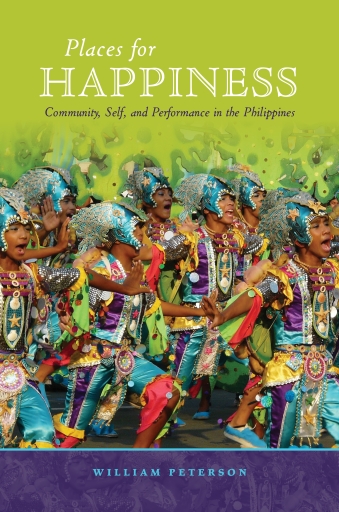
<p><i>Places for Happiness</i> explores two of the most important performance-based activities in the Philippines: the processions and Passion Plays associated with Easter and the mass-dance phenomenon known as “street dancing.” The scale of these handcrafted performances in terms of duration, time commitment, and productive labor marks the Philippines as one of the world’s most significant and undervalued performance-centered cultures. Drawing on a decade of fieldwork, William Peterson examines how people come together in the streets or on temporary stages, celebrating a shared sense of community and creating places for happiness.<br><br>The first half of the book focuses on localized and often highly idiosyncratic versions of the Passion of Christ. Peterson considers not only what people do in these events, but what it feels like to participate. The book’s second half provides a window into the many expressions of “street dancing.” Street dancing is inflected by localized indigenous and folk dance traditions that are reinforced at school and practiced in conjunction with religious civic festivals. Peterson identifies key frames that shape and contain the individual in the Philippines, while tracking how the local expands its expressive home by engaging in a dialogue with regional, national, and diasporic Filipino imaginaries.<br><br>Ultimately <i>Places for Happiness</i> explores how community-based performance responds to and fulfills basic human needs. Many Filipinos rely on family members and immediate neighbors for support and sustenance, and community-based performance assumes a unique and leading role in defining, reinforcing, and celebrating shared belief systems. By bringing forth the internal, phenomenological, and embodied aspects of a range of community-based practices contributing to human happiness, the book offers a cultural framework that interweaves the individual experience with that of the collective, plotting out what resides inside the body through the coordinates of culture.</p>
Categorie
- Lingua
- English
Condividi