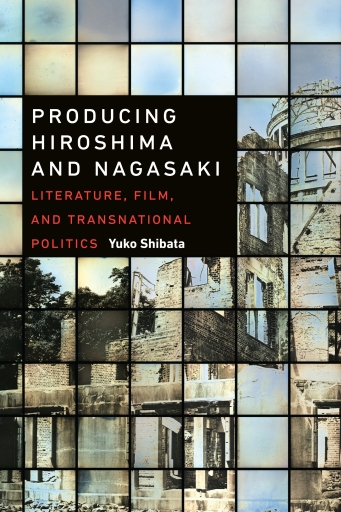
Producing Hiroshima and Nagasaki
Pubblicato da University of Hawaii Press
English
2018
ISBN 9780824876265
eBook
Buy at Ebooks Yenny - El Ateneo
🇦🇷
 Association of University Presses - Tienda FILUNI
🇺🇸
Visita il negozio →
Association of University Presses - Tienda FILUNI
🇺🇸
Visita il negozio →
 Bajalibros Argentina
🇦🇷
Visita il negozio →
Bajalibros Argentina
🇦🇷
Visita il negozio →
 Bajalibros Latam
🇺🇸
Visita il negozio →
Bajalibros Latam
🇺🇸
Visita il negozio →
 Bookshop Uruguay
🇺🇾
Visita il negozio →
Bookshop Uruguay
🇺🇾
Visita il negozio →
 Catademic
🇺🇸
Visita il negozio →
Catademic
🇺🇸
Visita il negozio →
Disponibile in 13 librerie
Association of University Presses - Tienda FILUNI
🇺🇸
Visita il negozio →
Bajalibros Argentina
🇦🇷
Visita il negozio →
Bajalibros Latam
🇺🇸
Visita il negozio →
Bookshop Uruguay
🇺🇾
Visita il negozio →
Catademic
🇺🇸
Visita il negozio →








Informazioni su questo libro
National, disciplinary, and linguistic boundaries all play a role in academic study and nowhere is this more apparent than in traditional humanities scholarship surrounding the atomic bombing of Hiroshima and Nagasaki. How would our understanding of this seminal event change if we read Japanese and Euro-American texts together and across disciplines? In Producing Hiroshima and Nagasaki, Yuko Shibata juxtaposes literary and cinematic texts usually considered separately to highlight the “connected divides” in the production of knowledge on Hiroshima and Nagasaki, shedding new light on both texts and contexts in the process.
Shibata takes up two canonical works—American journalist John Hersey’s account, Hiroshima, and French director Alain Resnais’ avant-garde film, Hiroshima Mon Amour—that are traditionally excluded from study in Japanese literature and cinema. By examining Hersey’s Hiroshima in conjunction with The Bells of Nagasaki (Nagai Takashi) and Children of the A-Bomb (Osada Arata), both Japanese bestsellers, Shibata demonstrates how influential Hersey’s Hiroshima has been in forging the normative narrative of the hibakusha experience in Japan. She also compares Hiroshima Mon Amour with Kamei Fumio’s documentary, Still It’s Good to Live, whose footage Resnais borrowed to depict atomic bomb victimhood. Resnais’ avant-garde masterpiece, she contends, is the palimpsest of Kamei’s surrealist documentary; both blur the binaries between realist and avant-garde representations. Reading Hiroshima Mon Amour in its historical context enables Shibata to offer an entirely new analysis of Renais’ work. She also delineates how Japanese films came to produce the martyrdom narrative of the hibakusha in the early postwar period.
Producing Hiroshima and Nagasaki allows us to trace the complex and entangled political threads that link representations of Hiroshima and Nagasaki, reminding us that narratives and images deploy different effects in different places and times. This highly original approach establishes a new kind of transnational and transpacific studies on Hiroshima and Nagasaki and raises the possibility of a comparative area studies to match the age of world literature.
Disponibilità
Producing Hiroshima and Nagasaki è disponibile come eBook in 13 librerie online. Tra le librerie che lo vendono ci sono Association of University Presses - Tienda FILUNI, Bajalibros Argentina, Bajalibros Latam.
- Lingua
- English
Condividi
Domande frequenti
- In quali formati è disponibile Producing Hiroshima and Nagasaki?
- Producing Hiroshima and Nagasaki è disponibile come eBook in 13 librerie online.
- Dove posso comprare Producing Hiroshima and Nagasaki?
- Puoi comprare Producing Hiroshima and Nagasaki su Association of University Presses - Tienda FILUNI, Bajalibros Argentina, Bajalibros Latam. Confronta tutte le opzioni nell’elenco di questa pagina.
Valutazioni e recensioni
Ancora nessuna valutazione. Sii il primo a recensire questo libro.
Accedi per valutare e recensire questo libro.