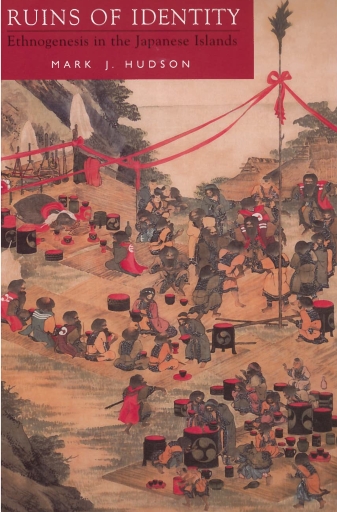
Ruins of Identity
Pubblicato da University of Hawaii Press
English
337 pagine
1999
ISBN 9780824864194
Tempo di lettura stimato: 6 h 11 min
PDF
Buy at Ebooks Agustin
🇪🇸
 Association of University Presses - Tienda FILUNI
🇺🇸
Visita il negozio →
Association of University Presses - Tienda FILUNI
🇺🇸
Visita il negozio →
 Bajalibros Argentina
🇦🇷
Visita il negozio →
Bajalibros Argentina
🇦🇷
Visita il negozio →
 Bajalibros Latam
🇺🇸
Visita il negozio →
Bajalibros Latam
🇺🇸
Visita il negozio →
 Bookshop Uruguay
🇺🇾
Visita il negozio →
Bookshop Uruguay
🇺🇾
Visita il negozio →
 Catademic
🇺🇸
Visita il negozio →
Catademic
🇺🇸
Visita il negozio →
Disponibile in 13 librerie
Association of University Presses - Tienda FILUNI
🇺🇸
Visita il negozio →
Bajalibros Argentina
🇦🇷
Visita il negozio →
Bajalibros Latam
🇺🇸
Visita il negozio →
Bookshop Uruguay
🇺🇾
Visita il negozio →
Catademic
🇺🇸
Visita il negozio →








Informazioni su questo libro
Many Japanese people consider themselves to be part of an essentially unchanging and isolated ethnic unit in which the biological, linguistic, and cultural aspects of Japanese identity overlap almost completely with each other. In its examination of the processes of ethnogenesis (the formation of ethnic groups) in the Japanese Islands, Ruins of Identity offers an approach to ethnicity that differs fundamentally from that found in most Japanese scholarship and popular discourse. Following an extensive discussion of previous theories on the formation of Japanese language, race, and culture and the nationalistic ideologies that have affected research in these topics, Mark Hudson presents a model of a core Japanese population based on the dual origin hypothesis currently favored by physical anthropologists. According to this model, the Jomon population, which was present in Japan by at least the end of the Pleistocene, was followed by agriculturalists from the Korean peninsula during the Yayoi period (ca. 400 BC to AD 300). Hudson analyzes further evidence of migrations and agricultural colonization in an impressive summary of recent cranial, dental, and genetic studies and in a careful examination of the linguistic and archaeological records.
The final sections of the book explore the cultural construction of Japanese ethnicity. Cultural aspects of ethnicity do not emerge pristine and fully formed but are the result of cumulative negotiation. Ethnic identity is continually recreated through interaction within and without the society concerned. Such a view necessitates an approach to culture change that takes into account complex interactions with a larger system. Accordingly, Hudson considers post-Yayoi ethnogenesis in Japan within the East Asian world system, examining the role of interaction between core and periphery in the formation of new ethnic identities, such as the Ainu. He argues that the defining elements of the Ainu period and culture (ca. AD 1200) can be linked directly to a dramatic expansion in Japanese trade goods flowing north as Hokkaido became increasingly exploited by core regions to the south.
Highly original and at times controversial, Ruins of Identity will be essential reading for students and scholars in Japanese studies and will be of interest to anthropologists and historians working on ethnicity in other parts of the world.
Text adopted at University ofChicago
Disponibilità
Ruins of Identity è disponibile come PDF in 13 librerie online. Tra le librerie che lo vendono ci sono Association of University Presses - Tienda FILUNI, Bajalibros Argentina, Bajalibros Latam.
Categorie
- Lingua
- English
Condividi
Domande frequenti
- In quali formati è disponibile Ruins of Identity?
- Ruins of Identity è disponibile come PDF in 13 librerie online.
- Dove posso comprare Ruins of Identity?
- Puoi comprare Ruins of Identity su Association of University Presses - Tienda FILUNI, Bajalibros Argentina, Bajalibros Latam. Confronta tutte le opzioni nell’elenco di questa pagina.
- Quanto tempo ci vuole per leggere Ruins of Identity?
- A un ritmo di lettura medio, Ruins of Identity si legge in circa 6 h 11 min (337 pagine).
Valutazioni e recensioni
Ancora nessuna valutazione. Sii il primo a recensire questo libro.
Accedi per valutare e recensire questo libro.