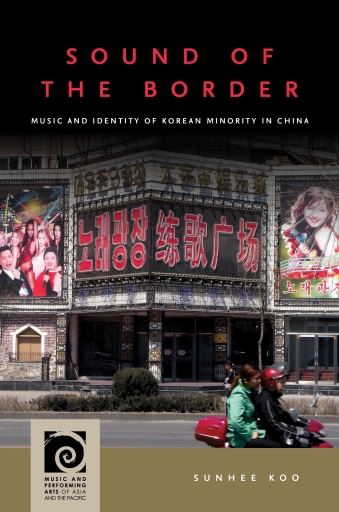
Sound of the Border
Di Koo, Sunhee
Pubblicato da University of Hawaii Press
English
2021
ISBN 9780824889579
eBook
Buy at Catademic
🇺🇸
Catademic
🇺🇸
Visita il negozio →
Bajalibros Latam
🇺🇸
Visita il negozio →
Association of University Presses - Tienda FILUNI
🇺🇸
Visita il negozio →

Ebooks Librería Antártica
🇨🇱
Visita il negozio →
Ebooks Agustin
🇪🇸
Visita il negozio →
Bajalibros Argentina
🇦🇷
Visita il negozio →

Sanborns Ebooks
🇲🇽
Visita il negozio →
ebooks Libreria del GAM
🇺🇾
Visita il negozio →
Bookshop Uruguay
🇺🇾
Visita il negozio →

ebookskitapenas
🇬🇹
Visita il negozio →
Ebooks Yenny - El Ateneo
🇦🇷
Visita il negozio →
Crisol Ebooks
🇨🇴
Visita il negozio →
Disponibile in 12 librerie
Catademic
🇺🇸
Visita il negozio →

Association of University Presses - Tienda FILUNI
🇺🇸
Visita il negozio →
Ebooks Librería Antártica
🇨🇱
Visita il negozio →
Ebooks Agustin
🇪🇸
Visita il negozio →
Sanborns Ebooks
🇲🇽
Visita il negozio →
ebooks Libreria del GAM
🇺🇾
Visita il negozio →
ebookskitapenas
🇬🇹
Visita il negozio →
Ebooks Yenny - El Ateneo
🇦🇷
Visita il negozio →
Crisol Ebooks
🇨🇴
Visita il negozio →
Informazioni su questo libro
<p>Using ethnographic data collected in China and South Korea between 2004 and 2011, author Sunhee Koo provides a comprehensive view of the music of Koreans in China (Chaoxianzu), from its time as manifestation of a displaced culture to its return home after more than a century of amalgamation and change in China. As the first English-language book on the music and identity of China’s Korean minority community, <i>Sound of the Border</i> investigates diasporic mutations of Korean culture, influenced by power dynamics in the host country and the constant renewal of relationships with the homeland. Between the 1860s and the 1940s, about two million Koreans migrated to China in search of economic opportunity and political stability. Settling primarily in the northeastern part of China bordering the Russian Far East, these Koreans had flexibility in crossing geopolitical and cultural boundaries throughout the first half of the twentieth century. In 1949, the majority of Koreans in China accepted their new citizenship designation as one of the PRC’s fifty-five official national minorities. The subsequent partition of the Korean peninsula in 1953 further politicized their ethnic identity, and for the next forty years they were only authorized to interact with North Korea. It was only in the early 1990s that Chaoxianzu were able to renew their relationship with South Korea, although they now faced new challenges due to an ethno-national prejudice as it focused on the nation’s industrial advancement as the most prominent measure of its social superiority.<br><br> Sunhee Koo examines the unique construction of diasporic Korean music in China and uses it as a window to understanding the complexities and diversification of Korean identity, shaped by the ideological and political bifurcation and post–Cold War political resurgence that have affected Northeast Asia. The performances of Korean Chinese musicians—positioned between their adopted state and the two Koreas—embody a complex cultural intersection crisscrossing ideological, political, and social boundaries in historical and present-day Northeast Asia. Migrants enact their agency in creating a unique sound for Korean Chinese identity through navigating cultural resources accessed in their host and the two distinctive motherlands.</p>
Categorie
- Lingua
- English
Condividi
Potrebbe piacerti anche
Long Strange Journey
Levine, Gregory P. A.
The Art of Censorship in Postwar Japan
Fischer, Kirsten Cather
Accounts and Images of Six Kannon in Japan
Fowler, Sherry D.
Capitalscapes
McKelway, Matthew Philip
Ukiyo-E
von Seidlitz, Woldemar, Amsden, Dora
Exploring the essence of Persian art
Lukonin, Vladimir, Ivanov, Anatoli