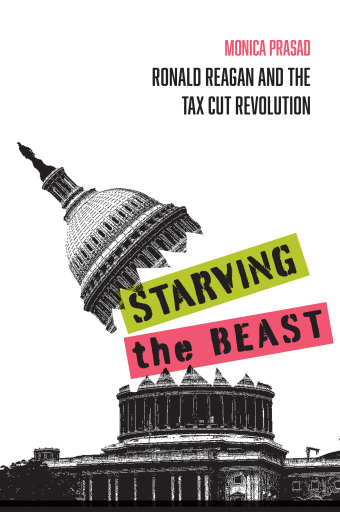
Starving the Beast
Pubblicato da Russell Sage Foundation
English
2018
ISBN 9781610448765
eBook
Buy at Catademic
🇺🇸
Catademic
🇺🇸
Visita il negozio →
Bajalibros Latam
🇺🇸
Visita il negozio →
Association of University Presses - Tienda FILUNI
🇺🇸
Visita il negozio →
Ebooks Librería Antártica
🇨🇱
Visita il negozio →
Ebooks Agustin
🇪🇸
Visita il negozio →
Bajalibros Argentina
🇦🇷
Visita il negozio →

Sanborns Ebooks
🇲🇽
Visita il negozio →
ebooks Libreria del GAM
🇨🇱
Visita il negozio →
Bookshop Uruguay
🇺🇾
Visita il negozio →

ebookskitapenas
🇬🇹
Visita il negozio →
Ebooks Yenny - El Ateneo
🇦🇷
Visita il negozio →
Crisol Ebooks
🇵🇪
Visita il negozio →
Disponibile in 12 librerie
Catademic
🇺🇸
Visita il negozio →

Association of University Presses - Tienda FILUNI
🇺🇸
Visita il negozio →
Ebooks Librería Antártica
🇨🇱
Visita il negozio →
Ebooks Agustin
🇪🇸
Visita il negozio →
Sanborns Ebooks
🇲🇽
Visita il negozio →
ebooks Libreria del GAM
🇨🇱
Visita il negozio →
ebookskitapenas
🇬🇹
Visita il negozio →
Ebooks Yenny - El Ateneo
🇦🇷
Visita il negozio →
Crisol Ebooks
🇵🇪
Visita il negozio →
Informazioni su questo libro
<div>Since the Reagan Revolution of the early 1980s, Republicans have consistently championed tax cuts for individuals and businesses, regardless of whether the economy is booming or in recession or whether the federal budget is in surplus or deficit. In <i>Starving the Beast</i>, sociologist Monica Prasad uncovers the origins of the GOP’s relentless focus on tax cuts and shows how this is a uniquely American phenomenon.<br> <br> Drawing on never-before seen archival documents, Prasad traces the history of the 1981 tax cut—the famous “supply side” tax cut, which became the cornerstone for the next several decades of Republican domestic economic policy. She demonstrates that the main impetus behind this tax cut was not business group pressure, racial animus, or a belief that tax cuts would pay for themselves. <br> <br> Rather, the tax cut emerged because in America--unlike in the rest of the advanced industrial world—progressive policies are not embedded within a larger political economy that is favorable to business. Since the end of World War II, many European nations have combined strong social protections with policies to stimulate economic growth such as lower taxes on capital and less regulation on businesses than in the United State. Meanwhile, the United States emerged from World War II with high taxes on capital and some of the strongest regulations on business in the advanced industrial world. This adversarial political economy could not survive the economic crisis of the 1970s.<br> <br> <i>Starving the Beast</i> suggests that taking inspiration from the European model of progressive policies embedded in market-promoting political economy could serve to build an American economy that works better for all.</div>
- Lingua
- English
Condividi
Potrebbe piacerti anche
Temas de hacienda pública
Patiño Jacinto, Ruth Alejandra, Bautista, Jairo Alonso, Castro Jiménez, Daniel
Las promesas por las que vivimos
Scherman, Harry
A Era Das Crises Financeiras:
Mena, Yoandy Casas
First State of the Union Address
Buchanan, James
Las guerras comerciales son guerras de clases
Klein, Pettis, Klein, Matthew
Como Enriquecer Com Criptomoedas
Silva, Everaldo Santos