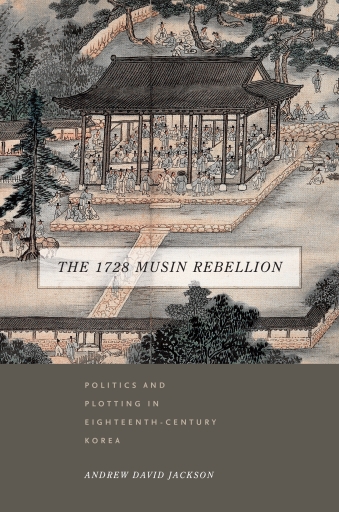
The 1728 Musin Rebellion
Pubblicato da University of Hawaii Press
English
2016
ISBN 9780824852740
eBook
Buy at ebookskitapenas
🇬🇹
 Association of University Presses - Tienda FILUNI
🇺🇸
Visita il negozio →
Association of University Presses - Tienda FILUNI
🇺🇸
Visita il negozio →
 Bajalibros Argentina
🇦🇷
Visita il negozio →
Bajalibros Argentina
🇦🇷
Visita il negozio →
 Bajalibros Latam
🇺🇸
Visita il negozio →
Bajalibros Latam
🇺🇸
Visita il negozio →
 Bookshop Uruguay
🇺🇾
Visita il negozio →
Bookshop Uruguay
🇺🇾
Visita il negozio →
 Catademic
🇺🇸
Visita il negozio →
Catademic
🇺🇸
Visita il negozio →
Disponibile in 13 librerie
Association of University Presses - Tienda FILUNI
🇺🇸
Visita il negozio →
Bajalibros Argentina
🇦🇷
Visita il negozio →
Bajalibros Latam
🇺🇸
Visita il negozio →
Bookshop Uruguay
🇺🇾
Visita il negozio →
Catademic
🇺🇸
Visita il negozio →








Informazioni su questo libro
The 1728 Musin Rebellion: Politics and Plotting in Eighteenth-Century Korea provides the first comprehensive account in English of the Musin Rebellion, an attempt to overthrow King Yŏngjo (1694–1776; r. 1724–1776), and the largest rebellion of eighteenth-century Korea. The rebellion proved unsuccessful, but during three weeks of fighting the government lost control of over a dozen county seats and the rebels drew popular support from the inhabitants of three southern provinces. The revolt profoundly unsettled the early years of Yŏngjo's reign and had considerable influence on the subsequent course of factionalism. In this keenly reasoned study, Andrew David Jackson investigates the causes, development, suppression, legacy, and significance of the bloody Musin Rebellion.
The Musin Rebellion had its roots in the factional conflicts surrounding Yŏngjo's troubled succession to the throne. Jackson analyzes an aspect of the conflict previously neglected by researchers, namely how the rebels managed to create an armed rebellion. He argues that the rebellion should be understood in the context of other attempts on power by factional members that occurred over a hundred-year period leading up to 1728. By exploring the political and military context of the event, the book demonstrates that the Musin Rebellion was not driven by systemic breakdown, regionalism, or ideology, but was a failed attempt by political players to take control of the court. Central to the eruption of violence in 1728 was the intervention of key rebel plotters, several of whom were serving officials with access to state military resources. The book provides an in-depth view of factional politics in the Chosŏn court, and the final section deals with the rebel legacy, bringing to the fore issues about managing, forming, and directing the historical memory of the rebellion.
Disponibilità
The 1728 Musin Rebellion è disponibile come eBook in 13 librerie online. Tra le librerie che lo vendono ci sono Association of University Presses - Tienda FILUNI, Bajalibros Argentina, Bajalibros Latam.
Categorie
- Lingua
- English
Condividi
Domande frequenti
- In quali formati è disponibile The 1728 Musin Rebellion?
- The 1728 Musin Rebellion è disponibile come eBook in 13 librerie online.
- Dove posso comprare The 1728 Musin Rebellion?
- Puoi comprare The 1728 Musin Rebellion su Association of University Presses - Tienda FILUNI, Bajalibros Argentina, Bajalibros Latam. Confronta tutte le opzioni nell’elenco di questa pagina.
Valutazioni e recensioni
Ancora nessuna valutazione. Sii il primo a recensire questo libro.
Accedi per valutare e recensire questo libro.