
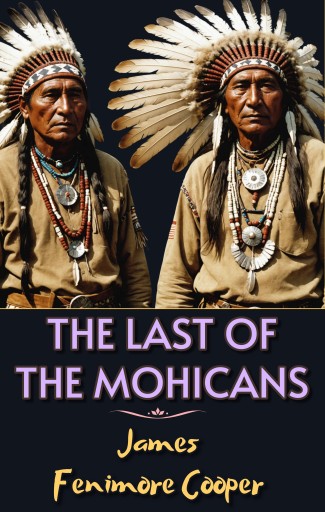
The Last of the Mohicans
Pubblicato da E-Kitap Projesi & Cheapest Books
Disponibile in 15 librerie
 Alpha Books
🇨🇴
Visita il negozio →
Alpha Books
🇨🇴
Visita il negozio →
 Bajalibros Argentina
🇦🇷
Visita il negozio →
Bajalibros Argentina
🇦🇷
Visita il negozio →
 Bajalibros Latam
🇺🇸
Visita il negozio →
Bajalibros Latam
🇺🇸
Visita il negozio →
 Bookshop Uruguay
🇺🇾
Visita il negozio →
Bookshop Uruguay
🇺🇾
Visita il negozio →
 Crisol Ebooks
🇵🇪
Visita il negozio →
Crisol Ebooks
🇵🇪
Visita il negozio →







Informazioni su questo libro
Disponibilità
The Last of the Mohicans è disponibile come eBook in 15 librerie online. Tra le librerie che lo vendono ci sono Alpha Books, Bajalibros Argentina, Bajalibros Latam.
Categorie
- Lingua
- English
Domande frequenti
- In quali formati è disponibile The Last of the Mohicans?
- The Last of the Mohicans è disponibile come eBook in 15 librerie online.
- Dove posso comprare The Last of the Mohicans?
- Puoi comprare The Last of the Mohicans su Alpha Books, Bajalibros Argentina, Bajalibros Latam. Confronta tutte le opzioni nell’elenco di questa pagina.
Valutazioni e recensioni
Ancora nessuna valutazione. Sii il primo a recensire questo libro.
Accedi per valutare e recensire questo libro.
Potrebbe piacerti anche
Heaven Official's Blessing - Light Novel, Band 01
Xiu, Mo Xiang Tong
King Arthur & His Knights
Pyle, Howard
Die Meisterwerke der Weltliterature
Goethe, Johann Wolfgang von, Verne, Jules, Flaubert, Gustave, Kafka, Franz, Carroll, Lewis, Lagerlöf, Selma, Freud, Sigmund, Spyri, Johanna, Storm, Theodor, Rilke, Rainer Maria, Dickens, Charles, Zweig, Stefan, Heine, Heinrich, Balzac, Honoré de, Fontane, Theodor, May, Karl, Keller, Gottfried, Twain, Mark, Mann, Heinrich, Lasker-Schüler, Else, Musil, Robert, Whitman, Walt, Wilde, Oscar, von Droste-Hülshoff, Annette, Schopenhauer, Arthur, Stevenson, Robert Louis, Freytag, Gustav, Cooper, James Fenimore, Poe, Edgar Allan, Kleist, Heinrich von, Shakespeare, William, Dante Alighieri, Brontë, Charlotte, Brontë, Emily, London, Jack, Doyle, Arthur Conan, Conrad, Joseph, Austen, Jane, Melville, Herman, Maupassant, Guy de, Scott, Walter, Swift, Jonathan, Grimm, Jacob, Grimm, Wilhelm, Dumas, Alexandre, Kipling, Rudyard, Hawthorne, Nathaniel, Homer, Henry, O., Voltaire, Wallace, Lew, Galsworthy, John, Hoffmann, E. T. A., Aurelius, Marcus, Andersen, Hans Christian, Tschechow, Anton Pawlowitsch, Platón, Nietzsche, Friedrich, Turgenew, Iwan Sergejewitsch, Tacitus, Gógol, Nikolai, de Cervantes, Miguel, Shelley, Mary, Wolfe, Thomas, Zola, Émile, Dostojewski, Fjodor Michailowitsch, Tolstoi, Leo, Roth, Joseph, von Eichendorff, Joseph, Tucholsky, Kurt, Gontscharow, Iwan Alexandrowitsch, Spengler, Oswald, Molière, Adler, Alfred, von La Roche, Sophie, Mann, Klaus, Rumi
The Greatest Literary Masterpieces for the Holiday Season
Goethe, Johann Wolfgang von, Stendhal, Verne, Jules, Flaubert, Gustave, Carroll, Lewis, Storm, Theodor, Ibsen, Henrik, Dickens, Charles, Plato, Balzac, Honoré de, Twain, Mark, Stowe, Harriet Beecher, Tagore, Rabindranath, Dostoyevsky, Fyodor, Whitman, Walt, Machiavelli, Niccolò, Wilde, Oscar, Stevenson, Robert Louis, Cooper, James Fenimore, Poe, Edgar Allan, Shakespeare, William, Boccaccio, Giovanni, Confucius, MacDonald, George, Stoker, Bram, Brontë, Charlotte, Brontë, Anne, Brontë, Emily, Thoreau, Henry David, London, Jack, James, Henry, Alcott, Louisa May, Hugo, Victor, Doyle, Arthur Conan, Burnett, Frances Hodgson, Conrad, Joseph, Austen, Jane, Melville, Herman, Eliot, George, Sterne, Laurence, Hardy, Thomas, Swift, Jonathan, Wharton, Edith, Pérez Galdós, Benito, Defoe, Daniel, Fielding, Henry, Dumas, Alexandre, Kipling, Rudyard, Howells, William Dean, Kâlidasa, Grahame, Kenneth, Proust, Marcel, Irving, Washington, Valera, Juan, Cather, Willa, Hawthorne, Nathaniel, Homer, Leroux, Gastón, Baudelaire, Charles, Thackeray, William Makepeace, Voltaire, Chopin, Kate, Apuleius, Milton, John, Gilman, Charlotte Perkins, Douglass, Frederick, Laozi, Keats, John, Joyce, James, Radcliffe, Ann Ward, Gibran, Kahlil, Okakura, Kakuzo, Natsume, Sōseki, Der Ling, Princess, Baum, L. Frank, Wells, H. G., Yeats, W. B., Barrie, J. M., Chesterton, G. K., Eliot, T. S., Montgomery, L. M., Lewis, C. S., Lawrence, D. H., Forster, E. M., Lovecraft, H. P., Fitzgerald, F. Scott, Aurelius, Marcus, Nietzsche, Friedrich, Wallace, Lewis, Turgenev, Ivan, Chekhov, Anton, Tolstoy, Leo, Gógol, Nikolai, Scott, Walter, Sir, Shaw, George Bernard, de Cervantes, Miguel, Shelley, Mary, Xueqin, Cao, Zola, Émile, Válmíki, Chatterjee, Bankim Chandra, Shelley, P. B., Von Arnim, Elizabeth, Hesse, Herman, Dante, de la Barca, Pedro Calderón, Tzu, Sun, Nitobe, Inazo, Grossmith, George Weedon, Collins, Willkie
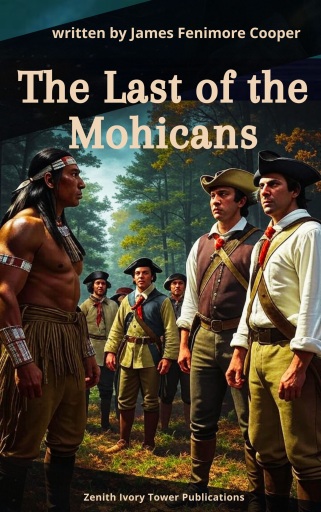
The Last of the Mohicans
Cooper, James Fenimore
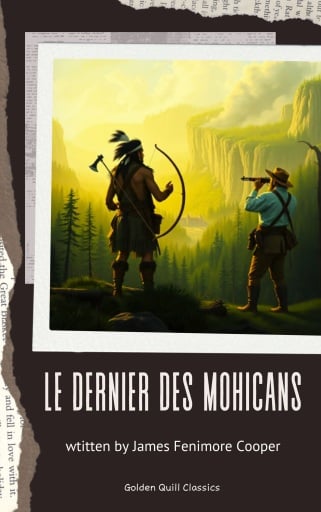
Le Dernier des Mohicans
Cooper, James Fenimore