The Traffic in Hierarchy
Di Keeler, Ward
Pubblicato da University of Hawaii Press
English
2017
ISBN 9780824865955
eBook
Buy at University of Hawaiʻi Press
🇺🇸
Catademic
🇺🇸
Visita il negozio →
UN
University of Hawaiʻi Press
🇺🇸
Visita il negozio →
ebookstaolistic
🇺🇸
Visita il negozio →
Bajalibros Latam
🇺🇸
Visita il negozio →
Association of University Presses - Tienda FILUNI
🇺🇸
Visita il negozio →

Ebooks Librería Antártica
🇨🇱
Visita il negozio →
Ebooks Agustin
🇪🇸
Visita il negozio →
Bajalibros Argentina
🇦🇷
Visita il negozio →

Sanborns Ebooks
🇲🇽
Visita il negozio →
ebooks Libreria del GAM
🇺🇾
Visita il negozio →
Bookshop Uruguay
🇺🇾
Visita il negozio →

ebookskitapenas
🇬🇹
Visita il negozio →
Ebooks Yenny - El Ateneo
🇦🇷
Visita il negozio →
Crisol Ebooks
🇨🇴
Visita il negozio →
Disponibile in 14 librerie
Catademic
🇺🇸
Visita il negozio →

UN
University of Hawaiʻi Press
🇺🇸
Visita il negozio →
ebookstaolistic
🇺🇸
Visita il negozio →
Association of University Presses - Tienda FILUNI
🇺🇸
Visita il negozio →
Ebooks Librería Antártica
🇨🇱
Visita il negozio →
Ebooks Agustin
🇪🇸
Visita il negozio →
Sanborns Ebooks
🇲🇽
Visita il negozio →
ebooks Libreria del GAM
🇺🇾
Visita il negozio →
ebookskitapenas
🇬🇹
Visita il negozio →
Ebooks Yenny - El Ateneo
🇦🇷
Visita il negozio →
Crisol Ebooks
🇨🇴
Visita il negozio →
Informazioni su questo libro
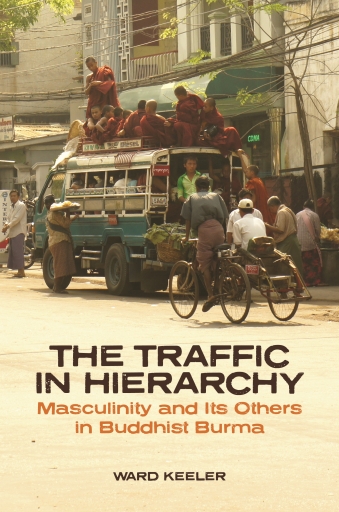
<p>Until its recent political thaw, Burma was closed to most foreign researchers, and fieldwork-based research was rare. In <i>The Traffic in Hierarchy,</i> one of the few such works to appear in recent years, author Ward Keeler combines close ethnographic attention to life in a Buddhist monastery with a broad analysis of Burman gender ideology. The result is a thought-provoking analysis of Burmese social relations both within and beyond a monastery’s walls. <br><br>Keeler shows that the roles individuals choose in Burman society entail inevitable trade-offs in privileges and prestige. A man who becomes a monk gives up some social opportunities but takes on others and gains great respect. Alternatively, a man can become a head of household. Or he can choose to take on a feminine gender identity—to the derision of many but not necessarily his social exclusion. A woman, by contrast, is expected to concern herself with her relations with family and kin. Any interest she might show in becoming a nun arouses ambivalent reactions: although it fulfills Buddhist teachings, it contravenes assumptions about a woman’s proper role. <br><br>In Burma, hierarchical understandings condition all relationships, but hierarchy implies relations of exchange, not simply inequality, and everyone takes on subordinate roles in their bonds with some, and superordinate ones with others. Knowing where power lies and how to relate to it appropriately is key. It may mean choosing at times to resist power, but more often it involves exercising care as to whom one wishes to subordinate oneself, in what ways, and on what terms.<br><br>Melding reflections on the work of theorists such as Dumont, Anderson, Warner, and Kapferer with close attention to the details of Burman social interaction, Keeler balances theoretical insights and ethnographic observation to produce a rich and challenging read. The conundrum at the heart of this book—whether to opt for autonomy, the Buddhist seeking of detachment, or for attachment, the desire for close bonds with others—is one that all humans, not just Burmans, must confront, and it is one that admits of no final resolution.</p>
Categorie
- Lingua
- English
Condividi
Potrebbe piacerti anche
Tradition, Revolution, and Market Economy in a North Vietnamese Village, 1925–2006
Luong, Hy Van
Women’s Movements and the Filipina
ROCES, MARIA NATIVIDAD
Myanmar’s Buddhist-Muslim Crisis
Holt, John Clifford
Pacific Ethnomathematics
Goetzfridt, Nicholas J.
Citizen Designs
Elinoff, Eli
Siam : The Land of the White Elephant as It Was and Is
Bacon, George B.