
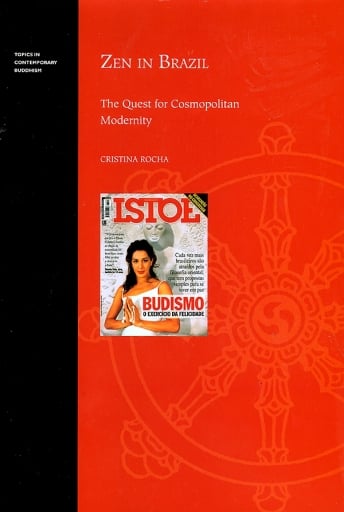
Zen in Brazil
Pubblicato da University of Hawaii Press
English
271 pagine
2005
ISBN 9780824865665
PDF
Buy at Association of University Presses - Tienda FILUNI
🇺🇸
 Catademic
🇺🇸
Visita il negozio →
Catademic
🇺🇸
Visita il negozio →
 Bajalibros Latam
🇺🇸
Visita il negozio →
Bajalibros Latam
🇺🇸
Visita il negozio →
 Association of University Presses - Tienda FILUNI
🇺🇸
Visita il negozio →
Association of University Presses - Tienda FILUNI
🇺🇸
Visita il negozio →
 Ebooks Librería Antártica
🇨🇱
Visita il negozio →
Ebooks Librería Antártica
🇨🇱
Visita il negozio →
 Ebooks Agustin
🇪🇸
Visita il negozio →
Ebooks Agustin
🇪🇸
Visita il negozio →
 Bajalibros Argentina
🇦🇷
Visita il negozio →
Bajalibros Argentina
🇦🇷
Visita il negozio →
 Sanborns Ebooks
🇲🇽
Visita il negozio →
Sanborns Ebooks
🇲🇽
Visita il negozio →
 ebooks Libreria del GAM
🇨🇱
Visita il negozio →
ebooks Libreria del GAM
🇨🇱
Visita il negozio →
 Bookshop Uruguay
🇺🇾
Visita il negozio →
Bookshop Uruguay
🇺🇾
Visita il negozio →
 ebookskitapenas
🇬🇹
Visita il negozio →
ebookskitapenas
🇬🇹
Visita il negozio →
 Ebooks Yenny - El Ateneo
🇦🇷
Visita il negozio →
Ebooks Yenny - El Ateneo
🇦🇷
Visita il negozio →
 Crisol Ebooks
🇵🇪
Visita il negozio →
Crisol Ebooks
🇵🇪
Visita il negozio →
Disponibile in 12 librerie
Catademic
🇺🇸
Visita il negozio →
Bajalibros Latam
🇺🇸
Visita il negozio →
Association of University Presses - Tienda FILUNI
🇺🇸
Visita il negozio →
Ebooks Librería Antártica
🇨🇱
Visita il negozio →
Ebooks Agustin
🇪🇸
Visita il negozio →
Bajalibros Argentina
🇦🇷
Visita il negozio →
Sanborns Ebooks
🇲🇽
Visita il negozio →
ebooks Libreria del GAM
🇨🇱
Visita il negozio →
Bookshop Uruguay
🇺🇾
Visita il negozio →
ebookskitapenas
🇬🇹
Visita il negozio →
Ebooks Yenny - El Ateneo
🇦🇷
Visita il negozio →
Crisol Ebooks
🇵🇪
Visita il negozio →
Informazioni su questo libro
Widely perceived as an overwhelmingly Catholic nation, Brazil has experienced in recent years a growth in the popularity of Buddhism among the urban, cosmopolitan upper classes. In the 1990s Buddhism in general and Zen in particular were adopted by national elites, the media, and popular culture as a set of humanistic values to counter the rampant violence and crime in Brazilian society. Despite national media attention, the rapidly expanding Brazilian market for Buddhist books and events, and general interest in the globalization of Buddhism, the Brazilian case has received little scholarly attention. Cristina Rocha addresses that shortcoming in <i>Zen in Brazil</i>. Drawing on fieldwork in Japan and Brazil, she examines Brazilian history, culture, and literature to uncover the mainly Catholic, Spiritist, and Afro-Brazilian religious matrices responsible for this particular indigenization of Buddhism. In her analysis of Japanese immigration and the adoption and creolization of the Sôtôshû school of Zen Buddhism in Brazil, she offers the fascinating insight that the latter is part of a process of "cannibalizing" the modern other to become modern oneself. She shows, moreover, that in practicing Zen, the Brazilian intellectual elites from the 1950s onward have been driven by a desire to acquire and accumulate cultural capital both locally and overseas. Their consumption of Zen, Rocha contends, has been an expression of their desire to distinguish themselves from popular taste at home while at the same time associating themselves with overseas cultural elites.
Categorie
- Lingua
- English
Condividi
Potrebbe piacerti anche

La comunidad perdida
José Bengoa

Mazinger y otros poemas
Rodrigo Zúñiga

Pisagua, 1948. Anticomunismo y militarización política en Chile
Verónica Valdivia Ortiz de Zárate

El nombre de la Patagonia: Historia y ficción
Javier Roberto González

El Puerto
Martínez, Héctor Fabio

La cuestión indígena en Colombia
Torres Giraldo, Ignacio