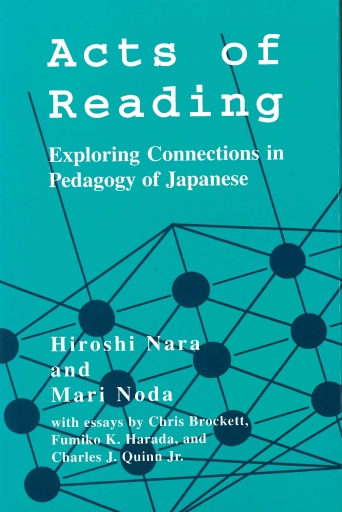
Acts of Reading
Autor: Nara, Hiroshi, Noda, Mari
Wydane przez University of Hawaii Press
English
341 stron
2002
ISBN 9780824861377
PDF
Buy at Bajalibros Latam
🇺🇸
Catademic
🇺🇸
Odwiedź sklep →
Bajalibros Latam
🇺🇸
Odwiedź sklep →
Association of University Presses - Tienda FILUNI
🇺🇸
Odwiedź sklep →

Ebooks Librería Antártica
🇨🇱
Odwiedź sklep →
Ebooks Agustin
🇪🇸
Odwiedź sklep →
Bajalibros Argentina
🇦🇷
Odwiedź sklep →

Sanborns Ebooks
🇲🇽
Odwiedź sklep →
ebooks Libreria del GAM
🇺🇾
Odwiedź sklep →
Bookshop Uruguay
🇺🇾
Odwiedź sklep →

ebookskitapenas
🇬🇹
Odwiedź sklep →
Ebooks Yenny - El Ateneo
🇦🇷
Odwiedź sklep →
Crisol Ebooks
🇨🇴
Odwiedź sklep →
Dostępne w 12 księgarniach
Catademic
🇺🇸
Odwiedź sklep →
Association of University Presses - Tienda FILUNI
🇺🇸
Odwiedź sklep →
Ebooks Librería Antártica
🇨🇱
Odwiedź sklep →
Ebooks Agustin
🇪🇸
Odwiedź sklep →
Sanborns Ebooks
🇲🇽
Odwiedź sklep →
ebooks Libreria del GAM
🇺🇾
Odwiedź sklep →
ebookskitapenas
🇬🇹
Odwiedź sklep →
Ebooks Yenny - El Ateneo
🇦🇷
Odwiedź sklep →
Crisol Ebooks
🇨🇴
Odwiedź sklep →
O tej książce
<p>Students who have completed a year of German read Brecht in their second year, those of Spanish read Cervantes. Teachers of first and second-year Japanese can often find nothing comparable. "Why aren't your students reading literature?" they are asked. "Why not Soseki? Or Murakami?" What are instructors of Japanese doing wrong?<br><br>Nothing, according to the authors of this volume. Rather, they argue, such questions exemplify the gross misunderstandings and unreasonable expectations of teaching reading in Japanese. In <i>Acts of Reading</i>, the authors set out to explore what reading is for Japanese as a language, and how instructors should teach it to students of Japanese. They seek answers to two questions: What are the aspects of reading in Japan as manifested in Japanese society? What L2 (second-language) reading problems are specific to Japanese? In answering the first and related questions, the authors conclude that reading is a socially motivated, purposeful act that is savored and becomes a part of people's lives. Reading instruction in Japanese, therefore, should include teaching students how to work with text as the Japanese do in Japanese society.<br><br>The second question relates more directly to traditional concerns in L2 reading. The authors begin with a general theory of reading. They then offer a welcome glimpse into the rich and complex perspectives-sometimes conflicting, other times symbiotic-on what reading is and how it is performed in L1 and L2, and, most importantly, on the web of interconnections between the phenomenology of reading and the demands it places on teaching approaches to reading in Japanese.<br><br>With essays by Charles J. Quinn, Jr., Fumiko Harada, and Chris Brockett<br>Foreword by J. Marshall Unger</p>
Kategorie
- Język
- English
Udostępnij
Może ci się też spodobać
Mi sueño más bonito – わたしの とびっきり すてきな ゆめ (español – japonés)
Haas, Cornelia
Yuki-mira
Silva, Julio
O Delegado Que Gostava De Usar Veneno
Miyazawa, Kenji
Japanisch sprechen lernen für die Reise (Intensivkurs)
Rike, Thomas
Kentaro
Jesen, Ninho
Japanisch lernen für Anfänger: Kurzgeschichten & alltagsnahe Dialoge für schnelle Erfolge – inkl. Audio, Vokabeln, Grammatik, Hiragana/Katakana & Mitmach-Übungen
Becker, Mia