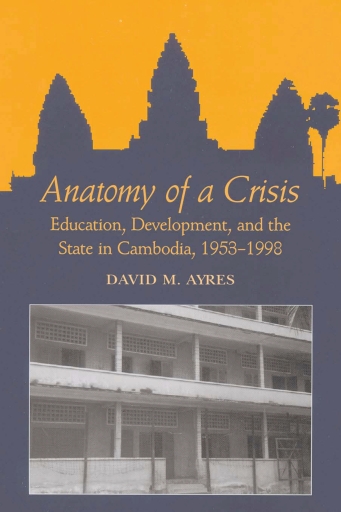
Anatomy of a Crisis
Autor: Ayres, David M.
Wydane przez University of Hawaii Press
English
272 stron
2000
ISBN 9780824861445
PDF
Buy at Catademic
🇺🇸
Catademic
🇺🇸
Odwiedź sklep →
Bajalibros Latam
🇺🇸
Odwiedź sklep →
Association of University Presses - Tienda FILUNI
🇺🇸
Odwiedź sklep →

Ebooks Librería Antártica
🇨🇱
Odwiedź sklep →
Ebooks Agustin
🇪🇸
Odwiedź sklep →
Bajalibros Argentina
🇦🇷
Odwiedź sklep →

Sanborns Ebooks
🇲🇽
Odwiedź sklep →
ebooks Libreria del GAM
🇨🇱
Odwiedź sklep →
Bookshop Uruguay
🇺🇾
Odwiedź sklep →

ebookskitapenas
🇬🇹
Odwiedź sklep →
Ebooks Yenny - El Ateneo
🇦🇷
Odwiedź sklep →
Crisol Ebooks
🇵🇪
Odwiedź sklep →
Dostępne w 12 księgarniach
Catademic
🇺🇸
Odwiedź sklep →
Association of University Presses - Tienda FILUNI
🇺🇸
Odwiedź sklep →
Ebooks Librería Antártica
🇨🇱
Odwiedź sklep →
Ebooks Agustin
🇪🇸
Odwiedź sklep →
Sanborns Ebooks
🇲🇽
Odwiedź sklep →
ebooks Libreria del GAM
🇨🇱
Odwiedź sklep →
ebookskitapenas
🇬🇹
Odwiedź sklep →
Ebooks Yenny - El Ateneo
🇦🇷
Odwiedź sklep →
Crisol Ebooks
🇵🇪
Odwiedź sklep →
O tej książce
<p>In 1993, the United Nations sponsored national elections in Cambodia, signaling the international community's commitment to the rehabilitation and reconstruction of what was, by any measure, a shattered and torn society. Cambodia's economy was stagnant. The education system was in complete disarray: Students had neither pens nor books, teachers were poorly trained, and classrooms were literally crumbling. Few of the individuals and organizations responsible for financing, planning, and implementing Cambodia's post-election development thought it necessary to ask why the country's economy and society were in such a parlous state. The mass graves scattered throughout the countryside provided an obvious explanation. The appalling state of the education system, many argued, could be directly attributed to the fact that among the 1.7 million victims of Pol Pot's holocaust were thousands of students, teachers, technocrats, and intellectuals.<br><br> In this exacting and insightful examination of the crisis in Cambodian education, David M. Ayres challenges the widespread belief that the key to Cambodia's future development and prosperity lies in overcoming the dreadful legacy of Khmer Rouge. He seeks to explain why Cambodia has struggled with an educational crisis for more that four decades (including the years before the Khmer Rouge came to power in 1975) and thus casts the net of his analysis well beyond Pol Pot and his accomplices. Drawing on an extensive range of sources, Ayres clearly shows that Cambodia's educational dilemma--the disparity between the education system and the economic, political, and cultural environments, which it should serve--can be explained by setting education within its historical and cultural contexts. Themes of tradition, modernity, change, and changelessness are linked with culturally entrenched notions of power, hierarchy, and leadership to clarify why education funding is promised but rarely delivered, why schools are built where they are not needed, why plans are enthusiastically embraced but never implemented, and why contracts and agreements are ignored almost immediately after they are signed.<br><br> <i>Anatomy of a Crisis</i> will be compulsory reading for anyone with an interest in education and development issues, as well as Cambodian society, culture, politics, and history.</p>
Kategorie
- Język
- English
Udostępnij
Może ci się też spodobać
Misión Santiago
Fernanda Beigel
R3 y la Huerta Mágica
David Valbuena, Nelson Aedo Muñoz, Felipe Aichele Paschen
Problemas gerais de linguística
Flores, Valdir do Nascimento
Ampliando Olhar: Altas Habilidades/Superdotação
Antunes, Cristiane Corina
La revolución Ceibal
Solari, Ana
EL LIDERAZGO TRANSGLOBAL en la formación de innovadores sociales universitarios en el Ecuador
Jarrin Jaramillo, Gladys Fabiola, Zamora Moreta, Marina Genoveva, Avila Proaño, Leonardo Antonino