Przejdź do głównej treści
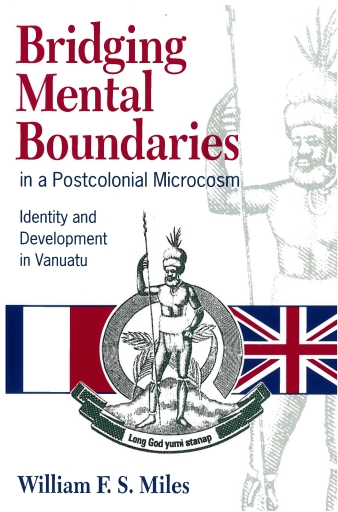
Bridging Mental Boundaries in a Postcolonial Microcosm

Bridging Mental Boundaries in a Postcolonial Microcosm

Autor: Miles, William F. S.

Wydane przez University of Hawaii Press

English 297 stron 1998 ISBN 9780824861681
Szacowany czas czytania: 5 godz. 27 min
PDF

O tej książce

The South Pacific archipelago of Vanuatu simultaneously experienced the two major types of colonialism of the modern era (British and French), the only instance in which these colonial powers jointly ruled the same people in the same territory over an extended period of time. This, in addition to its small size and recent independence (1980), makes Vanuatu an ideal case study of the clash of contemporary colonialism and its enduring legacies. At the same time, the uniqueness of Melanesian society highlights the singular role of indigenous culture in shaping both colonial and postcolonial political reality. With its close attention to global processes, Bridging Mental Boundaries in a Postcolonial Microcosm provides a fresh comparative approach to an island state that has most frequently been examined from an ethnographic or area studies perspective. William F. S. Miles looks at the long-term effects of the joint Franco-British administration in public policy, political disputes, and social cleavages in post-independence Vanuatu. He emphasizes the strong imprint left by "condocolonialism" in dividing ni-Vanuatu into "Anglophones" and "Francophones," but also suggest how this basic division is being replaced (or overlaid) by divisions based on urban or rural residence, "traditional" or "modern" employment, and disparities between the status and activities of men and women. As such, this volume is more than an analysis of a unique case of colonialism and its effects; it is an interpretation of the evolution of an insular society beset by particularly convoluted precolonial, colonial, and postcolonial fractures. Based principally on research conducted in 1991 and, following a key change in Vanuatu's government, a subsequent visit in 1992, the analysis is enriched by regular comparisons between Vanuatu and other colonized societies where the author has carried out original research, including Niger, Nigeria, Martinique, and Pondicherry. Extensive interviews with ni-Vanuatu are integrated throughout the text, presenting islanders' views of their own experience.

Dostępność

Bridging Mental Boundaries in a Postcolonial Microcosm jest dostępna jako PDF w 13 księgarni internetowej. Wśród księgarni, które ją oferują, są Association of University Presses - Tienda FILUNI, Bajalibros Argentina, Bajalibros Latam.

Język
English
Udostępnij

Najczęstsze pytania

W jakich formatach dostępna jest Bridging Mental Boundaries in a Postcolonial Microcosm?
Bridging Mental Boundaries in a Postcolonial Microcosm jest dostępna jako PDF w 13 księgarni internetowej.
Gdzie mogę kupić Bridging Mental Boundaries in a Postcolonial Microcosm?
Możesz kupić Bridging Mental Boundaries in a Postcolonial Microcosm w Association of University Presses - Tienda FILUNI, Bajalibros Argentina, Bajalibros Latam. Porównaj wszystkie opcje na liście na tej stronie.
Ile czasu zajmuje przeczytanie Bridging Mental Boundaries in a Postcolonial Microcosm?
Przy przeciętnym tempie czytania Bridging Mental Boundaries in a Postcolonial Microcosm zajmuje około 5 godz. 27 min (297 stron).

Oceny i recenzje

Brak ocen. Bądź pierwszą osobą, która zrecenzuje tę książkę.

Zaloguj się aby ocenić i zrecenzować tę książkę.
Komentarze

Zaloguj się aby dołączyć do rozmowy.

Brak komentarzy.