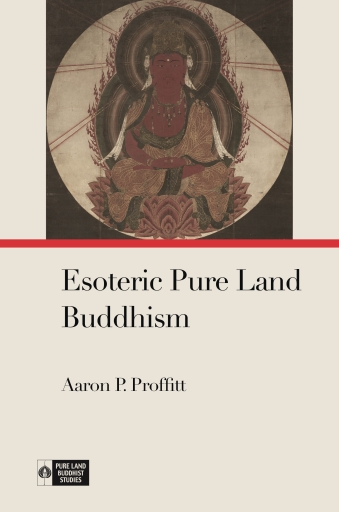
Esoteric Pure Land Buddhism
Autor: Proffitt, Aaron P.
Wydane przez University of Hawaii Press
English
2023
ISBN 9780824893811
eBook
Buy at Bajalibros Latam
🇺🇸
Catademic
🇺🇸
Odwiedź sklep →
UN
University of Hawaiʻi Press
🇺🇸
Odwiedź sklep →
ebookstaolistic
🇺🇸
Odwiedź sklep →
Bajalibros Latam
🇺🇸
Odwiedź sklep →
Association of University Presses - Tienda FILUNI
🇺🇸
Odwiedź sklep →

Ebooks Librería Antártica
🇨🇱
Odwiedź sklep →
Ebooks Agustin
🇪🇸
Odwiedź sklep →
Bajalibros Argentina
🇦🇷
Odwiedź sklep →

Sanborns Ebooks
🇲🇽
Odwiedź sklep →
ebooks Libreria del GAM
🇺🇾
Odwiedź sklep →
Bookshop Uruguay
🇺🇾
Odwiedź sklep →

ebookskitapenas
🇬🇹
Odwiedź sklep →
Ebooks Yenny - El Ateneo
🇦🇷
Odwiedź sklep →
Crisol Ebooks
🇨🇴
Odwiedź sklep →
Dostępne w 14 księgarniach
Catademic
🇺🇸
Odwiedź sklep →
UN
University of Hawaiʻi Press
🇺🇸
Odwiedź sklep →
ebookstaolistic
🇺🇸
Odwiedź sklep →
Association of University Presses - Tienda FILUNI
🇺🇸
Odwiedź sklep →
Ebooks Librería Antártica
🇨🇱
Odwiedź sklep →
Ebooks Agustin
🇪🇸
Odwiedź sklep →
Sanborns Ebooks
🇲🇽
Odwiedź sklep →
ebooks Libreria del GAM
🇺🇾
Odwiedź sklep →
ebookskitapenas
🇬🇹
Odwiedź sklep →
Ebooks Yenny - El Ateneo
🇦🇷
Odwiedź sklep →
Crisol Ebooks
🇨🇴
Odwiedź sklep →
O tej książce
<p>What, if anything, is Esoteric Pure Land Buddhism? In 1224, the medieval Japanese scholar-monk Dōhan (1179–1252) composed <i>The Compendium on Esoteric Mindfulness of Buddha</i> <i>(Himitsu nenbutsu shō), </i>which begins with another seemingly simple question: Why is it that practitioners of mantra and meditation rely on the recitation of the name of the Buddha Amitābha? To answer this question, Dōhan explored diverse areas of study spanning the whole of the East Asian Mahayana Buddhist tradition. Although contemporary scholars often study Esoteric Buddhism and Pure Land Buddhism as if they were mutually exclusive and diametrically opposed schools of Buddhism, in the present volume Aaron Proffitt examines Dōhan’s <i>Compendium</i> in the context of the eastward flow of Mahayana Buddhism from India to Japan and uncovers Mahayana Buddhists employing multiple, overlapping, so-called “esoteric” approaches along the path to awakening. <br><br>Proffitt divides his study into two parts. In Part I he considers how early Buddhologists, working under colonialism, first constructed Mahayana Buddhism, Pure Land Buddhism, and Esoteric Buddhism as discrete fields of inquiry. He then surveys the flow of Indian Buddhist spells, <i>dhāraṇī</i>, and mantra texts into China and Japan and the diverse range of Buddhist masters who employed these esoteric techniques to achieve rebirth in Sukhāvatī, the Pure Land of Bliss. In Part II, he considers the life of Dōhan and analyzes the monk’s comprehensive view of <i>buddhānusmṛti</i> as a form of ritual technology that unified body and mind, Sukhāvatī as a this-worldly or other-worldly soteriological goal synonymous with nirvana itself, and the Buddha Amitābha as an object of devotion beyond this world of suffering. The work concludes with the first full translation of Dōhan’s <i>Himitsu nenbutsu shō</i> into a modern language.</p>
- Język
- English
Udostępnij
Może ci się też spodobać
Reading the Kimono in Twentieth-Century Japanese Literature and Film
Suzuki, Michiko
Land, Power, and the Sacred
Kingdom of the Sick
Burns, Susan L.
Agents of World Renewal
Miura, Takashi
The Book of Five Rings
Miyamoto, Musashi
Shinra Myōjin and Buddhist Networks of the East Asian “Mediterranean”
Kim, Sujung