Przejdź do głównej treści
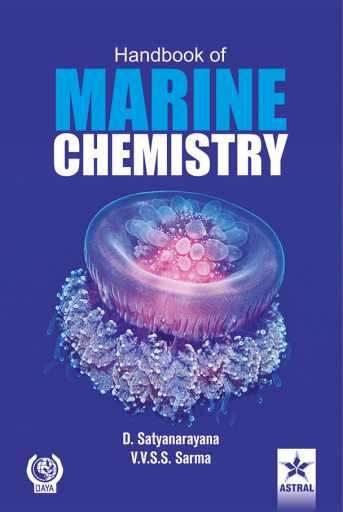
Handbook of Marine Chemistry

Handbook of Marine Chemistry

Autor: V.V.S.S. Sarma, D. Satyanarayana

Wydane przez Astral International Pvt Ltd

English 463 stron 2018 ISBN 9789386615916
Szacowany czas czytania: 8 godz. 29 min
PDF

O tej książce

The earlier book entitled “Marine Chemistry” written by me and published in 2007 has been thoroughly revised and enlarged to include recent developments in chemical oceanography. The seven chapters included in the earlier book have been expanded into eleven incorporating additional information such as the origin of the ocean, isotopic composition of seawater, speciation of major and minor elements, role of trace metals in global climate control, distribution of reactive (non-conservative) gases such as nitrous oxide (N2O), nitric oxide (NO), Methane (CH4) and dimethyl sulphide [(CH3)2S]. Distribution of CO2 components e.g. partial pressure (PCO2), pH, total alkalinity (TA) and total CO2 (“CO2) in seawater, segregation (horizontal) of bio-limiting elements, iron fertilization, methods of organic matter characterization and major classes of organic bio-molecules such as hydrocarbons, carbohydrates, amino acids and proteins, complex and simple lipids, and pyrroles and porphyrins in seawater are also included. Five new chapters (12-16) of special significance and present day relevance namely, the Global carbon cycle and climate change; Hypoxia (Reducing environments); Hydrothermal vent fluids; Chemical diagenesis and interstitial waters; and fossil and bio-fuels have been incorporated in the book. Important topics such as Role of ocean on global carbon cycle and climate, Use of oceans to mitigate anthropogenic CO2 emissions, Typical anoxic/hypoxic environments for example, Black Sea, Cariaco Trench, Framvaren Fjord, Northern Gulf of Mexico and the Arabian Sea; Categorization of hydrothermal vent fluids and their chemical composition; Diagenesis of organic matter in sediments and typical pore water profiles of major cations and anions, alkalinity, pH and Eh and some redox species are included. Distinction of fossil (petroleum and natural gas) and bio (ethanol, diesel, methane, hydrogen, BtL) fuels; Relative merits and limitations of fossil and biofuels, and future strategies of biofuels have been described in detail. The book thus provides the latest information on marine chemistry to be used as a course material in chemical oceanography to graduate/post-graduate students. It is written in a simple and lucid style that can be easily followed not only by the students but also by the practicing scientists and engineers working in marine environment and related areas.

Dostępność

Handbook of Marine Chemistry jest dostępna jako PDF w 1 księgarni internetowej.

Język
English
Udostępnij

Najczęstsze pytania

W jakich formatach dostępna jest Handbook of Marine Chemistry?
Handbook of Marine Chemistry jest dostępna jako PDF w 1 księgarni internetowej.
Gdzie mogę kupić Handbook of Marine Chemistry?
Możesz kupić Handbook of Marine Chemistry w Catademic. Porównaj wszystkie opcje na liście na tej stronie.
Ile czasu zajmuje przeczytanie Handbook of Marine Chemistry?
Przy przeciętnym tempie czytania Handbook of Marine Chemistry zajmuje około 8 godz. 29 min (463 stron).

Oceny i recenzje

Brak ocen. Bądź pierwszą osobą, która zrecenzuje tę książkę.

Zaloguj się aby ocenić i zrecenzować tę książkę.

Komentarze

Zaloguj się aby dołączyć do rozmowy.

Brak komentarzy.