Indigenizing the Cold War
Autor: Hyun, Sinae
Wydane przez University of Hawaii Press
English
2023
ISBN 9780824895907
eBook
Buy at Association of University Presses - Tienda FILUNI
🇺🇸
Catademic
🇺🇸
Odwiedź sklep →
Bajalibros Latam
🇺🇸
Odwiedź sklep →
Association of University Presses - Tienda FILUNI
🇺🇸
Odwiedź sklep →

Ebooks Librería Antártica
🇨🇱
Odwiedź sklep →
Ebooks Agustin
🇪🇸
Odwiedź sklep →
Bajalibros Argentina
🇦🇷
Odwiedź sklep →

Sanborns Ebooks
🇲🇽
Odwiedź sklep →
ebooks Libreria del GAM
🇨🇱
Odwiedź sklep →
Bookshop Uruguay
🇺🇾
Odwiedź sklep →

ebookskitapenas
🇬🇹
Odwiedź sklep →
Ebooks Yenny - El Ateneo
🇦🇷
Odwiedź sklep →
Crisol Ebooks
🇵🇪
Odwiedź sklep →
Dostępne w 12 księgarniach
Catademic
🇺🇸
Odwiedź sklep →
Association of University Presses - Tienda FILUNI
🇺🇸
Odwiedź sklep →
Ebooks Librería Antártica
🇨🇱
Odwiedź sklep →
Ebooks Agustin
🇪🇸
Odwiedź sklep →
Sanborns Ebooks
🇲🇽
Odwiedź sklep →
ebooks Libreria del GAM
🇨🇱
Odwiedź sklep →
ebookskitapenas
🇬🇹
Odwiedź sklep →
Ebooks Yenny - El Ateneo
🇦🇷
Odwiedź sklep →
Crisol Ebooks
🇵🇪
Odwiedź sklep →
O tej książce
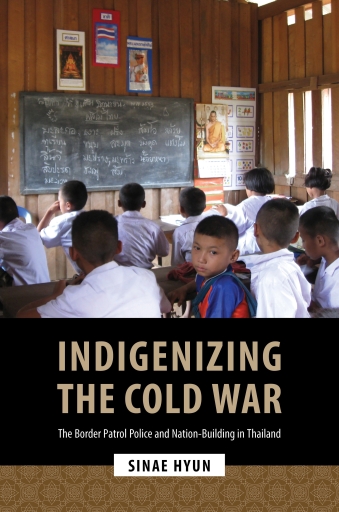
<p>The Border Patrol Police (BPP) of Thailand was formed as a United States CIA’s paramilitary intelligence force in the early 1950s. In the early 1960s, changes in Thailand’s political leadership and the U.S. government’s strategies for fighting the spread of communism in Southeast Asia led to a transformation of the BPP. The organization became a civic action agency supported by the United States Agency for International Development and the Thai monarchy. Its civic actions, pinned on advancing anticommunist modernization, civilian counterinsurgency, and royalist nationalism, soon extended from the margins to the center of Thailand, and contributed to building the border of “Thainess” <i>(khwam pen thai)</i>. The growing tension between the royalist network, consisting of military and rightwing groups, and the democratization movements culminated in a massacre. On October 6, 1976, the Village Scout, a rural vigilante group that the BPP created through its civic actions, and the Police Aerial Reinforcement Unit (PARU), a subunit of the BPP, attacked peaceful protesters at Thammasat University. The success of a military coup on the same day solidified the victory of the royalist network, and it would continue to dominate Thai politics and society into the post–Cold War era.<br><br>Through a study of the Border Patrol Police’s transformations, <i>Indigenizing the Cold War</i> shows how the Thai ruling elite unfailingly pursued their nation-building. With an introduction of the “indigenization” concept and an in-depth analysis of postcolonial nation-building, this work challenges conventional Cold War studies. The Cold War in Thailand was not always and only about an ideological conflict between the communist and anticommunist. It was a war between the local ruling elite and the people, each pushing forward their visions for constructing a new nation-state. The “indigenization” framework reveals the nature of the collaboration between the global superpowers and the Asian local ruling elite, who took advantage of the American Cold War for legitimizing and continuing their authoritarian regimes.</p>
- Język
- English
Udostępnij
Może ci się też spodobać
Leaves of the Same Tree
Andaya, Leonard Y.
Saigon at the Turn of the Millennium
Carl, Klaus H.
Silver Screens and Golden Dreams
Ferguson, Jane M.
Figures of Southeast Asian Modernity
The Story of Magellan and The Discovery of the Philippines
Butterworth, Hezekiah
Painters in Hanoi
Taylor, Nora Annesley