
Przejdź do głównej treści
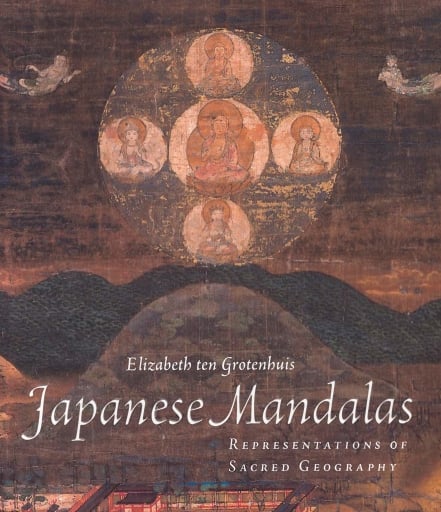
Japanese Mandalas

Japanese Mandalas

Autor: ten Grotenhuis, Elizabeth

Wydane przez University of Hawaii Press

English 249 stron 1998 ISBN 9780824863111
Szacowany czas czytania: 4 godz. 34 min
PDF

O tej książce

The first broad study of Japanese mandalas to appear in a Western language, this volume interprets mandalas as sanctified realms where identification between the human and the sacred occurs. The author investigates eighth- to seventeenth-century paintings from three traditions: Esoteric Buddhism, Pure Land Buddhism, and the kami-worshipping (Shinto) tradition. It is generally recognized that many of these mandalas are connected with texts and images from India and the Himalayas. A pioneering theme of this study is that, in addition to the South Asian connections, certain paradigmatic Japanese mandalas reflect pre-Buddhist Chinese concepts, including geographical concepts. In convincing and lucid prose, ten Grotenhuis chronicles an intermingling of visual, doctrinal, ritual, and literary elements in these mandalas that has come to be seen as characteristic of the Japanese religious tradition as a whole. This beautifully illustrated work begins in the first millennium B.C.E. in China with an introduction to the Book of Documents and ends in present-day Japan at the sacred site of Kumano. Ten Grotenhuis focuses on the Diamond and Womb World mandalas of Esoteric Buddhist tradition, on the Taima mandala and other related mandalas from the Pure Land Buddhist tradition, and on mandalas associated with the kami-worshipping sites of Kasuga and Kumano. She identifies specific sacred places in Japan with sacred places in India and with Buddhist cosmic diagrams. Through these identifications, the realm of the buddhas is identified with the realms of the kami and of human beings, and Japanese geographical areas are identified with Buddhist sacred geography. Explaining why certain fundamental Japanese mandalas look the way they do and how certain visual forms came to embody the sacred, ten Grotenhuis presents works that show a complex mixture of Indian Buddhist elements, pre-Buddhist Chinese elements, Chinese Buddhist elements, and indigenous Japanese elements.

Dostępność

Japanese Mandalas jest dostępna jako PDF w 13 księgarni internetowej. Wśród księgarni, które ją oferują, są Association of University Presses - Tienda FILUNI, Bajalibros Argentina, Bajalibros Latam.

Kategorie

Język
English
Udostępnij

Najczęstsze pytania

W jakich formatach dostępna jest Japanese Mandalas?
Japanese Mandalas jest dostępna jako PDF w 13 księgarni internetowej.
Gdzie mogę kupić Japanese Mandalas?
Możesz kupić Japanese Mandalas w Association of University Presses - Tienda FILUNI, Bajalibros Argentina, Bajalibros Latam. Porównaj wszystkie opcje na liście na tej stronie.
Ile czasu zajmuje przeczytanie Japanese Mandalas?
Przy przeciętnym tempie czytania Japanese Mandalas zajmuje około 4 godz. 34 min (249 stron).

Oceny i recenzje

Brak ocen. Bądź pierwszą osobą, która zrecenzuje tę książkę.

Zaloguj się aby ocenić i zrecenzować tę książkę.

Komentarze

Zaloguj się aby dołączyć do rozmowy.

Brak komentarzy.










