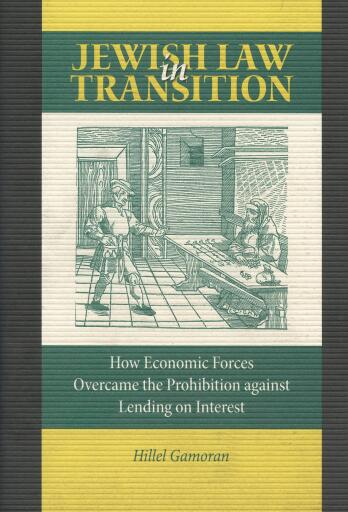
Jewish Law in Transition
Autor: Gamoran, Hillel
Wydane przez Hebrew Union College Press
English
207 stron
2008
ISBN 9780878201426
PDF
Buy at Catademic
🇺🇸
Catademic
🇺🇸
Odwiedź sklep →
Bajalibros Latam
🇺🇸
Odwiedź sklep →
LORANCHBOOKSTORE
🇺🇸
Odwiedź sklep →
Ebooks Librería Carlos Fuentes
🇲🇽
Odwiedź sklep →
ebooks libreria española
🇪🇨
Odwiedź sklep →
Bajalibros Argentina
🇦🇷
Odwiedź sklep →
Alpha Books
🇨🇴
Odwiedź sklep →

Sanborns Ebooks
🇲🇽
Odwiedź sklep →
ebooks Libreria del GAM
🇨🇱
Odwiedź sklep →
Bookshop Uruguay
🇺🇾
Odwiedź sklep →

Ebooks Yenny - El Ateneo
🇦🇷
Odwiedź sklep →
Crisol Ebooks
🇵🇪
Odwiedź sklep →
Dostępne w 12 księgarniach
Catademic
🇺🇸
Odwiedź sklep →
LORANCHBOOKSTORE
🇺🇸
Odwiedź sklep →
Ebooks Librería Carlos Fuentes
🇲🇽
Odwiedź sklep →
ebooks libreria española
🇪🇨
Odwiedź sklep →
Alpha Books
🇨🇴
Odwiedź sklep →
Sanborns Ebooks
🇲🇽
Odwiedź sklep →
ebooks Libreria del GAM
🇨🇱
Odwiedź sklep →
Ebooks Yenny - El Ateneo
🇦🇷
Odwiedź sklep →
Crisol Ebooks
🇵🇪
Odwiedź sklep →
O tej książce
The prohibition against lending on interest (Exodus 22:24) is a well-known biblical law: "If you lend to any one of my people with you who is poor, you shall not be to him as a creditor, and you shall not exact interest from him." This prohibition was intended to prevent the wealthy from exploiting the unfortunate. In the course of time, it was seen to have consequences that militated against the economic welfare of Jewish society as a whole. As a result, Jewish law (halakhah) has over the centuries relaxed the biblical injunction, allowing interest charges despite the biblical prohibition. Hillel Gamoran seeks to explain how and when this law of high moral standing collapsed and fell over the course of the centuries. Talmudic rabbis believed that business agreements violated the biblical prohibition against lending in five areas: loans of produce, advance payment for the purchase of goods, buying on credit, mortgages, and investments. The Bible does not consider any of these activities, but all arise in postbiblical literature. How was the biblical law to be applied to situations that had not occurred in biblical times? And how could the rabbis allow these activities when they were hampered from doing so by the laws against lending on interest? To answer these questions, Gamoran examines the biblical prohibition against lending and postulates when it was written, why it was written, and to whom it applied. He then considers the early and later teachers of the Oral Law, the Tannaim and Amoraim, who expanded discussion of the ban in light of various business activities from 70 C.E. to 500 C.E. Finally, he explores how the original tannaitic proscriptions for each of the five activities were upheld or relaxed over the centuries. Each activity is considered in the period of the Geonim (ca. 650-1050), the Rishonim (ca. 1000-1500), and the Aharonim (ca. 1500-2000). For each period, Gamoran shows how the rabbis struggled with the law and with one another and used inventive interpretation to create the legal fictions necessary for business life to flourish.
- Język
- English
Udostępnij
Może ci się też spodobać
Las cuentas de la vieja
Ballesteros García, Carlos
50 cosas que hay que saber sobre economía
Conway, Ed
The Complete Works of Thorstein Veblen: Economics Books, Business Essays & Political Articles
Veblen, Thorstein
El precio de la desigualdad
Stiglitz, Joseph E.
Estado en construcción: Reflexionando sobre las capacidades estatales en el ámbito económico en el Ecuador
Granda, Francisca, Andrade, Pablo, Nicholls, Esteban
Gowex, la gran estafa
Calvo Martínez, Pedro