
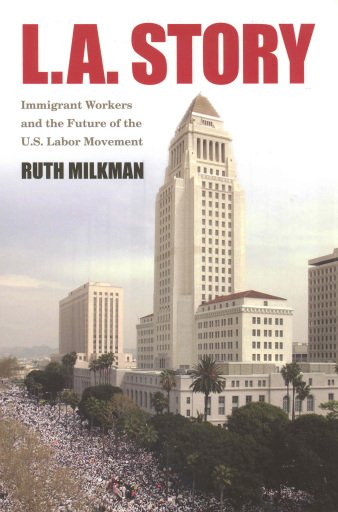
L.A. Story
Autor: Milkman, Ruth
Wydane przez Russell Sage Foundation
English
2006
ISBN 9781610443968
eBook
Buy at Bajalibros Latam
🇺🇸
 Catademic
🇺🇸
Odwiedź sklep →
Catademic
🇺🇸
Odwiedź sklep →
 Bajalibros Latam
🇺🇸
Odwiedź sklep →
Bajalibros Latam
🇺🇸
Odwiedź sklep →
 Association of University Presses - Tienda FILUNI
🇺🇸
Odwiedź sklep →
Association of University Presses - Tienda FILUNI
🇺🇸
Odwiedź sklep →
 Ebooks Librería Antártica
🇨🇱
Odwiedź sklep →
Ebooks Librería Antártica
🇨🇱
Odwiedź sklep →
 Ebooks Agustin
🇪🇸
Odwiedź sklep →
Ebooks Agustin
🇪🇸
Odwiedź sklep →
 Bajalibros Argentina
🇦🇷
Odwiedź sklep →
Bajalibros Argentina
🇦🇷
Odwiedź sklep →
 Sanborns Ebooks
🇲🇽
Odwiedź sklep →
Sanborns Ebooks
🇲🇽
Odwiedź sklep →
 ebooks Libreria del GAM
🇨🇱
Odwiedź sklep →
ebooks Libreria del GAM
🇨🇱
Odwiedź sklep →
 Bookshop Uruguay
🇺🇾
Odwiedź sklep →
Bookshop Uruguay
🇺🇾
Odwiedź sklep →
 ebookskitapenas
🇬🇹
Odwiedź sklep →
ebookskitapenas
🇬🇹
Odwiedź sklep →
 Ebooks Yenny - El Ateneo
🇦🇷
Odwiedź sklep →
Ebooks Yenny - El Ateneo
🇦🇷
Odwiedź sklep →
 Crisol Ebooks
🇵🇪
Odwiedź sklep →
Crisol Ebooks
🇵🇪
Odwiedź sklep →
Dostępne w 12 księgarniach
Catademic
🇺🇸
Odwiedź sklep →
Bajalibros Latam
🇺🇸
Odwiedź sklep →
Association of University Presses - Tienda FILUNI
🇺🇸
Odwiedź sklep →
Ebooks Librería Antártica
🇨🇱
Odwiedź sklep →
Ebooks Agustin
🇪🇸
Odwiedź sklep →
Bajalibros Argentina
🇦🇷
Odwiedź sklep →
Sanborns Ebooks
🇲🇽
Odwiedź sklep →
ebooks Libreria del GAM
🇨🇱
Odwiedź sklep →
Bookshop Uruguay
🇺🇾
Odwiedź sklep →
ebookskitapenas
🇬🇹
Odwiedź sklep →
Ebooks Yenny - El Ateneo
🇦🇷
Odwiedź sklep →
Crisol Ebooks
🇵🇪
Odwiedź sklep →
O tej książce
<div>Sharp decreases in union membership over the last fifty years have caused many to dismiss organized labor as irrelevant in today's labor market. In the private sector, only 8 percent of workers today are union members, down from 24 percent as recently as 1973. Yet developments in Southern California—including the successful Justice for Janitors campaign—suggest that reports of organized labor's demise may have been exaggerated. In L.A. Story, sociologist and labor expert Ruth Milkman explains how Los Angeles, once known as a company town hostile to labor, became a hotbed for unionism, and how immigrant service workers emerged as the unlikely leaders in the battle for workers' rights. L.A. Story shatters many of the myths of modern labor with a close look at workers in four industries in Los Angeles: building maintenance, trucking, construction, and garment production. Though many blame deunionization and deteriorating working conditions on immigrants, Milkman shows that this conventional wisdom is wrong. Her analysis reveals that worsening work environments preceded the influx of foreign-born workers, who filled the positions only after native-born workers fled these suddenly undesirable jobs. Ironically, L.A. Story shows that immigrant workers, who many union leaders feared were incapable of being organized because of language constraints and fear of deportation, instead proved highly responsive to organizing efforts. As Milkman demonstrates, these mostly Latino workers came to their service jobs in the United States with a more group-oriented mentality than the American workers they replaced. Some also drew on experience in their native countries with labor and political struggles. This stock of fresh minds and new ideas, along with a physical distance from the east-coast centers of labor's old guard, made Los Angeles the center of a burgeoning workers' rights movement. Los Angeles' recent labor history highlights some of the key ingredients of the labor movement's resurgence—new leadership, latitude to experiment with organizing techniques, and a willingness to embrace both top-down and bottom-up strategies. L.A. Story's clear and thorough assessment of these developments points to an alternative, high-road national economic agenda that could provide workers with a way out of poverty and into the middle class.</div>
- Język
- English
Udostępnij
Może ci się też spodobać

Fundamentos de dirección y administración de empresas
Fuentes Fuentes, María del Mar, Cordón Pozo, Eulogio

Como Ser Rico com a Reciclagem
Ribeiro, Gregorio

La España precaria
de la Fuente, Alejandra

Maldito trabajo
Vara, Eduardo

En favor del trabajo garantizado
Tcherneva, Pavlina R.
Unequal Time
Clawson, Dan, Gerstel, Naomi