Przejdź do głównej treści
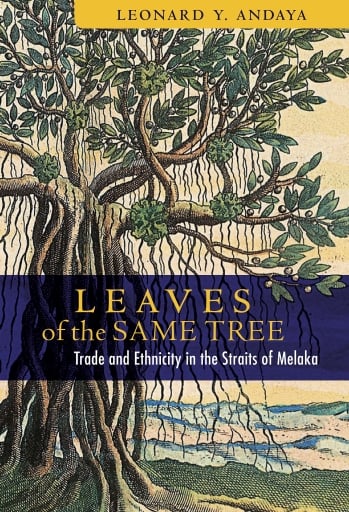
Leaves of the Same Tree

Leaves of the Same Tree

Autor: Andaya, Leonard Y.

Wydane przez University of Hawaii Press

English 337 stron 2008 ISBN 9780824863319
Szacowany czas czytania: 6 godz. 11 min
PDF

O tej książce

Despite the existence of about a thousand ethnolinguistic groups in Southeast Asia, very few historians of the region have engaged the complex issue of ethnicity. Leaves of the Same Tree takes on this concept and illustrates how historians can use it both as an analytical tool and as a subject of analysis to add further depth to our understanding of Southeast Asian pasts. Following a synthesis of some of the major issues in the complex world of ethnic theory, the author identifies two general principles of particular value for this study: the ideas that ethnic identity is an ongoing process and that the boundaries of a group undergo continual—if at times imperceptible—change based on perceived advantage. The Straits of Melaka for much of the past two millennia offers an ideal testing ground to better understand the process of ethnic formation. The straits forms the primary waterway linking the major civilizations to the east and west of Southeast Asia, and the flow of international trade through it was the lifeblood of the region. Privileging ethnicity as an analytical tool, the author examines the ethnic groups along the straits to document the manner in which they responded to the vicissitudes of the international marketplace. Earliest and most important were the Malayu (Malays), whose dominance in turn contributed to the "ethnicization" of other groups in the straits. By deliberately politicizing differences within their own ethnic community, the Malayu encouraged the emergence of new ethnic categories, such as the Minangkabau, the Acehnese, and, to a lesser extent, the Batak. The Orang Laut and the Orang Asli, on the other hand, retained their distinctive cultural markers because a separate yet complementary identity proved to be economically and socially advantageous for them. Ethnic communities are shown as fluid and changing, exhibiting a porosity and flexibility that suited the mandala communities of Southeast Asia. Leaves of the Same Tree demonstrates how problematizing ethnicity can offer a more nuanced view of ethnic relations in a region that boasts one of the greatest diversities of language and culture in the world. Creative and challenging, this book uncovers many new questions that should revitalize and reorient the historiography of Southeast Asia.

Dostępność

Leaves of the Same Tree jest dostępna jako PDF w 13 księgarni internetowej. Wśród księgarni, które ją oferują, są Association of University Presses - Tienda FILUNI, Bajalibros Argentina, Bajalibros Latam.

Język
English
Udostępnij

Najczęstsze pytania

W jakich formatach dostępna jest Leaves of the Same Tree?
Leaves of the Same Tree jest dostępna jako PDF w 13 księgarni internetowej.
Gdzie mogę kupić Leaves of the Same Tree?
Możesz kupić Leaves of the Same Tree w Association of University Presses - Tienda FILUNI, Bajalibros Argentina, Bajalibros Latam. Porównaj wszystkie opcje na liście na tej stronie.
Ile czasu zajmuje przeczytanie Leaves of the Same Tree?
Przy przeciętnym tempie czytania Leaves of the Same Tree zajmuje około 6 godz. 11 min (337 stron).

Oceny i recenzje

Brak ocen. Bądź pierwszą osobą, która zrecenzuje tę książkę.

Zaloguj się aby ocenić i zrecenzować tę książkę.

Komentarze

Zaloguj się aby dołączyć do rozmowy.

Brak komentarzy.