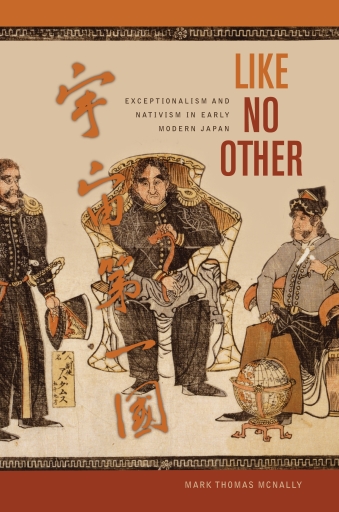
Like No Other
Autor: McNally, Mark T.
Wydane przez University of Hawaii Press
English
305 stron
2015
ISBN 9780824852856
PDF
Buy at University of Hawaiʻi Press
🇺🇸
 Catademic
🇺🇸
Odwiedź sklep →
UN
University of Hawaiʻi Press
🇺🇸
Odwiedź sklep →
Catademic
🇺🇸
Odwiedź sklep →
UN
University of Hawaiʻi Press
🇺🇸
Odwiedź sklep →
 Bajalibros Latam
🇺🇸
Odwiedź sklep →
Bajalibros Latam
🇺🇸
Odwiedź sklep →
 Association of University Presses - Tienda FILUNI
🇺🇸
Odwiedź sklep →
Association of University Presses - Tienda FILUNI
🇺🇸
Odwiedź sklep →
 Ebooks Librería Antártica
🇨🇱
Odwiedź sklep →
Ebooks Librería Antártica
🇨🇱
Odwiedź sklep →
 Ebooks Agustin
🇪🇸
Odwiedź sklep →
Ebooks Agustin
🇪🇸
Odwiedź sklep →
 Bajalibros Argentina
🇦🇷
Odwiedź sklep →
Bajalibros Argentina
🇦🇷
Odwiedź sklep →
 Sanborns Ebooks
🇲🇽
Odwiedź sklep →
Sanborns Ebooks
🇲🇽
Odwiedź sklep →
 ebooks Libreria del GAM
🇺🇾
Odwiedź sklep →
ebooks Libreria del GAM
🇺🇾
Odwiedź sklep →
 Bookshop Uruguay
🇺🇾
Odwiedź sklep →
Bookshop Uruguay
🇺🇾
Odwiedź sklep →
 ebookskitapenas
🇬🇹
Odwiedź sklep →
ebookskitapenas
🇬🇹
Odwiedź sklep →
 Ebooks Yenny - El Ateneo
🇦🇷
Odwiedź sklep →
Ebooks Yenny - El Ateneo
🇦🇷
Odwiedź sklep →
 Crisol Ebooks
🇨🇴
Odwiedź sklep →
Crisol Ebooks
🇨🇴
Odwiedź sklep →
Dostępne w 13 księgarniach
Catademic
🇺🇸
Odwiedź sklep →
UN
University of Hawaiʻi Press
🇺🇸
Odwiedź sklep →
Bajalibros Latam
🇺🇸
Odwiedź sklep →
Association of University Presses - Tienda FILUNI
🇺🇸
Odwiedź sklep →
Ebooks Librería Antártica
🇨🇱
Odwiedź sklep →
Ebooks Agustin
🇪🇸
Odwiedź sklep →
Bajalibros Argentina
🇦🇷
Odwiedź sklep →
Sanborns Ebooks
🇲🇽
Odwiedź sklep →
ebooks Libreria del GAM
🇺🇾
Odwiedź sklep →
Bookshop Uruguay
🇺🇾
Odwiedź sklep →
ebookskitapenas
🇬🇹
Odwiedź sklep →
Ebooks Yenny - El Ateneo
🇦🇷
Odwiedź sklep →
Crisol Ebooks
🇨🇴
Odwiedź sklep →
O tej książce
<p><i>Like No Other: Exceptionalism and Nativism in Early Modern Japan</i> probes the association of the early modern Japanese intellectual institution called Kokugaku with the phenomenon of nativism. Uncovering profound differences that cast serious doubt on this association, Mark McNally argues that what Japanologists viewed as nativistic about Kokugaku were actually more typical of what Americanists call exceptionalism. By severing the link between Kokugaku and nativism, he is able to explore within early modern Japanese history instances that were more genuinely nativistic, such as the upheaval associated with the intercultural encounters with Westerners during the 1850s and 1860s that culminated in the overthrow of Japan's last shogun. He also documents, for the first time in Japanese studies, the ways in which exceptionalism applies to Japanese history; not by focusing on either <i>Nihonjinron</i> or on Kokugaku—the connection between the former and exceptionalism is one that Americanists have already made, and the connection between the two Japanese institutions is one that Japanologists already know well—but by highlighting the central role of Confucianism. <br><br>While Americans looked to the Judeo-Christian tradition for their exceptionalist ideas, their counterparts in early modern Japan looked to Confucianism, whose foundational connections to exceptionalism were perhaps stronger than any analogous tradition in the West. Despite the fact that exceptionalism and nativism occupy distinct positions within the historiographical traditions of both the United States and Japan, they also intersect and overlap in the latter case, which strongly suggests that this situation may also be true in other places, including the United States.</p>
Kategorie
- Język
- English
Udostępnij
Może ci się też spodobać

Translingual Narration
Scruggs, Bert Mittchell

Writing Pregnancy in Low-Fertility Japan
Seaman, Amanda C.

At the Edge of the Nation
Richardson, Paul B.

Shimaji Mokurai and the Reconception of Religion and the Secular in Modern Japan
Krämer, Hans Martin

A Diplomat in Japan- The Inner History of the Critical Years in the Evolution of Japan
Satow, Ernest Mason