
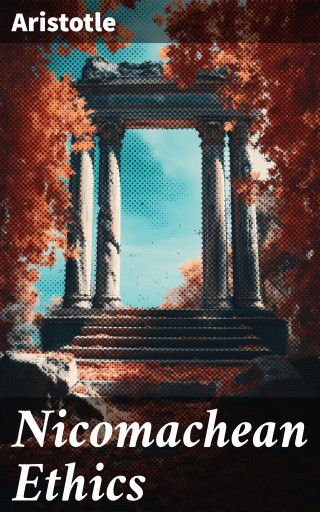
Nicomachean Ethics
Autor: Aristotle
Wydane przez Good Press
English
2023
ISBN 8596547669463
eBook
Buy at Bajalibros Latam
🇺🇸
 Bajalibros Latam
🇺🇸
Odwiedź sklep →
Bajalibros Latam
🇺🇸
Odwiedź sklep →
 LORANCHBOOKSTORE
🇺🇸
Odwiedź sklep →
LORANCHBOOKSTORE
🇺🇸
Odwiedź sklep →
 Libros Patagonia
🇨🇱
Odwiedź sklep →
Libros Patagonia
🇨🇱
Odwiedź sklep →
 Ebooks Librería Carlos Fuentes
🇲🇽
Odwiedź sklep →
Ebooks Librería Carlos Fuentes
🇲🇽
Odwiedź sklep →
 Ebooks Librería Antártica
🇨🇱
Odwiedź sklep →
Ebooks Librería Antártica
🇨🇱
Odwiedź sklep →
 Ebooks Happy Books
🇨🇴
Odwiedź sklep →
Ebooks Happy Books
🇨🇴
Odwiedź sklep →
 ebooks libreria española
🇪🇨
Odwiedź sklep →
ebooks libreria española
🇪🇨
Odwiedź sklep →
 Bajalibros Argentina
🇦🇷
Odwiedź sklep →
Bajalibros Argentina
🇦🇷
Odwiedź sklep →
 Alpha Books
🇨🇴
Odwiedź sklep →
Alpha Books
🇨🇴
Odwiedź sklep →
 Sanborns Ebooks
🇲🇽
Odwiedź sklep →
Sanborns Ebooks
🇲🇽
Odwiedź sklep →
 ebooks Libreria del GAM
🇨🇱
Odwiedź sklep →
ebooks Libreria del GAM
🇨🇱
Odwiedź sklep →
 Bookshop Uruguay
🇺🇾
Odwiedź sklep →
Bookshop Uruguay
🇺🇾
Odwiedź sklep →
 Ebooks Yenny - El Ateneo
🇦🇷
Odwiedź sklep →
Ebooks Yenny - El Ateneo
🇦🇷
Odwiedź sklep →
 Crisol Ebooks
🇵🇪
Odwiedź sklep →
Crisol Ebooks
🇵🇪
Odwiedź sklep →
Dostępne w 14 księgarniach
Bajalibros Latam
🇺🇸
Odwiedź sklep →
LORANCHBOOKSTORE
🇺🇸
Odwiedź sklep →
Libros Patagonia
🇨🇱
Odwiedź sklep →
Ebooks Librería Carlos Fuentes
🇲🇽
Odwiedź sklep →
Ebooks Librería Antártica
🇨🇱
Odwiedź sklep →
Ebooks Happy Books
🇨🇴
Odwiedź sklep →
ebooks libreria española
🇪🇨
Odwiedź sklep →
Bajalibros Argentina
🇦🇷
Odwiedź sklep →
Alpha Books
🇨🇴
Odwiedź sklep →
Sanborns Ebooks
🇲🇽
Odwiedź sklep →
ebooks Libreria del GAM
🇨🇱
Odwiedź sklep →
Bookshop Uruguay
🇺🇾
Odwiedź sklep →
Ebooks Yenny - El Ateneo
🇦🇷
Odwiedź sklep →
Crisol Ebooks
🇵🇪
Odwiedź sklep →
O tej książce
In "Nicomachean Ethics," Aristotle explores the nature of human happiness and the path to achieving a virtuous life. Written in a didactic yet accessible style, the text synthesizes empirical observations with philosophical inquiries, providing a foundational perspective on ethics that bridges both moral theory and practical application. Aristotle meticulously categorizes virtues, distinguishing between intellectual and moral types, and presents the concept of the "Golden Mean," where ethical behavior lies between extremes. This work, set against the backdrop of Classical Greek philosophy, engages with contemporaneous ethical debates and serves as a pivotal reference in Western moral thought. Aristotle, one of the most influential philosophers in history, draws upon his extensive experience as a student of Plato and as a teacher at the Lyceum. His wide-ranging inquiries into biology, politics, and metaphysics culminate in this ethical treatise, reflecting his belief that philosophical contemplation must inform practical living. Aristotle's scholarly backdrop and his commitment to exploring the intricacies of human character are evident throughout the text, inviting readers to ponder the relationship between virtue and personal fulfillment deeply. "Nicomachean Ethics" is an essential read for anyone interested in ethics, philosophy, or the human experience. Aristotle's profound insights offer timeless guidance, prompting readers to reflect on their moral frameworks and the pursuit of a fulfilled life. This enduring work not only enriches one's understanding of virtue but also poses vital questions about personal responsibility and the essence of true happiness.
In this enriched edition, we have carefully created added value for your reading experience:
- A succinct Introduction situates the work's timeless appeal and themes.
- The Synopsis outlines the central plot, highlighting key developments without spoiling critical twists.
- A detailed Historical Context immerses you in the era's events and influences that shaped the writing.
- An Author Biography reveals milestones in the author's life, illuminating the personal insights behind the text.
- A thorough Analysis dissects symbols, motifs, and character arcs to unearth underlying meanings.
- Reflection questions prompt you to engage personally with the work's messages, connecting them to modern life.
- Hand‐picked Memorable Quotes shine a spotlight on moments of literary brilliance.
- Interactive footnotes clarify unusual references, historical allusions, and archaic phrases for an effortless, more informed read.
Kategorie
- Język
- English
Udostępnij
Może ci się też spodobać

A Questão Da Alteridade No Ambiente Digital
Edoa, Louis Marie Ndomo

Voz Do Silêncio
Oliveira, Adriana

A Era Da Razão — Volume 2
Paine, Thomas
A Problem in Modern Ethics
Symonds, John Addington
POETICS: Aristotle
Aristotle
10 Masterpieces You Have to Read Before You Die, Vol.5
Alighieri, Dante, von Goethe, Johann Wolfgang, Tolstoy, Leo, Homer, Machiavelli, Niccolò, Aristotle, Aurelius, Marcus, Plato