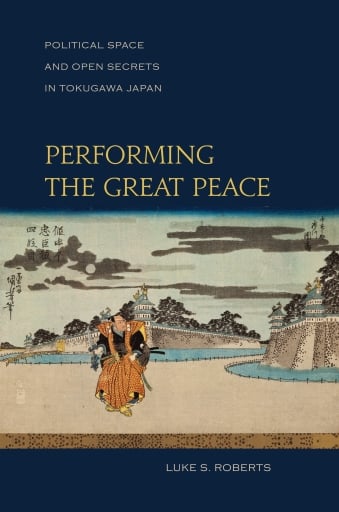
Performing the Great Peace
Autor: Roberts, Luke S.
Wydane przez University of Hawaii Press
English
282 stron
2012
ISBN 9780824861155
PDF
Buy at Catademic
🇺🇸
 Catademic
🇺🇸
Odwiedź sklep →
Catademic
🇺🇸
Odwiedź sklep →
 Bajalibros Latam
🇺🇸
Odwiedź sklep →
Bajalibros Latam
🇺🇸
Odwiedź sklep →
 Association of University Presses - Tienda FILUNI
🇺🇸
Odwiedź sklep →
Association of University Presses - Tienda FILUNI
🇺🇸
Odwiedź sklep →
 Ebooks Librería Antártica
🇨🇱
Odwiedź sklep →
Ebooks Librería Antártica
🇨🇱
Odwiedź sklep →
 Ebooks Agustin
🇪🇸
Odwiedź sklep →
Ebooks Agustin
🇪🇸
Odwiedź sklep →
 Bajalibros Argentina
🇦🇷
Odwiedź sklep →
Bajalibros Argentina
🇦🇷
Odwiedź sklep →
 Sanborns Ebooks
🇲🇽
Odwiedź sklep →
Sanborns Ebooks
🇲🇽
Odwiedź sklep →
 ebooks Libreria del GAM
🇨🇱
Odwiedź sklep →
ebooks Libreria del GAM
🇨🇱
Odwiedź sklep →
 Bookshop Uruguay
🇺🇾
Odwiedź sklep →
Bookshop Uruguay
🇺🇾
Odwiedź sklep →
 ebookskitapenas
🇬🇹
Odwiedź sklep →
ebookskitapenas
🇬🇹
Odwiedź sklep →
 Ebooks Yenny - El Ateneo
🇦🇷
Odwiedź sklep →
Ebooks Yenny - El Ateneo
🇦🇷
Odwiedź sklep →
 Crisol Ebooks
🇵🇪
Odwiedź sklep →
Crisol Ebooks
🇵🇪
Odwiedź sklep →
Dostępne w 12 księgarniach
Catademic
🇺🇸
Odwiedź sklep →
Bajalibros Latam
🇺🇸
Odwiedź sklep →
Association of University Presses - Tienda FILUNI
🇺🇸
Odwiedź sklep →
Ebooks Librería Antártica
🇨🇱
Odwiedź sklep →
Ebooks Agustin
🇪🇸
Odwiedź sklep →
Bajalibros Argentina
🇦🇷
Odwiedź sklep →
Sanborns Ebooks
🇲🇽
Odwiedź sklep →
ebooks Libreria del GAM
🇨🇱
Odwiedź sklep →
Bookshop Uruguay
🇺🇾
Odwiedź sklep →
ebookskitapenas
🇬🇹
Odwiedź sklep →
Ebooks Yenny - El Ateneo
🇦🇷
Odwiedź sklep →
Crisol Ebooks
🇵🇪
Odwiedź sklep →
O tej książce
<p><i>Performing the Great Peace</i> offers a cultural approach to understanding the politics of the Tokugawa period, at the same time deconstructing some of the assumptions of modern national historiographies. Deploying the political terms <i>uchi</i> (inside), <i>omote</i> (ritual interface), and <i>naisho</i> (informal negotiation)—all commonly used in the Tokugawa period—Luke Roberts explores how daimyo and the Tokugawa government understood political relations and managed politics in terms of spatial autonomy, ritual submission, and informal negotiation.<br><br>Roberts suggests as well that a layered hierarchy of <i>omote</i> and <i>uchi</i> relations strongly influenced politics down to the village and household level, a method that clarifies many seeming anomalies in the Tokugawa order. He analyzes in one chapter how the identities of daimyo and domains differed according to whether they were facing the Tokugawa or speaking to members of the domain and daimyo household: For example, a large domain might be identified as a“country” by insiders and as a “private territory” in external discourse. In another chapter he investigates the common occurrence of daimyo who remained formally alive to the government months or even years after they had died in order that inheritance issues could be managed peacefully within their households. The operation of the court system in boundary disputes is analyzed as are the “illegal” enshrinements of daimyo inside domains that were sometimes used to construct forms of domain-state Shinto. <br><br><i>Performing the Great Peace’</i>s convincing analyses and insightful conceptual framework will benefit historians of not only the Tokugawa and Meiji periods, but Japan in general and others seeking innovative approaches to premodern history.</p>
Kategorie
- Język
- English
Udostępnij