Przejdź do głównej treści
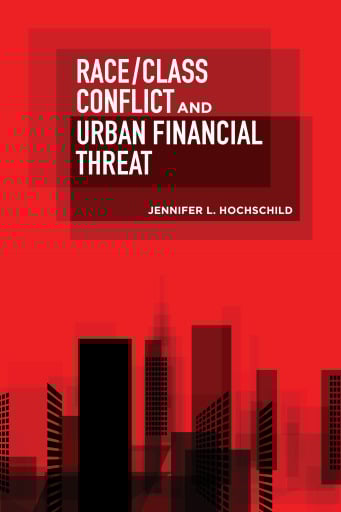
Race/Class Conflict and Urban Financial Threat

Race/Class Conflict and Urban Financial Threat

Autor: Hochschild, Jennifer L.

Wydane przez Russell Sage Foundation

English 2024 ISBN 9781610449281
eBook

O tej książce

Race and class inequality are at the crux of many policy disputes in American cities. But are they the only factors driving political discord? In Race/Class Conflict and Urban Financial Threat, political scientist Jennifer L. Hochschild examines significant policies in four major American cities to determine when race and class shape city politics, when they do not, and what additional forces have the power to shape urban policy choices.   Hochschild investigates the root causes of disputes in the arenas of policing, development, schooling, and budgeting. She finds that race and class are central to the Stop-Question-Frisk policing policy in New York City and the development of Atlanta’s Beltline. New York’s Stop-Question-Frisk policy was intended to fight crime and keep all New Yorkers safe. In practice, however, young Black and Latino men in low-income neighborhoods were disproportionately stopped by a predominantly White police force. The goal of the Atlanta Beltline, a redevelopment project that includes public parks, new housing, commercial development, and a robust public transit system, is to expand access around the city and keep working-class residents in the city by constructing affordable housing. Instead, the construction completed thus far has encouraged gentrification and displacement of poor, disproportionately Black residents, and has increased the wealth and power of both Black and White city elites.   However, Hochschild finds that race and class inequality are not central to all urban policy disputes. When investigating the issues of charter schools in Los Angeles and Chicago’s pension system she identifies a third driver: financial threat that feels existential to the policy and political actors. In Los Angeles, there is a battle between traditional public schools and independent charter schools. Increasingly, families with sufficient resources are moving out of L.A. to areas with better school districts. Traditional public schools and charter schools must fight for the remaining students and the funding that comes with them. There are not enough students to teach and not enough money to teach them. The school district risks school closures, layoffs, and pension deficits; in this context, race/class conflict fades into the background.   Chicago’s public sector pension debt is at least three times as large as the city’s annual budget and continues to grow. Policy actors agree that the pension system needs to be stably funded. Yet city leaders, fearful of upsetting constituents and jeopardizing their political careers, fail to implement policies that would do so. Meaningful policy change to rectify the pension deficit continues to get kicked down the line for future policy actors to address. In this context also, race/class conflict fades into the background.   Race/Class Conflict and Urban Financial Threat is a compelling examination of the role that race, class, and political and fiscal threat play in shaping urban policy.    

Dostępność

Race/Class Conflict and Urban Financial Threat jest dostępna jako eBook w 13 księgarni internetowej. Wśród księgarni, które ją oferują, są Association of University Presses - Tienda FILUNI, Bajalibros Argentina, Bajalibros Latam.

Język
English
Udostępnij

Najczęstsze pytania

W jakich formatach dostępna jest Race/Class Conflict and Urban Financial Threat?
Race/Class Conflict and Urban Financial Threat jest dostępna jako eBook w 13 księgarni internetowej.
Gdzie mogę kupić Race/Class Conflict and Urban Financial Threat?
Możesz kupić Race/Class Conflict and Urban Financial Threat w Association of University Presses - Tienda FILUNI, Bajalibros Argentina, Bajalibros Latam. Porównaj wszystkie opcje na liście na tej stronie.

Oceny i recenzje

Brak ocen. Bądź pierwszą osobą, która zrecenzuje tę książkę.

Zaloguj się aby ocenić i zrecenzować tę książkę.

Komentarze

Zaloguj się aby dołączyć do rozmowy.

Brak komentarzy.