Przejdź do głównej treści
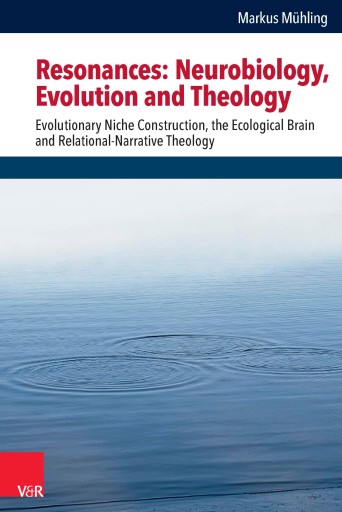
Resonances: Neurobiology, Evolution and Theology

Resonances: Neurobiology, Evolution and Theology

Autor: Mühling, Markus

Wydane przez Vandenhoeck & Ruprecht

English 255 stron 2014 ISBN 9783647570365
Szacowany czas czytania: 4 godz. 41 min
PDF

O tej książce

This volume contains the results of research into the dialogue between theology and biology, particularly neuroscience and evolutionary theory. With regard to neuroscience, the representational paradigm is abandoned in favor of the ecological brain theory, which understands the brain as an organ of resonance between the living body and its surrounding environment. In relation to theological epistemology, this account not only leads to fruitful convergences, but also shows that revelation, as perception of God's triune presence in creation, has to be understood as a resonating and non extra-ordinary or general kind of perception, instead of being a special interpretation of experiences that are beyond the ordinary. With regard to the theory of evolution, the Neodarwinian paradigm is expanded with the help of the theory of niche-construction, in which the relationship between organisms and their environment is understood to be reciprocally resonating. This new and emerging paradigm in biology fits to a relational-narrative theological ontology, in which the relationship between the life of the triune God and creation can be modeled on basis of the key metaphor of niche construction understood as a reciprocally resonating dramatic coherence.Theologically, Markus Mühling presents a theory of revelation as perception and a relational-narrative ontology based on the concept of dramatic coherence, in which the triune life is understood not as an exception to ontology, but as the decisive condition of its possibility.For neuroscience and evolutionary theory it provides the insight that taking the concepts of internally related external relata and a phenomenological approach into account leads to new horizons for solving those problems seen in certain older paradigms as posing irreconcilable contradictions.Mühling also argues that a dialogue between theology and the natural sciences – in order to be fruitful – must be maintained in relative dependence and independence, that any such dialogue must take philosophical considerations into account, and that it is decisive for each of the dialogue partners to speak on behalf of their proper and particular areas of research.The proposed results also reflect the author's participation in the dialogue between leading theologians and scientists at the Center of Theological Inquiry, Princeton (NJ) on Evolution and Human Nature in 2013.

Dostępność

Resonances: Neurobiology, Evolution and Theology jest dostępna jako PDF w 15 księgarni internetowej. Wśród księgarni, które ją oferują, są Alpha Books, Bajalibros Argentina, Bajalibros Latam.

Język
English
Udostępnij

Najczęstsze pytania

W jakich formatach dostępna jest Resonances: Neurobiology, Evolution and Theology?
Resonances: Neurobiology, Evolution and Theology jest dostępna jako PDF w 15 księgarni internetowej.
Gdzie mogę kupić Resonances: Neurobiology, Evolution and Theology?
Możesz kupić Resonances: Neurobiology, Evolution and Theology w Alpha Books, Bajalibros Argentina, Bajalibros Latam. Porównaj wszystkie opcje na liście na tej stronie.
Ile czasu zajmuje przeczytanie Resonances: Neurobiology, Evolution and Theology?
Przy przeciętnym tempie czytania Resonances: Neurobiology, Evolution and Theology zajmuje około 4 godz. 41 min (255 stron).

Oceny i recenzje

Brak ocen. Bądź pierwszą osobą, która zrecenzuje tę książkę.

Zaloguj się aby ocenić i zrecenzować tę książkę.

Komentarze

Zaloguj się aby dołączyć do rozmowy.

Brak komentarzy.