Surviving Imperial Intrigues
Autor: Jin, Sangpil
Wydane przez University of Hawaii Press
English
2021
ISBN 9780824889128
eBook
Buy at Association of University Presses - Tienda FILUNI
🇺🇸
Catademic
🇺🇸
Odwiedź sklep →
Bajalibros Latam
🇺🇸
Odwiedź sklep →
Association of University Presses - Tienda FILUNI
🇺🇸
Odwiedź sklep →

Ebooks Librería Antártica
🇨🇱
Odwiedź sklep →
Ebooks Agustin
🇪🇸
Odwiedź sklep →
Bajalibros Argentina
🇦🇷
Odwiedź sklep →

Sanborns Ebooks
🇲🇽
Odwiedź sklep →
ebooks Libreria del GAM
🇨🇱
Odwiedź sklep →
Bookshop Uruguay
🇺🇾
Odwiedź sklep →

ebookskitapenas
🇬🇹
Odwiedź sklep →
Ebooks Yenny - El Ateneo
🇦🇷
Odwiedź sklep →
Crisol Ebooks
🇵🇪
Odwiedź sklep →
Dostępne w 12 księgarniach
Catademic
🇺🇸
Odwiedź sklep →
Association of University Presses - Tienda FILUNI
🇺🇸
Odwiedź sklep →
Ebooks Librería Antártica
🇨🇱
Odwiedź sklep →
Ebooks Agustin
🇪🇸
Odwiedź sklep →
Sanborns Ebooks
🇲🇽
Odwiedź sklep →
ebooks Libreria del GAM
🇨🇱
Odwiedź sklep →
ebookskitapenas
🇬🇹
Odwiedź sklep →
Ebooks Yenny - El Ateneo
🇦🇷
Odwiedź sklep →
Crisol Ebooks
🇵🇪
Odwiedź sklep →
O tej książce
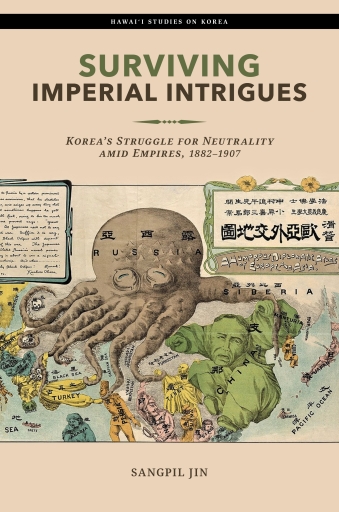
<p>In <i>Surviving Imperial Intrigues,</i> Sangpil Jin explores how successful Korean neutralization could have radically transformed the balance of power equation in East Asia. He conducted multilocational archival work, analyzing documents from the Austro-Hungarian Empire Ministry of Foreign Affairs, British Foreign Office, French Ministry of Foreign Affairs, German Foreign Office, Japanese Ministry of Foreign Affairs, Russian Foreign Office, Russian State Naval Archive, and US State Department, as well as perusing private papers and newspapers. What surfaced in these readings were disparate voices of multiple actors and their agendas concerning Korean neutrality and dynamic international relations in modern East Asia. Jin argues that although never implemented, Korean neutralization had the potential to succeed during the British occupation of Kŏmundo (1885–1887). He further points out that neutralization has recently resurfaced as a possible option for a unified Korean state to preserve its strategic flexibility amidst the US pivot to Asia and China’s re-emergence as a potential hegemon in the region.<br><br>While neutralization is the focal point of the book, Jin also analyzes Korea’s complex and layered relations with China, Japan, Russia, and the United States, within the overall framework of Sino-Japanese, Anglo-Russian, and Russo-Japanese rivalries. A periphery state in the contemporary international system, Korea was forced to navigate through intricate diplomatic relations with major imperial powers. Jin skillfully directs his academic lens toward understanding the stories behind Korea’s contentious relations and the rivalries among the powers. The timespan of his study stretching from 1882 to 1907 reflects his unique periodization that offers a groundbreaking view of Korean diplomatic history from a more regional geography paradigm. In recent years, contemporary South Korea has been learning to reassess its strategic position in the emerging Sino–US bipolarity in the Asia-Pacific region. This book serves as a historical guide for both specialists and policymakers who require a nuanced grasp of the new era of geopolitical shift, likely dominated by the two powers (China and the United States) that possess a distinct understanding of the norms and structure of the international order.</p>
Kategorie
- Język
- English
Udostępnij