
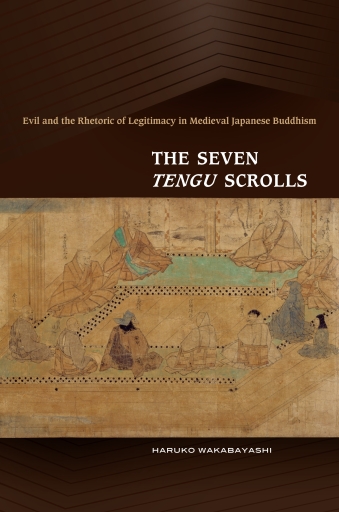
The Seven Tengu Scrolls
Autor: Wakabayashi, Haruko
Wydane przez University of Hawaii Press
English
226 stron
2012
ISBN 9780824861148
PDF
Buy at Association of University Presses - Tienda FILUNI
🇺🇸
 Catademic
🇺🇸
Odwiedź sklep →
Catademic
🇺🇸
Odwiedź sklep →
 Bajalibros Latam
🇺🇸
Odwiedź sklep →
Bajalibros Latam
🇺🇸
Odwiedź sklep →
 Association of University Presses - Tienda FILUNI
🇺🇸
Odwiedź sklep →
Association of University Presses - Tienda FILUNI
🇺🇸
Odwiedź sklep →
 Ebooks Librería Antártica
🇨🇱
Odwiedź sklep →
Ebooks Librería Antártica
🇨🇱
Odwiedź sklep →
 Ebooks Agustin
🇪🇸
Odwiedź sklep →
Ebooks Agustin
🇪🇸
Odwiedź sklep →
 Bajalibros Argentina
🇦🇷
Odwiedź sklep →
Bajalibros Argentina
🇦🇷
Odwiedź sklep →
 Sanborns Ebooks
🇲🇽
Odwiedź sklep →
Sanborns Ebooks
🇲🇽
Odwiedź sklep →
 ebooks Libreria del GAM
🇨🇱
Odwiedź sklep →
ebooks Libreria del GAM
🇨🇱
Odwiedź sklep →
 Bookshop Uruguay
🇺🇾
Odwiedź sklep →
Bookshop Uruguay
🇺🇾
Odwiedź sklep →
 ebookskitapenas
🇬🇹
Odwiedź sklep →
ebookskitapenas
🇬🇹
Odwiedź sklep →
 Ebooks Yenny - El Ateneo
🇦🇷
Odwiedź sklep →
Ebooks Yenny - El Ateneo
🇦🇷
Odwiedź sklep →
 Crisol Ebooks
🇵🇪
Odwiedź sklep →
Crisol Ebooks
🇵🇪
Odwiedź sklep →
Dostępne w 12 księgarniach
Catademic
🇺🇸
Odwiedź sklep →
Bajalibros Latam
🇺🇸
Odwiedź sklep →
Association of University Presses - Tienda FILUNI
🇺🇸
Odwiedź sklep →
Ebooks Librería Antártica
🇨🇱
Odwiedź sklep →
Ebooks Agustin
🇪🇸
Odwiedź sklep →
Bajalibros Argentina
🇦🇷
Odwiedź sklep →
Sanborns Ebooks
🇲🇽
Odwiedź sklep →
ebooks Libreria del GAM
🇨🇱
Odwiedź sklep →
Bookshop Uruguay
🇺🇾
Odwiedź sklep →
ebookskitapenas
🇬🇹
Odwiedź sklep →
Ebooks Yenny - El Ateneo
🇦🇷
Odwiedź sklep →
Crisol Ebooks
🇵🇪
Odwiedź sklep →
O tej książce
<p>This is a study of visual and textual images of the mythical creature <i>tengu</i> from the late Heian (897–1185) to the late Kamakura (1185–1333) periods. Popularly depicted as half-bird, half-human creatures with beaks or long noses, wings, and human bodies, <i>tengu</i> today are commonly seen as guardian spirits associated with the mountain ascetics known as <i>yamabushi.</i> In the medieval period, however, the character of <i>tengu</i> most often had a darker, more malevolent aspect. Haruko Wakabashi focuses in this study particularly on <i>tengu</i> as manifestations of the Buddhist concept of Māra (or <i>ma</i>), the personification of evil in the form of the passions and desires that are obstacles to enlightenment. Her larger aim is to investigate the use of evil in the rhetoric of Buddhist institutions of medieval Japan. Through a close examination of tengu that appear in various forms and contexts, Wakabayashi considers the functions of a discourse on evil as defined by the Buddhist clergy to justify their position and marginalize others.<br><br>Early chapters discuss Buddhist appropriations of <i>tengu</i> during the late twelfth and thirteenth centuries in relation to the concept of ma. Multiple interpretations of <i>ma</i> developed in response to changes in society and challenges to the Buddhist community, which recruited <i>tengu</i> in its efforts to legitimize its institutions. The highlight of the work discusses in detail the thirteenth-century narrative scroll <i>Tengu zōshi</i> (also known as the <i>Shichi Tengu-e,</i> or the <i>Seven Tengu Scrolls</i>), in which monks from prominent temples in Nara and Kyoto and leaders of “new” Buddhist sects (Pure Land and Zen) are depicted as <i>tengu.</i> Through a close analysis of the <i>Tengu zōshi’</i>s pictures and text, the author reveals one aspect of the critique against Kamakura Buddhism and how <i>tengu</i> images were used to express this in the late thirteenth century. She concludes with a reexamination of the meaning of <i>tengu</i> and a discussion of how <i>ma</i> was essentially socially constructed not only to explain the problems that plague this world, but also to justify the existence of an institution that depended on the presence of evil for its survival.<br><br>Drawing on a wide range of primary sources, Wakabayashi provides a thoughtful and innovative analysis of history and religion through art. <i>The Seven Tengu Scrolls</i> will therefore appeal to those with an interest in Japanese art, history, and religion, as well as in interdisciplinary approaches to socio-cultural history.</p>
- Język
- English
Udostępnij
Może ci się też spodobać

Bruges and West Flanders
Omond, George W. T.

The Epidemics in Medieval Time
Hecker, J. F. C.
History of the Crusades
Michaud, Joseph François
Ancient Ryukyu
Pearson, Richard
Einführung in die Wirtschaftsgeschichte
Steinbach, Sebastian
Un registro trecentesco in volgare della Casa di Dio padovana
Rovere, Serena