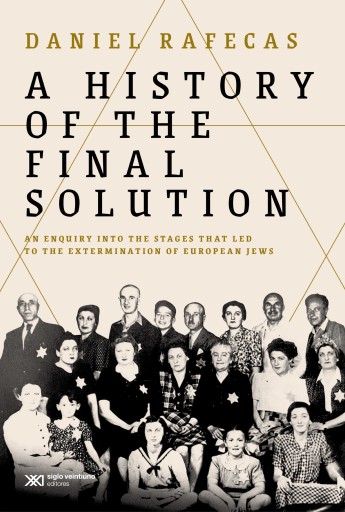
A History of the Final Solution
Von Rafecas, Daniel
Herausgegeben von Siglo XXI Editores
English
2021
ISBN 9789878011257
eBook
Buy at Bajalibros Latam
🇺🇸
Bajalibros Latam
🇺🇸
Shop besuchen →
LORANCHBOOKSTORE
🇺🇸
Shop besuchen →
Libros Patagonia
🇨🇱
Shop besuchen →
Ebooks Librería Carlos Fuentes
🇲🇽
Shop besuchen →
Ebooks Librería Antártica
🇨🇱
Shop besuchen →
Ebooks Happy Books
🇨🇴
Shop besuchen →
ebooks libreria española
🇪🇨
Shop besuchen →
Bajalibros Argentina
🇦🇷
Shop besuchen →
Alpha Books
🇨🇴
Shop besuchen →

Sanborns Ebooks
🇲🇽
Shop besuchen →
ebooks Libreria del GAM
🇺🇾
Shop besuchen →
Bookshop Uruguay
🇺🇾
Shop besuchen →
Ebooks Yenny - El Ateneo
🇦🇷
Shop besuchen →
Crisol Ebooks
🇨🇴
Shop besuchen →
Verfügbar in 14 Buchhandlungen
LORANCHBOOKSTORE
🇺🇸
Shop besuchen →
Libros Patagonia
🇨🇱
Shop besuchen →
Ebooks Librería Carlos Fuentes
🇲🇽
Shop besuchen →
Ebooks Librería Antártica
🇨🇱
Shop besuchen →
Ebooks Happy Books
🇨🇴
Shop besuchen →
ebooks libreria española
🇪🇨
Shop besuchen →
Alpha Books
🇨🇴
Shop besuchen →
Sanborns Ebooks
🇲🇽
Shop besuchen →
ebooks Libreria del GAM
🇺🇾
Shop besuchen →
Ebooks Yenny - El Ateneo
🇦🇷
Shop besuchen →
Crisol Ebooks
🇨🇴
Shop besuchen →
Über dieses Buch
This book explores the complex causes that led to the perpetration of the most significant genocidal crime in modern history: the Holocaust. The origin of this enquiry lies at the point where the utopia of the civilizing process failed to deliver: how could Auschwitz-Birkenau be possible?
Daniel Rafecas builds a concise but explanatory narration supported by a strong, not obvious hypothesis —the Holocaust was not arrived at as the result of the willingness of a handful of anti-Semitic fanatics led by Adolf Hitler, but through the overcoming of successive stages across which the criminal decisions regarding the Jewish question were radicalized. Such decisions were gradually processed and rationalized by dozens of thousands of officials involved in the destruction process.
This thorough chronicle of the relevant events covers the world war conflict (particularly, the dramatic circumstances that characterized the invasion of the Soviet Union), as well as the key role played by the state bureaucracy in charge of implementing anti-Jewish policies (the SS of Heinrich Himmler). And it sheds light over the path travelled by the Nazi regime towards the consummation of the Final Solution, a process that could only be possible as a result of the progressive trampling of basic human rights, which is typical of authoritarian states.
With an austere but didactic style, Daniel Rafecas offers a historical synthesis that is essential to those English-speaking readers who, coming from any area of knowledge, approach this subject, worried by what Rafecas defines as the great black hole of Modernity.
- Sprache
- English
Teilen