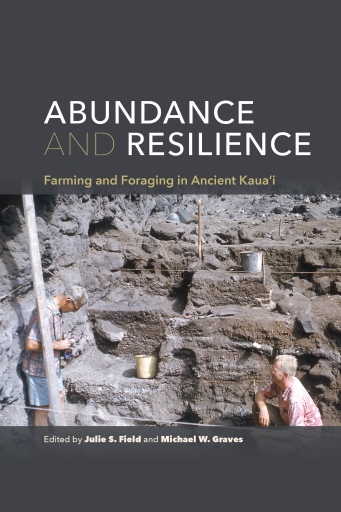
Abundance and Resilience
Herausgegeben von University of Hawaii Press
English
289 Seiten
2015
ISBN 9780824857158
Geschätzte Lesezeit: 5 Std. 18 Min.
PDF
Buy at Catademic
🇺🇸
 Association of University Presses - Tienda FILUNI
🇺🇸
Shop besuchen →
Association of University Presses - Tienda FILUNI
🇺🇸
Shop besuchen →
 Bajalibros Argentina
🇦🇷
Shop besuchen →
Bajalibros Argentina
🇦🇷
Shop besuchen →
 Bajalibros Latam
🇺🇸
Shop besuchen →
Bajalibros Latam
🇺🇸
Shop besuchen →
 Bookshop Uruguay
🇺🇾
Shop besuchen →
Bookshop Uruguay
🇺🇾
Shop besuchen →
Verfügbar in 13 Buchhandlungen
Association of University Presses - Tienda FILUNI
🇺🇸
Shop besuchen →
Bajalibros Argentina
🇦🇷
Shop besuchen →
Bajalibros Latam
🇺🇸
Shop besuchen →
Bookshop Uruguay
🇺🇾
Shop besuchen →









Über dieses Buch
At the base of a steep cliff towering some 500 feet above the coast of the remote Nā Pali district on the island of Kaua'i, lies the spectacular historical and archaeological site at Nu'alolo Kai. First excavated by Bishop Museum archaeologists between 1958 and 1964, the site contained the well-preserved remains of one of the largest and most diverse arrays of traditional and historic artifacts ever found in Hawai'i. The house sites that constitute the focus of Abundance and Resilience were built over five centuries of occupation and contained deeply buried, stratified deposits extending more than nine feet beneath the surface. The essays in this volume detail the work of archaeologists associated with the University of Hawai'i who have been compiling and studying the animal remains recovered from the excavations. The contributors discuss the range of foods eaten by Hawaiians, the ways in which particular species were captured and harvested, and how these practices might have evolved through changes in the climate and natural environment. Adding to this are analyses of a sophisticated material culture—how ancient Hawaiians fashioned animal remains into artifacts such as ornaments made of shell, pointed bird bone "pickers," sea urchin and coral files and abraders, turtle shell combs, and bone handles for kāhili (feathered standards) used by Hawaiian royalty.
For researchers, Nu'alolo Kai opened up the world of everyday life of indigenous Hawaiians between AD 1400 and 1900. More importantly, we learn how their procurement and utilization of animals—wild marine organisms and birds, as well as domesticated dogs and pigs—affected local resources. Demonstrating that an increased preference for introduced animals, such as dogs and pigs, effectively limited negative impacts on wild animal resources, the essays in Abundance and Resilience collectively argue that the Hawaiian community of Nu'alolo Kai practiced a sustainable form of animal resource procurement and management for five centuries.
Verfügbarkeit
Abundance and Resilience ist als PDF in 13 Online-Buchhandlungen erhältlich. Zu den Buchhandlungen, die es führen, gehören Association of University Presses - Tienda FILUNI, Bajalibros Argentina, Bajalibros Latam.
Kategorien
- Sprache
- English
Teilen
Häufige Fragen
- In welchen Formaten ist Abundance and Resilience erhältlich?
- Abundance and Resilience ist als PDF in 13 Online-Buchhandlungen erhältlich.
- Wo kann ich Abundance and Resilience kaufen?
- Du kannst Abundance and Resilience bei Association of University Presses - Tienda FILUNI, Bajalibros Argentina, Bajalibros Latam kaufen. Vergleiche alle Optionen in der Liste auf dieser Seite.
- Wie lange dauert es, Abundance and Resilience zu lesen?
- Bei durchschnittlichem Lesetempo dauert Abundance and Resilience etwa 5 Std. 18 Min. (289 Seiten).
Bewertungen und Rezensionen
Noch keine Bewertungen. Sei der Erste, der dieses Buch rezensiert.
Anmelden um dieses Buch zu bewerten und zu rezensieren.