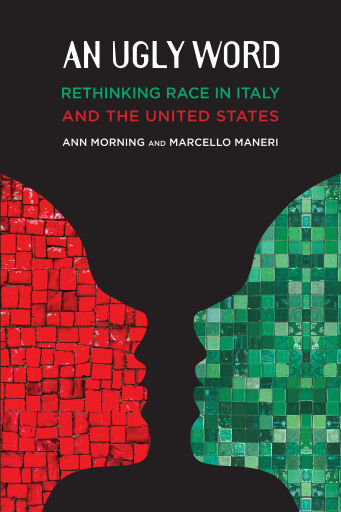
An Ugly Word
Von Morning, Ann, Maneri, Marcello
Herausgegeben von Russell Sage Foundation
English
2022
ISBN 9781610449137
eBook
Buy at Association of University Presses - Tienda FILUNI
🇺🇸
Catademic
🇺🇸
Shop besuchen →
Bajalibros Latam
🇺🇸
Shop besuchen →
Association of University Presses - Tienda FILUNI
🇺🇸
Shop besuchen →

Ebooks Librería Antártica
🇨🇱
Shop besuchen →
Ebooks Agustin
🇪🇸
Shop besuchen →
Bajalibros Argentina
🇦🇷
Shop besuchen →

Sanborns Ebooks
🇲🇽
Shop besuchen →
ebooks Libreria del GAM
🇨🇱
Shop besuchen →
Bookshop Uruguay
🇺🇾
Shop besuchen →

ebookskitapenas
🇬🇹
Shop besuchen →
Ebooks Yenny - El Ateneo
🇦🇷
Shop besuchen →
Crisol Ebooks
🇵🇪
Shop besuchen →
Verfügbar in 12 Buchhandlungen
Catademic
🇺🇸
Shop besuchen →
Association of University Presses - Tienda FILUNI
🇺🇸
Shop besuchen →
Ebooks Librería Antártica
🇨🇱
Shop besuchen →
Ebooks Agustin
🇪🇸
Shop besuchen →
Sanborns Ebooks
🇲🇽
Shop besuchen →
ebooks Libreria del GAM
🇨🇱
Shop besuchen →
ebookskitapenas
🇬🇹
Shop besuchen →
Ebooks Yenny - El Ateneo
🇦🇷
Shop besuchen →
Crisol Ebooks
🇵🇪
Shop besuchen →
Über dieses Buch
Scholars and politicians often assume a significant gap between the ways that Americans and Europeans think about race. According to this template, in the U.S. race is associated with physical characteristics, while in Western Europe race has disappeared, and discrimination is based on insurmountable cultural differences. However, little research has addressed how average Americans and Europeans actually think and talk about race. In <i>An Ugly Word,</i> sociologists Ann Morning and Marcello Maneri examine American and Italian understandings of group difference in order to determine if and how they may differ.<br> <br> Morning and Maneri interviewed over 150 people across the two countries about differences among what they refer to as “descent-based groups.” Using this concept allowed them to sidestep the language of “race” and “ethnicity,” which can be unnecessarily narrow, poorly defined, or even offensive to some. Drawing on these interviews, the authors find that while ways of speaking about group difference vary considerably across the Atlantic, underlying beliefs about it do not. The similarity in American and Italian understandings of difference was particularly evident when discussing sports. Both groups relied heavily on traditional stereotypes of Black physicality to explain Black athletes’ overrepresentation in sports like U.S. football and their underrepresentation in sports like swimming – contradicting the claims that a biological notion of race is a distinctly American phenomenon.<br> <br> While American and Italian concepts of difference may overlap extensively, they are not identical. Interviews in Italy were more likely to reveal beliefs about groups’ innate, unchangeable temperaments, such as friendly Senegalese and dishonest Roma. And where physical difference was seen by Italians as superficial and unimportant, cultural difference was perceived as deeply meaningful and consequential. In contrast, U.S. interviewees saw cultural difference as supremely malleable—and often ascribed the same fluidity to racial identity, which they believed stemmed from culture as well as biology. In light of their findings, Morning and Maneri propose a new approach to understanding cross-cultural beliefs about descent-based difference that includes identifying the traits people believe differentiate groups, how they believe those traits are acquired, and whether they believe these traits can change.<br> <br> <i>An Ugly Word</i> is an illuminating, cross-national examination of the ways in which people around the world make sense of race and difference.<br>
- Sprache
- English
Teilen
Das könnte dir auch gefallen
Derechos humanos: Una breve introducción
Andrew Clapham
Miséria da filosofia
Marx, Karl
Huérfanos del narco
Valdez Cárdenas, Javier
Factores de riesgo-protección asociados al ejercicio de la prostitución en niñas vinculadas a proceso de reeducación en la ciudadela María Micaela
F Quevedo, Johana Paola
Colombia en la mira
Ayala Diago, César Augusto
Conversaciones desde Las Gardenias
Torres Castro OP, Ricardo Ernesto