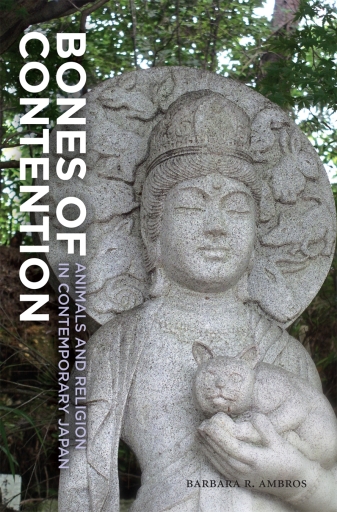
Bones of Contention
Herausgegeben von University of Hawaii Press
English
2012
ISBN 9780824848118
eBook
Buy at Bookshop Uruguay
🇺🇾
 Association of University Presses - Tienda FILUNI
🇺🇸
Shop besuchen →
Association of University Presses - Tienda FILUNI
🇺🇸
Shop besuchen →
 Bajalibros Argentina
🇦🇷
Shop besuchen →
Bajalibros Argentina
🇦🇷
Shop besuchen →
 Bajalibros Latam
🇺🇸
Shop besuchen →
Bajalibros Latam
🇺🇸
Shop besuchen →
 Catademic
🇺🇸
Shop besuchen →
Catademic
🇺🇸
Shop besuchen →
Verfügbar in 13 Buchhandlungen
Association of University Presses - Tienda FILUNI
🇺🇸
Shop besuchen →
Bajalibros Argentina
🇦🇷
Shop besuchen →
Bajalibros Latam
🇺🇸
Shop besuchen →
 Catademic
🇺🇸
Shop besuchen →
Catademic
🇺🇸
Shop besuchen →








Über dieses Buch
Since the 1990s the Japanese pet industry has grown to a trillion-yen business and estimates place the number of pets above the number of children under the age of fifteen. There are between 6,000 to 8,000 businesses in the Japanese pet funeral industry, including more than 900 pet cemeteries. Of these about 120 are operated by Buddhist temples, and Buddhist mortuary rites for pets have become an institutionalized practice. In Bones of Contention, Barbara Ambros investigates what religious and intellectual traditions constructed animals as subjects of religious rituals and how pets have been included or excluded in the necral landscapes of contemporary Japan.
Pet mortuary rites are emblems of the ongoing changes in contemporary Japanese religions. The increase in single and nuclear-family households, marriage delays for both males and females, the falling birthrate and graying of society, the occult boom of the 1980s, the pet boom of the 1990s, the anti-religious backlash in the wake of the 1995 Aum Shinrikyō incident—all of these and more have contributed to Japan’s contested history of pet mortuary rites. Ambros uses this history to shed light on important questions such as: Who (or what) counts as a family member? What kinds of practices should the state recognize as religious and thus protect financially and legally? Is it frivolous or selfish to keep, pamper, or love an animal? Should humans and pets be buried together? How do people reconcile the deeply personal grief that follows the loss of a pet and how do they imagine the afterlife of pets? And ultimately, what is the status of animals in Japan? Bones of Contention is a book about how Japanese people feel and think about pets and other kinds of animals and, in turn, what pets and their people have to tell us about life and death in Japan today.
Verfügbarkeit
Bones of Contention ist als eBook in 13 Online-Buchhandlungen erhältlich. Zu den Buchhandlungen, die es führen, gehören Association of University Presses - Tienda FILUNI, Bajalibros Argentina, Bajalibros Latam.
Kategorien
- Sprache
- English
Teilen
Häufige Fragen
- In welchen Formaten ist Bones of Contention erhältlich?
- Bones of Contention ist als eBook in 13 Online-Buchhandlungen erhältlich.
- Wo kann ich Bones of Contention kaufen?
- Du kannst Bones of Contention bei Association of University Presses - Tienda FILUNI, Bajalibros Argentina, Bajalibros Latam kaufen. Vergleiche alle Optionen in der Liste auf dieser Seite.
Bewertungen und Rezensionen
Noch keine Bewertungen. Sei der Erste, der dieses Buch rezensiert.
Anmelden um dieses Buch zu bewerten und zu rezensieren.