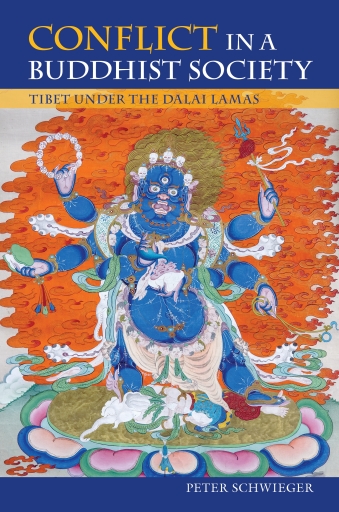
Conflict in a Buddhist Society
Von Schwieger, Peter
Herausgegeben von University of Hawaii Press
English
351 Seiten
2021
ISBN 9780824889302
PDF
Buy at Bajalibros Latam
🇺🇸
Catademic
🇺🇸
Shop besuchen →
Bajalibros Latam
🇺🇸
Shop besuchen →
Association of University Presses - Tienda FILUNI
🇺🇸
Shop besuchen →

Ebooks Librería Antártica
🇨🇱
Shop besuchen →
Ebooks Agustin
🇪🇸
Shop besuchen →
Bajalibros Argentina
🇦🇷
Shop besuchen →

Sanborns Ebooks
🇲🇽
Shop besuchen →
ebooks Libreria del GAM
🇺🇾
Shop besuchen →
Bookshop Uruguay
🇺🇾
Shop besuchen →

ebookskitapenas
🇬🇹
Shop besuchen →
Ebooks Yenny - El Ateneo
🇦🇷
Shop besuchen →
Crisol Ebooks
🇨🇴
Shop besuchen →
Verfügbar in 12 Buchhandlungen
Catademic
🇺🇸
Shop besuchen →
Association of University Presses - Tienda FILUNI
🇺🇸
Shop besuchen →
Ebooks Librería Antártica
🇨🇱
Shop besuchen →
Ebooks Agustin
🇪🇸
Shop besuchen →
Sanborns Ebooks
🇲🇽
Shop besuchen →
ebooks Libreria del GAM
🇺🇾
Shop besuchen →
ebookskitapenas
🇬🇹
Shop besuchen →
Ebooks Yenny - El Ateneo
🇦🇷
Shop besuchen →
Crisol Ebooks
🇨🇴
Shop besuchen →
Über dieses Buch
<p><i>Conflict in a Buddhist Society</i> presents a new way of looking at Tibet under the rule of the Dalai Lamas (1642–1959). Although this era can be clearly delineated as a distinct period in the history of Tibet, many questions remain concerning the specific form of rule established. Author Peter Schwieger attempts to make transparent the complexity and dynamics of the Dalai Lamas’ domination using the work of sociologist Niklas Luhman (1927–1998) as his theoretical starting point. Luhman’s systems theory allows Schwieger to approach Tibetan history and culture as a remarkable effort to create—under times of great conflict and stress and using uncommon means—a stable social and political order. Such a methodology provides the distance needed to move beyond event-based narrative history and understand the structures that made social action possible in Tibet and the operations by which its society as a whole distinguished itself from its environment.<br><br>Schwieger begins by asking the crucial question of how Tibet’s society dealt with conflict. The chapters that follow answer this question from various perspectives: history and memory; domination; hierarchy; center and periphery; semantics; morality and ethics; ritual; law; and war. Each reveals a different avenue for cross-cutting discourses in the historical and social sciences. Together, they provide a comprehensive picture of how conflicts were portrayed in Tibet society and how the manner in which they were handled stabilized the country for a considerable time but were ultimately unsuccessful in the face of radical upheavals in its environment. <br><br>Situated at the intersection of systems theory, conflict theory, and Tibetan/Inner Asian history and society,<i> Conflict in a Buddhist Society</i> will be of considerable interest to students and scholars in these areas. Its theoretical rather than narrative-descriptive approach to the history of the three centuries of Dalai Lama rule will be welcomed as wide-ranging and insightful.</p>
Kategorien
- Sprache
- English
Teilen
Das könnte dir auch gefallen
Ceremonias privadas
Toro, Hernán
Sketch of the Sikhs
Malcolm, John
The Bombay City Police: A Historical Sketch, 1672-1916
Edwardes, S. M.
H. G. Wells' Short History of The World
Wells, H. G.
Japan’s Frames of Meaning
Marra, Michael F.
Zwei Kronen, eine Welt: Rom und Konstantinopel im imperialen Konflikt
Crest , Jonas