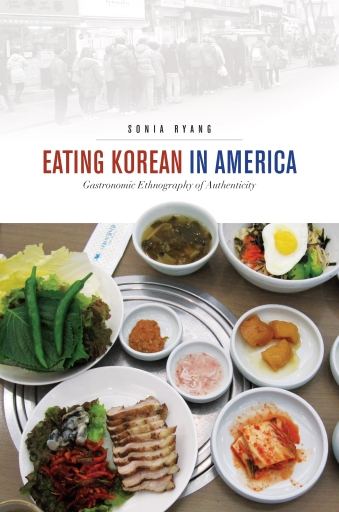
Eating Korean in America
Von Ryang, Sonia
Herausgegeben von University of Hawaii Press
English
154 Seiten
2015
ISBN 9780824854911
PDF
Buy at Association of University Presses - Tienda FILUNI
🇺🇸
Catademic
🇺🇸
Shop besuchen →
Bajalibros Latam
🇺🇸
Shop besuchen →
Association of University Presses - Tienda FILUNI
🇺🇸
Shop besuchen →

Ebooks Librería Antártica
🇨🇱
Shop besuchen →
Ebooks Agustin
🇪🇸
Shop besuchen →
Bajalibros Argentina
🇦🇷
Shop besuchen →

Sanborns Ebooks
🇲🇽
Shop besuchen →
ebooks Libreria del GAM
🇨🇱
Shop besuchen →
Bookshop Uruguay
🇺🇾
Shop besuchen →

ebookskitapenas
🇬🇹
Shop besuchen →
Ebooks Yenny - El Ateneo
🇦🇷
Shop besuchen →
Crisol Ebooks
🇵🇪
Shop besuchen →
Verfügbar in 12 Buchhandlungen
Catademic
🇺🇸
Shop besuchen →
Association of University Presses - Tienda FILUNI
🇺🇸
Shop besuchen →
Ebooks Librería Antártica
🇨🇱
Shop besuchen →
Ebooks Agustin
🇪🇸
Shop besuchen →
Sanborns Ebooks
🇲🇽
Shop besuchen →
ebooks Libreria del GAM
🇨🇱
Shop besuchen →
ebookskitapenas
🇬🇹
Shop besuchen →
Ebooks Yenny - El Ateneo
🇦🇷
Shop besuchen →
Crisol Ebooks
🇵🇪
Shop besuchen →
Über dieses Buch
<p>Can food be both national and global at the same time? What happens when a food with a national identity travels beyond the boundaries of a nation? What makes a food authentically national and yet American or broader global? <br><br>With these questions in mind, Sonia Ryang explores the world of Korean food in four American locations, Iowa City, Baltimore, Los Angeles, and Hawaii (Kona and Honolulu). Ryang visits restaurants and grocery stores in each location and observes Korean food as it is prepared and served to customers. She analyzes the history and evolution of each dish, how it arrived and what it became, but above all, she tastes and experiences her food—four items to be specific—<i>naengmyeon</i> cold noodle soup; <i>jeon</i> pancakes; <i>galbi</i> barbecued beef; and <i>bibimbap</i>, rice with mixed vegetable. <br><br>In her ethnographic journey, Ryang discovers how the chewy noodles from Pyongyang continue to retain their texture and yet are served differently in different locales. <i>Jeon</i> pancakes become completely decontextualized in the United States and metamorphosed into a portable and packable carry-out food. American consumers are unaware of the pancake's sacred origin. In Hawaii, Ryang finds that it is the Vietnamese restaurant that serves unexpectedly delicious <i>galbi</i> barbecued meat. Intertwined in the complex colonial and postcolonial contexts, Korean <i>galbi</i> and Japanese <i>yakiniku</i> can be found side by side on the streets of Honolulu frequented by both the locals and tourists. <br><br>In writing <i>Eating Korean in America: Gastronomic Ethnography of Authenticity</i>, Sonia Ryang is as much an eater as a researcher. Her accounts of the cities and their distinctive take on Korean food are at once entertaining and insightful, yet deeply moving. Ryang challenges the reader to stop and think about the food we eat every day in close connection to colonial histories, ethnic displacements, and global capitalism.</p>
Kategorien
- Sprache
- English
Teilen