Zum Hauptinhalt springen
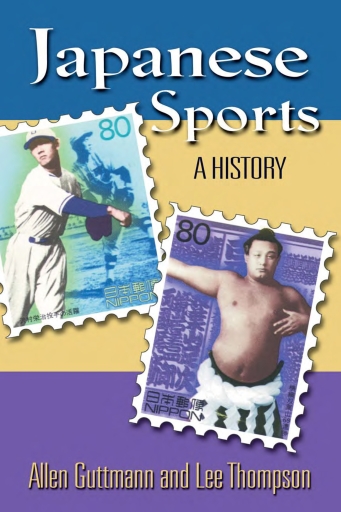
Japanese Sports

Japanese Sports

Von Guttmann, Allen, Thompson, Lee

Herausgegeben von University of Hawaii Press

English 337 Seiten 2001 ISBN 9780824863128
PDF

Über dieses Buch

<p>In this first synthetic, comprehensive survey of Japanese sports in English, the authors are attentive to the complex and fascinating interaction of traditional and modern elements. In the course of tracing the emergence and development of sumo, the martial arts, and other traditional sports from their origins to the present, they demonstrate that some cherished "ancient" traditions were, in fact, invented less than a century ago. They also register their skepticism about the use of the samurai tradition to explain Japan's success in sports. Special attention is given to Meiji-era Japan's frequently ambivalent adoption and adaptation of European and American sports--a particularly telling example of Japan's love-hate relationship with the West. The book goes on the describe the history of physical education in the school system, the emergence of amateur and professional leagues, the involvement of business and the media in sports promotion, and Japan's participation in the Olympics.<br><br><b>Japanese Sports Trivia Quiz</b><br><br> (openli)Japan's first professional baseball team was founded in 1921. When were the Central and Pacific Leagues established?<br><br> a. 1930; b. 1940; c. 1950; d. 1960<br><br> (openli)Oh Sadaharu hit 51 home runs in 1973 and 49 in 1974. How many did he hit in his lifetime?<br><br> a. 597; b. 602; c. 755; d. 868<br><br> (openli)Sugiura Tadashi pitched 42 games for the Nankai<br><br> Hawks in 1959 and won 38. How many games did he pitch and win against<br><br> the Yomiuri Giants in the Japan Series that same year?<br><br> a. 1; b. 2; c. 3; d. 4<br><br> (openli)The first Japanese radio broadcast of an entire<br><br> sports event occurred at the national middle-school baseball tournament<br><br> at Koshien Stadium in 1927, with a Ministry of Communication censor<br><br> standing by since the script couldn't be approved in advance. The<br><br> national middle-school tournament was suspended in 1941. When was it<br><br> resumed?<br><br> a. 1945; b. 1946; c. 1947; d. 1948<br><br> (openli)In 1791 Shogun Tokugawa Ienari observed a new<br><br> ring-entering ceremony similar to that now performed by yokozuna. When<br><br> did the Sumo Association officially recognize the rank of yokozuna?<br><br> a. 1789; b. 1890; c. 1909; d. 1951<br><br> (openli)Which famous sumo rikishi won 69 successive bouts over the course of 7 tournaments, the longest winning streak ever recorded?<br><br> a. Futabayama (Sadaji); b. Wakanohana (Kanji); c. Taiho (Koki); d. Chiyonofuji (Mitsugu)<br><br> (openli)When the first karate dojo was established in Okinawa in 1889, the characters for <i>karate</i> were written 'Chinese hand'. When were they first written 'empty hand'?<br><br> a. 1889; b. 1922; c. 1929; d. 1935 <br><br> (openli)Only one major school of aikido holds competitive tournaments. When did the name <i>aikido</i> first appear on the list of government-sanctioned martial arts.<br><br> a. 1883; b. 1890; c. 1931; d. 1942<br><br> (openli)In 1951 Tanaka Shigeki became the first Japanese runner to win the Boston Marathon. When was the first Fukuoka Marathon held?<br><br> a. 1927; b. 1937; c. 1947; d. 1957<br><br> (openli)At the infamous 1936 "Nazi Olympics" in Berlin,<br><br> Japanese athletes won gold medals in track and field, swimming, and<br><br> diving. In what event did a Korean win the gold for Japan?<br><br> a. marathon; b. triple jump; c. pole vault; d. 1500-m freestyle<br><br>Answers: 1. c. (the Pacific League was the expansion<br><br>league); 2. d. (Japanese ballparks are shorter than U.S. parks, but the<br><br>season is also shorter); 3. d. (his arm never recovered from that year);<br><br>4. b.; 5. c. (the rank "yokozuna" first appeared on the banzuke ratings<br><br>in 1890; and the first solo ring-entering ceremonies by wrestlers<br><br>wearing the "yokozuna" rope was in 1789); 6. a.; 7. c. (by members of<br><br>Keio's karate club who were impressed by a Zen priest of the Rinzai<br><br>sect); 8. d. (its founder Ueshiba Morihei was born in 1883); 9. c. (the<br><br>year after the first footrace around Lake Biwa); 10. a.</p>
Sprache
English
Teilen