
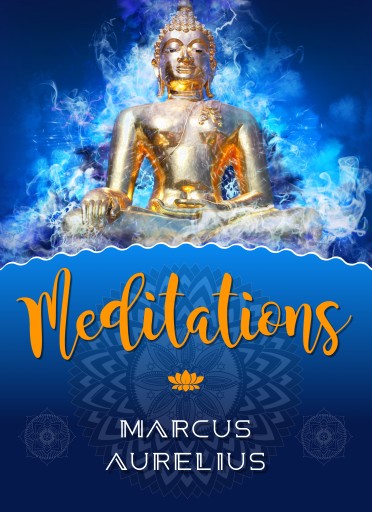
Meditations
Von Aurelius, Marcus
Herausgegeben von E-Kitap Projesi & Cheapest Books
Verfügbar in 15 Buchhandlungen
 Alpha Books
🇨🇴
Shop besuchen →
Alpha Books
🇨🇴
Shop besuchen →
 Bajalibros Argentina
🇦🇷
Shop besuchen →
Bajalibros Argentina
🇦🇷
Shop besuchen →
 Bajalibros Latam
🇺🇸
Shop besuchen →
Bajalibros Latam
🇺🇸
Shop besuchen →
 Bookshop Uruguay
🇺🇾
Shop besuchen →
Bookshop Uruguay
🇺🇾
Shop besuchen →
 Crisol Ebooks
🇵🇪
Shop besuchen →
Crisol Ebooks
🇵🇪
Shop besuchen →










Über dieses Buch
Verfügbarkeit
Meditations ist als eBook in 15 Online-Buchhandlungen erhältlich. Zu den Buchhandlungen, die es führen, gehören Alpha Books, Bajalibros Argentina, Bajalibros Latam.
Kategorien
- Sprache
- English
Häufige Fragen
- In welchen Formaten ist Meditations erhältlich?
- Meditations ist als eBook in 15 Online-Buchhandlungen erhältlich.
- Wo kann ich Meditations kaufen?
- Du kannst Meditations bei Alpha Books, Bajalibros Argentina, Bajalibros Latam kaufen. Vergleiche alle Optionen in der Liste auf dieser Seite.
Bewertungen und Rezensionen
Noch keine Bewertungen. Sei der Erste, der dieses Buch rezensiert.
Anmelden um dieses Buch zu bewerten und zu rezensieren.
Das könnte dir auch gefallen
Profanaciones
Agamben, Giorgio

Um Caminho Para A Verdade
Monteiro, Francisco

180 Motivos Em Frases E Pensamentos Para Refletir E Aquecer O Coração
Diaz, Deusiel
The Prosperity & Wealth Bible
Murphy, Joseph, Haanel, Charles F., Wattles, Wallace D., Allen, James, Conwell, Russell H., Franklin, Benjamin, Atkinson, William Walker, Gibran, Kahlil, Clason, George S., Hubbard, Elbert, Collier, Robert, Adams, George Matthew, Hardman, Harvey, Lewis, H.A., Nightingale, Earl, Sears, F.W., Tzu, Sun, Tzu, Lao, Musashi, Miyamoto, Hill, Napoleon, Fox, Emmet, Shinn, Florence Scovel, Barnum, P.T., Marden, Orison Swett, Machiavelli, Niccolò, Aurelius, Marcus, Behrend, Geneviève, Goddard, Neville, Fillmore, Charles, Coué, Émile, Hunter, William Crosbie, Towne, Elizabeth
The Ultimate Book Club: 180 Books You Should Read (Vol.1)
Whitman, Walt, Hesse, Herman, Eliot, George, Gibran, Kahlil, Chekhov, Anton, Melville, Herman, Wilde, Oscar, Dostoevsky, Fyodor, Gogol, Joyce, James, Thoreau, Henry David, Shakespeare, William, Eliot, T. S., Keats, John, Baudelaire, Charles, Scott, Sir Walter, Defoe, Daniel, Alcott, Louisa May, Austen, Jane, Brontë, Charlotte, Brontë, Emily, Brontë, Anne, Tolstoy, Leo, Galdós, Benito Pérez, Thackeray, William Makepeace, De Laclos, Pierre Choderlos, Blackmore, R.D., Dumas, Alexandre, Proust, Marcel, Lawrence, D. H., Dickens, Charles, Hardy, Thomas, James, Henry, de Maupassant, Guy, Der Ling, Princess, Hugo, Victor, Valera, Juan, Trollope, Anthony, Crane, Stephen, Forster, E. M., Dreiser, Theodore, Cavendish, Margaret, Sinclair, Upton, Plato, Apuleius, Aurelius, Marcus, Tzu, Sun, Voltaire, de Cervantes, Miguel, Boccaccio, Giovanni, Douglass, Frederick, Freud, Sigmund, Lorentz, H. A., Wattles, Wallace D., Allen, James, Christie, Agatha, Doyle, Arthur Conan, Conrad, Joseph, Lovecraft, H. P., Irving, Washington, Shelley, Mary, Wells, H. G., Poe, Edgar Allan, Hemingway, Ernest, Baum, L. Frank, Stevenson, Robert Louis, Twain, Mark, Lagerlöf, Selma, London, Jack, Verne, Jules, Carroll, Lewis, Burnett, Frances Hodgson, Kipling, Rudyard, Burroughs, Edgar Rice, Andersen, Hans Christian, Shaw, George Bernard, Natsume, Sōseki, Goethe, Johann Wolfgang
The Greatest Classics Ever Written
Goethe, Johann Wolfgang von, Stendhal, Verne, Jules, Flaubert, Gustave, Carroll, Lewis, Ibsen, Henrik, Dickens, Charles, Plato, Balzac, Honoré de, Twain, Mark, Stowe, Harriet Beecher, Tagore, Rabindranath, Dostoyevsky, Fyodor, Whitman, Walt, Machiavelli, Niccolò, Wilde, Oscar, Stevenson, Robert Louis, Cooper, James Fenimore, Poe, Edgar Allan, Shakespeare, William, Boccaccio, Giovanni, Confucius, MacDonald, George, Stoker, Bram, Brontë, Charlotte, Brontë, Emily, Thoreau, Henry David, Grossmith, Weedon, London, Jack, James, Henry, Alcott, Louisa May, Hugo, Victor, Doyle, Arthur Conan, Burnett, Frances Hodgson, Conrad, Joseph, Austen, Jane, Melville, Herman, Eliot, George, Sterne, Laurence, Hardy, Thomas, Swift, Jonathan, Wharton, Edith, Pérez Galdós, Benito, Defoe, Daniel, Fielding, Henry, Dumas, Alexandre, Kâlidasa, Grahame, Kenneth, Proust, Marcel, Cather, Willa, Hawthorne, Nathaniel, Homer, Leroux, Gastón, Baudelaire, Charles, Collins, Wilkie, Thackeray, William Makepeace, Voltaire, Chopin, Kate, Apuleius, Milton, John, Douglass, Frederick, Laozi, Keats, John, Joyce, James, Radcliffe, Ann Ward, Gibran, Kahlil, Okakura, Kakuzo, Natsume, Sōseki, Der Ling, Princess, Wells, H. G., Yeats, W. B., Barrie, J. M., Chesterton, G. K., Eliot, T. S., Montgomery, L. M., Lewis, C. S., Lawrence, D. H., Forster, E. M., Lovecraft, H. P., Aurelius, Marcus, Nietzsche, Friedrich, Wallace, Lewis, Turgenev, Ivan, Chekhov, Anton, Tolstoy, Leo, Gógol, Nikolai, Scott, Walter, Sir, Shaw, George Bernard, de Cervantes, Miguel, Shelley, Mary, Xueqin, Cao, Zola, Émile, Válmíki, Chatterjee, Bankim Chandra, Shelley, P. B., Von Arnim, Elizabeth, Hesse, Herman, Dante, de la Barca, Pedro Calderón, Tzu, Sun, Nitobe, Inazo