Zum Hauptinhalt springen
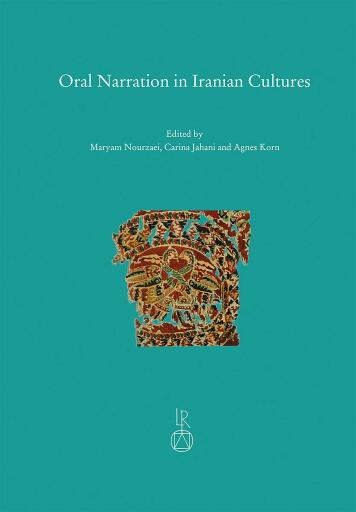
Oral Narration in Iranian Cultures

Oral Narration in Iranian Cultures

Herausgegeben von Dr Ludwig Reichert Verlag

English 199 Seiten 2022
Geschätzte Lesezeit: 3 Std. 39 Min.
PDF

Über dieses Buch

This volume presents papers demonstrating the current state of research on oral traditions among different groups in the Iranian-speaking cultural sphere. The articles offer from a variety of perspectives, encouraging the exchange of ideas between different academic disciplines such as anthropology, sociology, linguistics, literature, religious studies and folklore studies concerning methods and models applied to studies of oral traditions in Iranian languages and cultures. In the introductory part, Bo Utas discusses the use of multiple languages and diverse registers, comparing his father's native Estonian-Swedish village in Ukraine to parallels in the Iranian sphere, and Ulrich Marzolph presents a survey of recent research on oral traditions in Iran and the challenges it currently faces. The second part studies the interplay of written and oral patterns of text production and transmission connected to the Shāhnāma and its literary and narrative traditions. Carl Erixon examines passages referring to the sun, moon and stars that, he argues, represent poetic formulae with close parallels in ancient Indo-European languages. Kumiko Yamamoto applies a model developed to study oral traits in written text to a version of the Barzūnāma found in an unpublished manuscript at the French national library, and Julia Rubanovich studies the perception and representation of the written text in the Iskandarnāma and the Dārābnāma. Finally, Margaret Mills looks at the relationship of oral narrative performances from different genres in Afghanistan to written Persian texts. Concerning oral traditions in lesser-studied Iranian languages, Sara Belelli presents a comparative study of Southern Kurdish folk tales about the "Innocent Persecuted or Unfortunate Heroine". Sabir Badalkhan compares the epic about the Baloch hero Mir Chakar to parallels in the Shāhnāma and the Sindhi epic tradition. The heroes from the Balochi epics are also reflected in popular sayings containing place names, as shown by Moosa Mahmoudzahi. From a more linguistic perspective, Carina Jahani and Jaroslava Obrtelová study to what extent clause-combining strategies in Balochi differ between oral and written narration, and Maryam Nourzaei compares the extent to which oral traditions survive in different Balochi-speaking areas. Erika Friedl's account of how her long acquaintance with a Luri community influenced the way they tell their stories concludes the book.

Verfügbarkeit

Oral Narration in Iranian Cultures ist als PDF in 8 Online-Buchhandlungen erhältlich. Zu den Buchhandlungen, die es führen, gehören Bajalibros Argentina, Bajalibros Latam, Bookshop Uruguay.

Sprache
English
Teilen

Häufige Fragen

In welchen Formaten ist Oral Narration in Iranian Cultures erhältlich?
Oral Narration in Iranian Cultures ist als PDF in 8 Online-Buchhandlungen erhältlich.
Wo kann ich Oral Narration in Iranian Cultures kaufen?
Du kannst Oral Narration in Iranian Cultures bei Bajalibros Argentina, Bajalibros Latam, Bookshop Uruguay kaufen. Vergleiche alle Optionen in der Liste auf dieser Seite.
Wie lange dauert es, Oral Narration in Iranian Cultures zu lesen?
Bei durchschnittlichem Lesetempo dauert Oral Narration in Iranian Cultures etwa 3 Std. 39 Min. (199 Seiten).

Bewertungen und Rezensionen

Noch keine Bewertungen. Sei der Erste, der dieses Buch rezensiert.

Anmelden um dieses Buch zu bewerten und zu rezensieren.

Kommentare

Anmelden um an der Unterhaltung teilzunehmen.

Noch keine Kommentare.